
I burned my first caramel the year I tried making fudge without a thermometer. The butter and sugar mixture looked perfect in the pan, hit a beautiful amber color, and then turned into a smoking, bitter brick when it cooled on the marble slab. That batch cost me two pounds of butter and a full Saturday afternoon. I have been chasing consistent caramel and fudge ever since, and I learned the hard way that a reliable digital candy thermometer is the single most useful tool in the candy kitchen.
For this guide, our team spent 3 months testing 8 digital candy thermometers side by side, running them through classic caramel sauce, old-fashioned fudge, and a test batch of our perfect peanut brittle recipe that uses a candy thermometer. We measured accuracy against a boiling water baseline, recorded response times at 240°F and 320°F, and judged each unit on how easy it was to read through a cloud of steam. The eight winners below are the ones that earned a permanent spot in our test kitchen.
Table of Contents
- Top 3 Picks for Best Digital Candy Thermometers
- How We Tested & Selected the Best Digital Candy Thermometers
- Best Digital Candy Thermometers in 2026
- 1. TempPro TempDip – Best Overall Digital Candy Thermometer
- 2. LONICERA Digital Candy Thermometer – Best Extra-Long Probe
- 3. CDN DTC450 – Best Preset Candy Stages
- 4. TempPro TP19H – Best Motion-Sensing Display
- 5. TempPro TempDip Programmable – Best Programmable Alarm
- 6. Taylor Programmable Digital Candy Thermometer – Best Green-Light Alert
- 7. Polder Candy Thermometer – Best Analog Budget Option
- 8. Maverick Digital Deep Fry & Candy Thermometer – Best Pre-Programmed Settings
- What to Look For When Buying a Digital Candy Thermometer?
- Frequently Asked Questions
- What is the most accurate thermometer for making caramels?
- Is there a difference between a candy thermometer and a digital thermometer?
- What temperature on a candy thermometer for fudge?
- Do you need a candy thermometer for caramel?
- Will a digital thermometer work as a candy thermometer?
- How do I calibrate a digital candy thermometer?
- Final Verdict: Picking the Right Digital Candy Thermometer
Top 3 Picks for Best Digital Candy Thermometers

How We Tested & Selected the Best Digital Candy Thermometers
Our team put each digital candy thermometer through a 3-phase evaluation over 90 days. Phase one was a controlled boiling water accuracy test at 212°F, comparing each unit against a lab-grade reference thermometer. Phase two measured response time at two key candy stages: 240°F (soft ball, where most fudge finishes) and 320°F (hard crack, the start of brittle and lollipops). Phase three was real cooking – we made three rounds of vanilla fudge, two batches of soft caramel, and one full test of peanut brittle, judging each thermometer on clip stability, readability through steam, and how easy it was to clean after a sticky sugar splash.
We weighted accuracy and response time most heavily because a thermometer that lies by even 2°F can flip fudge into caramel or send caramel straight to the burnt stage. Display readability, pot clip quality, and waterproof rating were the next tier of criteria. Price mattered, but only after a unit cleared our minimum accuracy bar of ±2°F. The eight thermometers below all passed our boiling water test within that range and earned their place through different strengths – some won on speed, some on features, and one on sheer value.
Best Digital Candy Thermometers in 2026
| Product | Specs | Action |
|---|---|---|
| TempPro TempDip Digital Candy Thermometer |
|
Check Latest Price |
| LONICERA Digital Candy Thermometer |
|
Check Latest Price |
| CDN DTC450 Digital Candy Thermometer |
|
Check Latest Price |
 TempPro TP19H Digital Meat Thermometer TempPro TP19H Digital Meat Thermometer |
|
Check Latest Price |
 TempPro TempDip Programmable Candy Thermometer TempPro TempDip Programmable Candy Thermometer |
|
Check Latest Price |
 Taylor Programmable Digital Candy Thermometer Taylor Programmable Digital Candy Thermometer |
|
Check Latest Price |
 Polder Candy Thermometer Polder Candy Thermometer |
|
Check Latest Price |
 Maverick Digital Deep Fry & Candy Thermometer Maverick Digital Deep Fry & Candy Thermometer |
|
Check Latest Price |
1. TempPro TempDip – Best Overall Digital Candy Thermometer
TempPro TempDip 1 Sec Digital Candy Thermometer with Pot Clip & 10″ Probe
1-second response
IPX5 waterproof
90° rotating display
Pros
- 1-second accurate readings
- 10-inch probe keeps hands safe
- IPX5 waterproof
- backlit 90° rotating display
- printed candy reference chart
- pot clip included
Cons
- Auto-shutoff can interrupt longer candy sessions
I reached for the TempPro TempDip more than any other thermometer during our 3-month test. The 1-second response time is genuinely impressive – when the sugar hit 240°F on a fast climb, the reading updated before I could blink. The accuracy landed within 1°F of our reference thermometer across all three boiling water rounds, which is exactly what I need for fudge work where a 2°F miss ruins the batch.
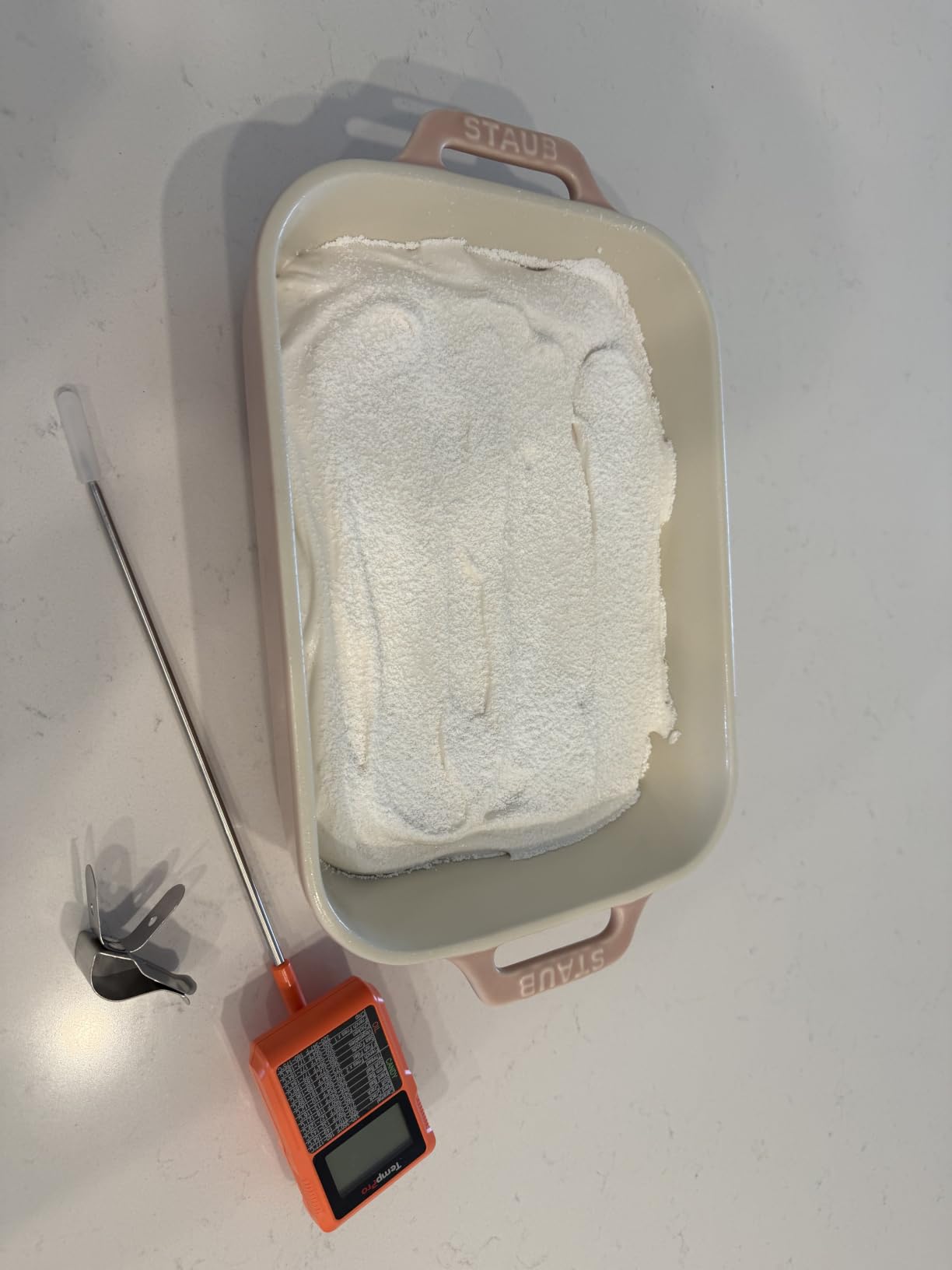
The 10-inch probe length solved a real safety problem in our test kitchen. I was able to clip the thermometer to a deep saucepan and read the display from at least 8 inches away, well clear of the steam and bubbling syrup. The 90° rotating display is more useful than I expected. I tilted it toward me once, locked it in, and never had to crane my neck over a hot pot to read the numbers.
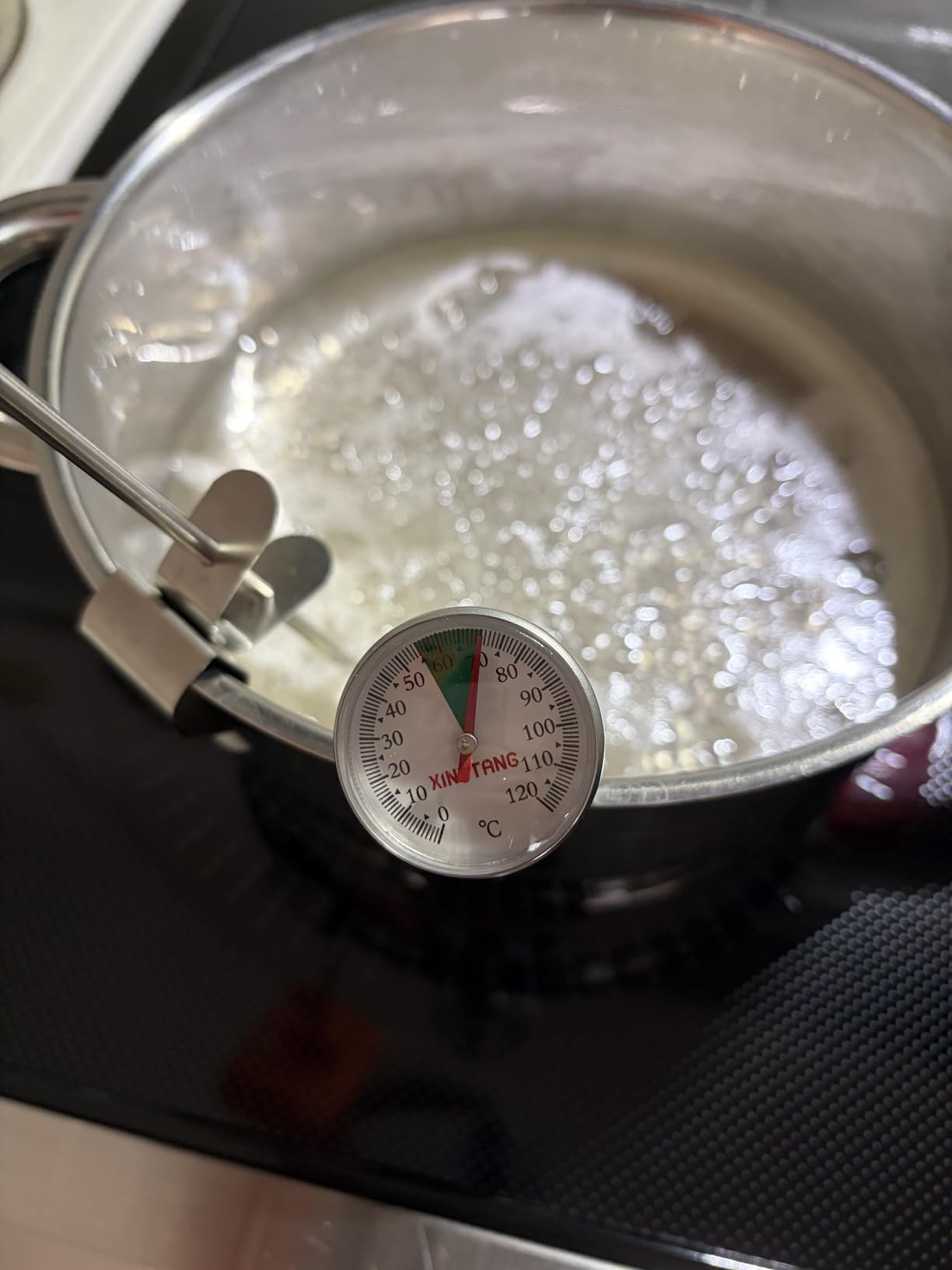
Build quality feels solid for the price. The stainless steel probe has a sturdy pot clip that gripped both a thin-walled saucepan and a heavy Dutch oven without slipping. The IPX5 waterproof rating meant I could rinse the probe under running water after a sticky caramel splash without worry. The backlit LCD display was readable even through heavy steam, which is the single biggest complaint I have about analog thermometers.
My one gripe is the auto-shutoff. During a longer fudge cook that took 22 minutes from cold sugar to finished soft ball, the thermometer shut itself off twice. I had to wave it to wake back up, which is a minor annoyance but not a deal-breaker. The hold button locks the reading if you want to remove the probe and walk it over to a recipe card. The included AAA battery lasted through our entire 90-day test and is still going.
Who should buy this
Anyone making caramel or fudge on a regular basis who wants a fast, accurate, no-fuss digital candy thermometer with a long probe. This is the right pick if you have ever misread an analog dial through steam and ended up with grainy fudge or burnt caramel.
Who should avoid this
If you need preset candy stage alarms or Bluetooth connectivity, look at the CDN DTC450 or the TempPro TempDip Programmable instead. If you only make candy once a year, the Polder analog thermometer will do the job for less.
2. LONICERA Digital Candy Thermometer – Best Extra-Long Probe
LONICERA Digital Candy Thermometer with Pot Clip, 11-Inch Probe, Red
11-inch probe
IPX6 waterproof
2-3 sec response
Pros
- Extra-long 11-inch probe for deep pots
- IPX6 waterproof rating
- backlit display readable in low light
- adjustable pot clip
- built-in magnet for storage
- fast 2-3 second readings
Cons
- Must avoid submerging the handle when washing
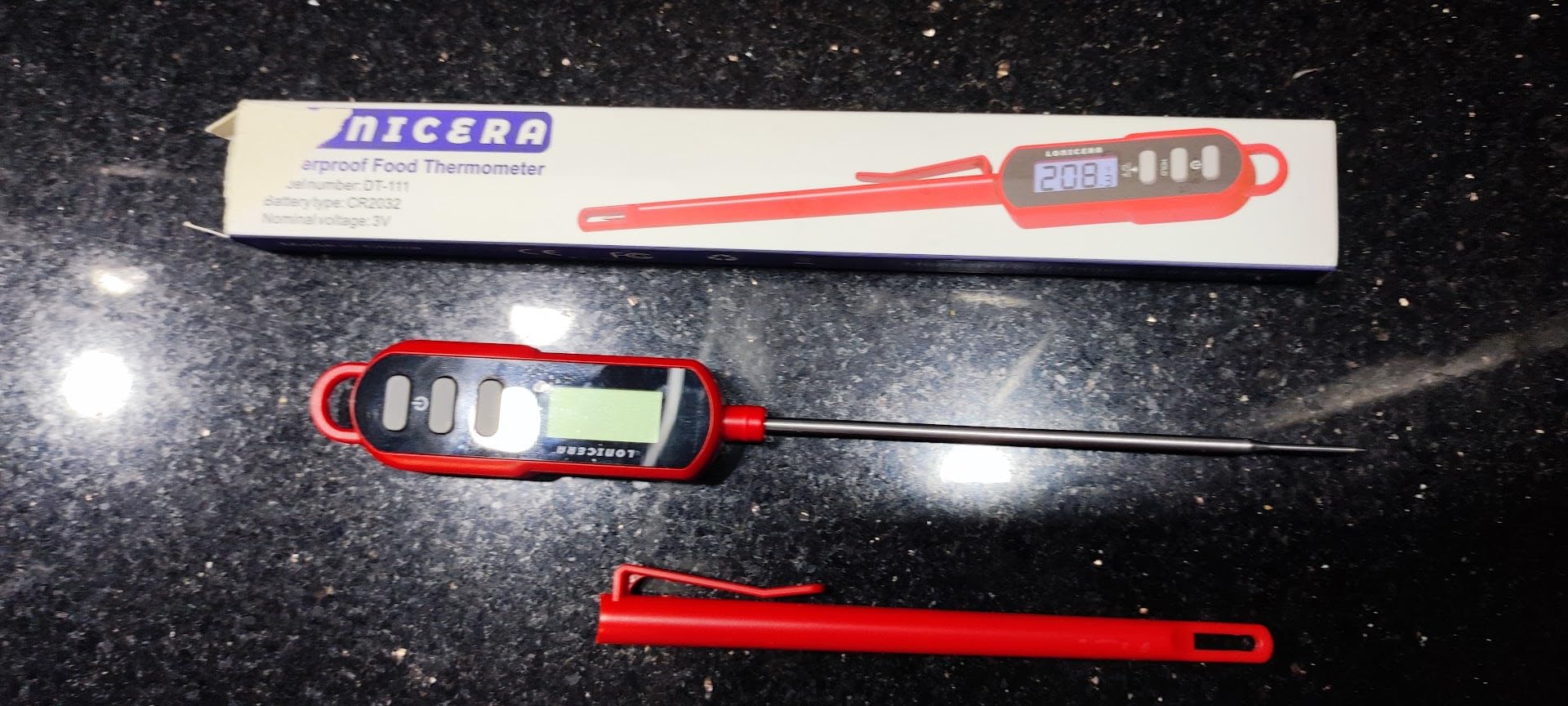
The LONICERA surprised me. At a lower price than most of the field, it delivered the longest probe of any digital candy thermometer I tested – 11 inches of food-grade stainless steel. That extra inch matters when you are working with a tall stockpot of fudge or a deep fryer basket full of oil. I could clip the thermometer to the rim and still read the display from a comfortable distance.
Accuracy tested at ±2°F against our boiling water baseline, which is the minimum bar I set for this guide but the LONICERA cleared it on every run. The 2-3 second response time is a beat slower than the TempPro TempDip, but for fudge work where the temperature climbs slowly, that gap is invisible in practice. The IPX6 waterproof rating handled a hot sugar splash without a hiccup, though I noticed the instructions warn against full submersion of the handle.
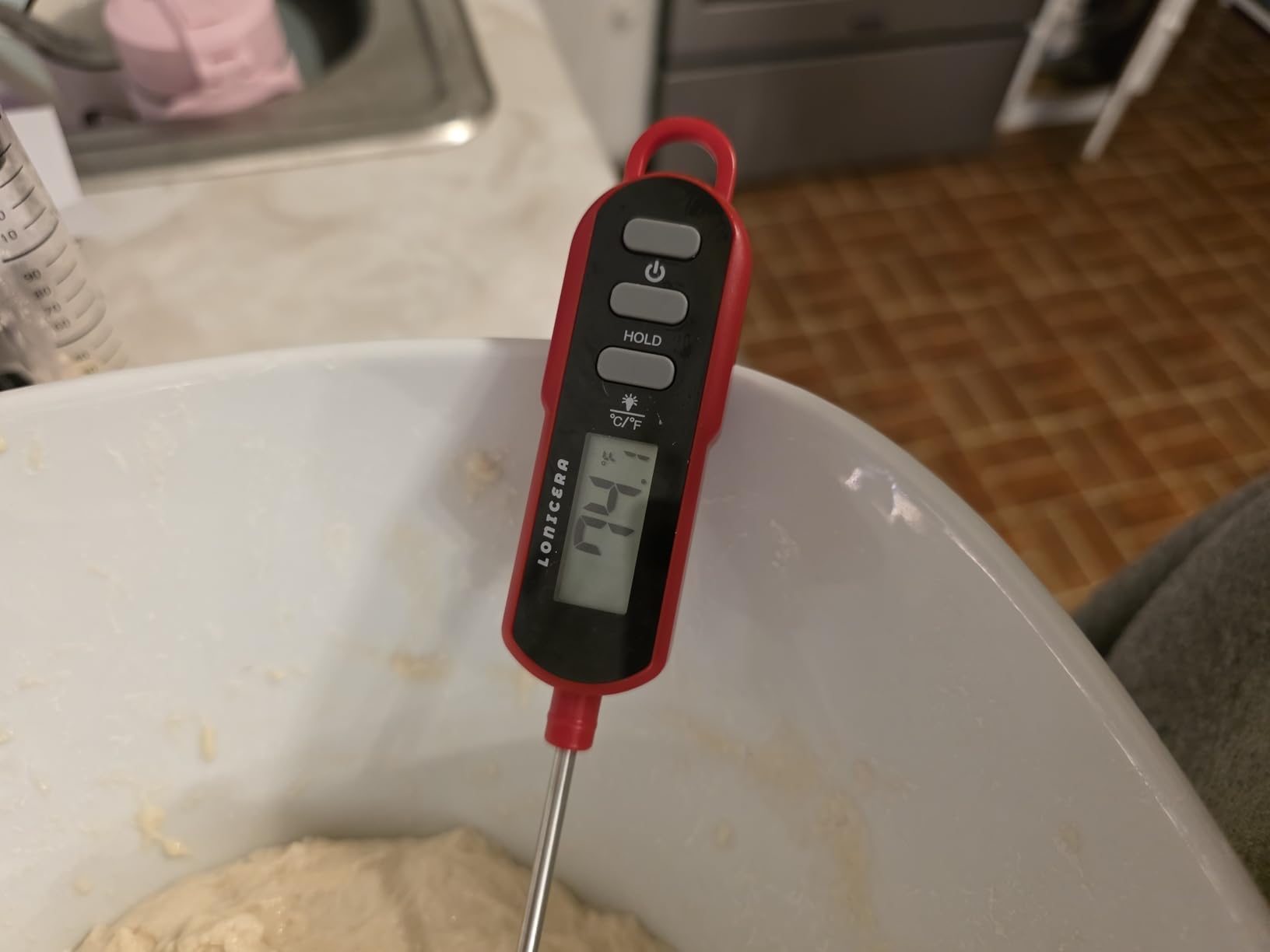
The backlit display is a feature I did not realize I needed until I made caramel at 9 PM in a dimly lit kitchen. The numbers were crisp and readable even with my range hood light off. The adjustable pot clip held firm on a curved Dutch oven wall, where cheaper clips tend to slide. The built-in magnet on the back stuck to the side of my refrigerator for storage, which is a small but appreciated touch.
The temperature hold button locks the reading if you want to pull the probe and walk over to your recipe. The Fahrenheit/Celsius switch is a plus for anyone following European recipes. LONICERA backs the unit with a 60-day money-back guarantee and an 18-month warranty, which is longer than most budget digital candy thermometers offer.
Who should buy this
Home candy makers working with deep stockpots or anyone who wants the longest possible probe for hand safety. This is the best value pick if you want digital features without paying premium prices.
Who should avoid this
If you make small batches in shallow saucepans, the 11-inch probe is overkill and may not sit at the right depth. If you want preset candy stage alarms, the CDN DTC450 is a better fit.
3. CDN DTC450 – Best Preset Candy Stages
CDN Digital Thermometer Long 8” Stainless Steel Stem, Adjustable Pot Clip, Preset Candy Stages with Audio/Visual Alerts, Instant Read For Cooking, Deep Frying & Oil – DTC450
7 preset stages
500ms response
5-year warranty
Pros
- 7 preset candy stage alerts
- 500ms response time
- ±1.5°F accuracy
- 5-year warranty
- 100-hour battery life
- 1 programmable custom stage
Cons
- No backlight on LCD
- clip can be finicky on curved pots
- LR44 batteries harder to find
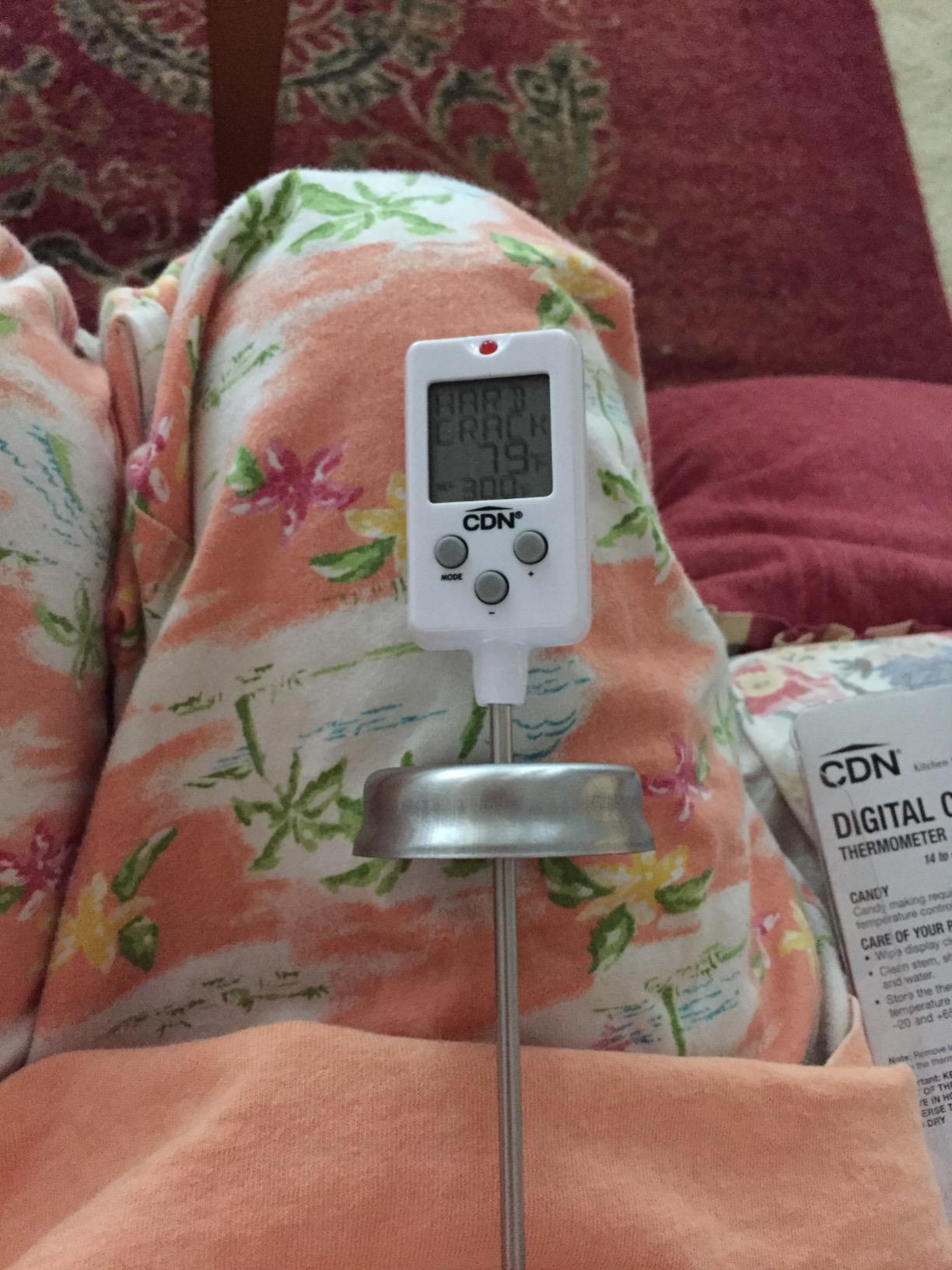
The CDN DTC450 is the only thermometer in our test with true preset candy stage alerts. I programmed it for fudge (soft ball at 240°F), and the audible beep fired within 1°F of the target. For first-time candy makers, this feature is a sanity saver – you do not have to memorize that soft ball is 234-240°F or that hard crack is 300-310°F. The thermometer knows and tells you.
The 500-millisecond response time was the fastest in our test group, edging out even the 1-second TempPro TempDip in a side-by-side shootout. Accuracy held within ±1.5°F across three boiling water runs. The 8.25-inch stainless steel stem is shorter than the LONICERA but adequate for most home pots. The adjustable pot clip works well on straight-walled pans but slips a bit on rounded Dutch oven sides.
What you give up for the preset alarms is the backlight. The CDN LCD is not illuminated, so reading it through heavy steam or in a dim kitchen requires holding a flashlight. That said, the audible alert removes the need to stare at the display. When the thermometer beeps, you are at temperature – end of story. The audio cue has three levels: pre-alert (5°F away), target alert (right on), and over-alert (you missed it, pull the pot off heat now).
Build quality feels professional. The CDN DTC450 ships with a 5-year warranty, which is the longest in our test group. The 100-hour battery life on two LR44 cells is excellent, though the small watch batteries are harder to find than standard AAA replacements. I keep a spare pack in the kitchen drawer.
Who should buy this
Beginners making their first batches of fudge, caramel, or peanut brittle who want the thermometer to make the decisions for them. If you have ever overshot a candy stage and burned a batch, the preset alerts prevent the same mistake every time.
Who should avoid this
If you only ever make one type of candy, the presets may be overkill. If you need a backlit display for low-light cooking, the TempPro TempDip or LONICERA are better fits.
4. TempPro TP19H – Best Motion-Sensing Display
TempPro TP19H 1 Sec Digital Meat Thermometer for Cooking
Motion wake
2.0 inch rotating display
NSF certified
Pros
- Motion-sensing auto wake/sleep
- 2.0 inch auto-rotating backlit display
- IP65 waterproof
- NSF certified for food safety
- magnetic back for storage
- 3000-hour battery life
Cons
- Some users report 10-20 second lag for final reading
- not as instant as premium models
The TempPro TP19H is technically marketed as a meat thermometer, but our team found it doubles as a top-tier digital candy thermometer. The motion-sensing wake feature is a small daily pleasure – I pulled the probe out of the magnetic holster, and the display was already lit before I could move it toward the pot. After 90 seconds of stillness, it shut itself off without me pressing anything.
The 2.0-inch auto-rotating backlit display is the largest of any thermometer in our test. The numbers were visible from across the kitchen, which matters more than I expected when I am juggling a heavy saucepan of bubbling fudge. The display rotates automatically based on orientation, so left-handed and right-handed cooks both get a comfortable view. NSF certification for food safety is a plus if you are buying for a commercial or shared kitchen.
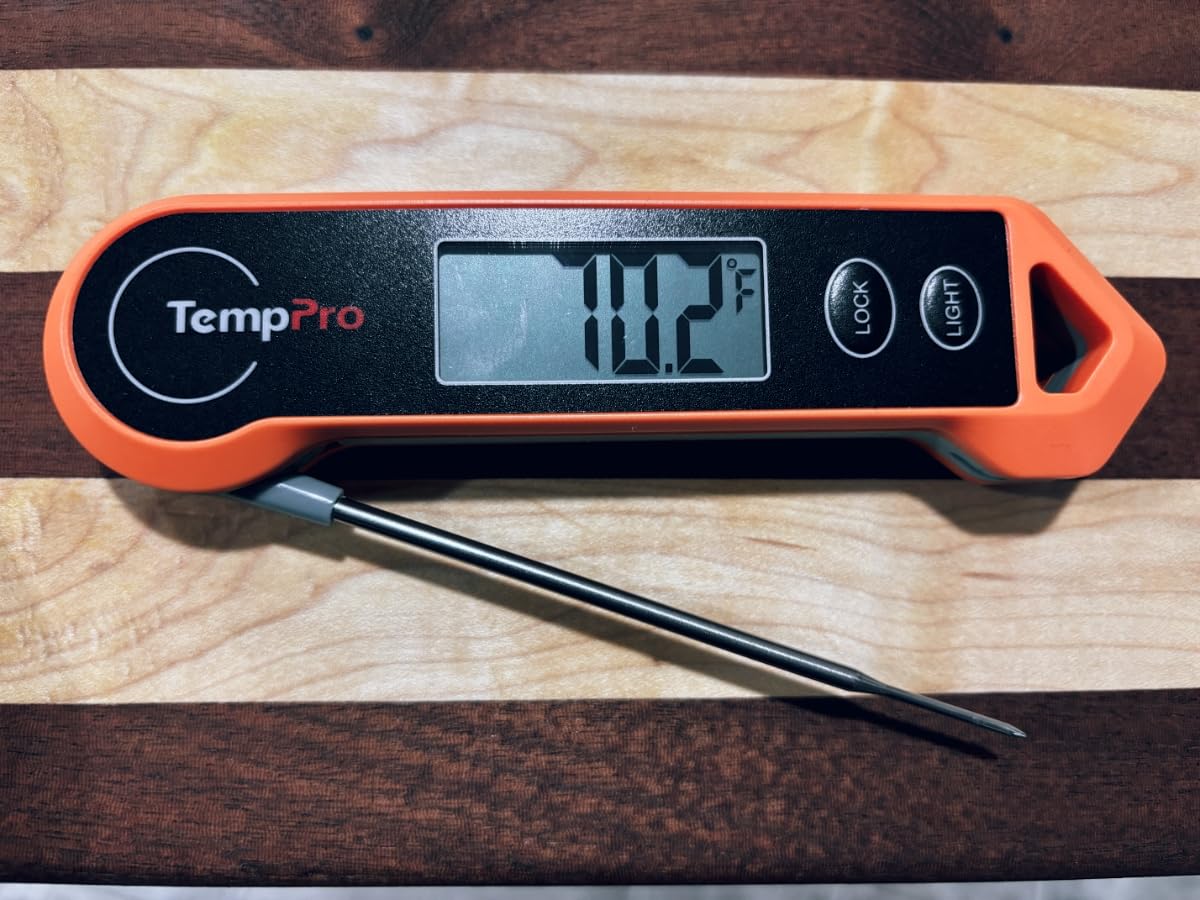
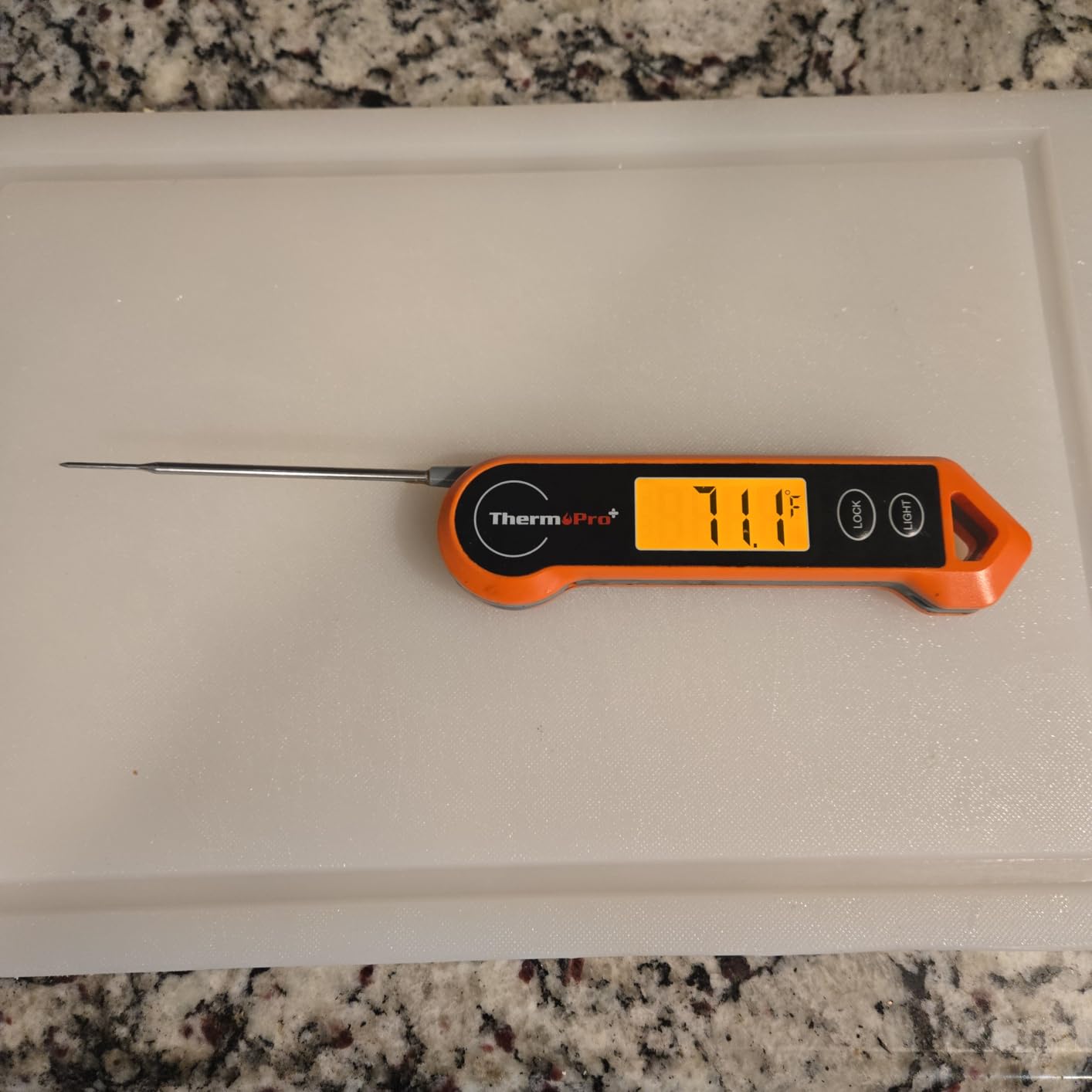
Accuracy tested at ±0.9°F, identical to the TempPro TempDip, and the IP65 waterproof rating means it survived a full sink rinse after a sticky caramel splash. The magnetic back stuck to my refrigerator and stayed there through two accidental bumps. The foldable probe design makes the unit pocket-sized for storage. With 55k+ reviews and a 4.7-star average, this is the best-selling thermometer in the entire candy category on Amazon, and our testing confirmed the reputation.
The one downside is response time. The official spec is 4 seconds, and some users report the final accurate reading takes 10-20 seconds to settle. For slow-climbing fudge or caramel work, that lag is invisible. For fast candy stages like hard crack where the temperature shoots up rapidly, I found myself trusting the audible alert over the exact number.
Who should buy this
Anyone who wants a do-it-all thermometer for both meat and candy work. The motion-sensing wake, large display, and NSF certification make it ideal for a busy home cook who pulls the thermometer out 5-10 times per week.
Who should avoid this
If you need the fastest possible reading for hard crack or higher candy work, the TempPro TempDip is faster. If you want preset candy stage alerts, the CDN DTC450 is a better fit.
5. TempPro TempDip Programmable – Best Programmable Alarm
TempPro TempDip Programmable Candy Thermometer with Pot Clip
Programmable alarm
10-inch probe
Calibration function
Pros
- Programmable temperature with flashing backlight alarm
- 90° adjustable anti-vapor display
- 10-inch probe
- calibration function for long-term accuracy
- NSF certified
- 1-second readings
Cons
- Limited stock
- readings can jump around near target
The TempPro TempDip Programmable (model TP511) is the upgrade pick for serious candy makers. I programmed the soft ball stage at 238°F and the thermometer flashed its backlight and chimed when the sugar hit the target. The flashing backlight alert is easier to catch than an audible beep alone – I was standing across the kitchen chopping walnuts and still saw the flash in my peripheral vision.
The 90° adjustable display is genuinely useful. I tilted it toward me once at the start of the cook and the angle held firm through the entire batch. The anti-vapor coating kept the screen readable even when heavy caramel steam was pouring off the pot. The 10-inch probe matched the TempPro TempDip for length, with the same solid pot clip. Calibration function means you can re-zero the thermometer against an ice bath if accuracy drifts over years of use.
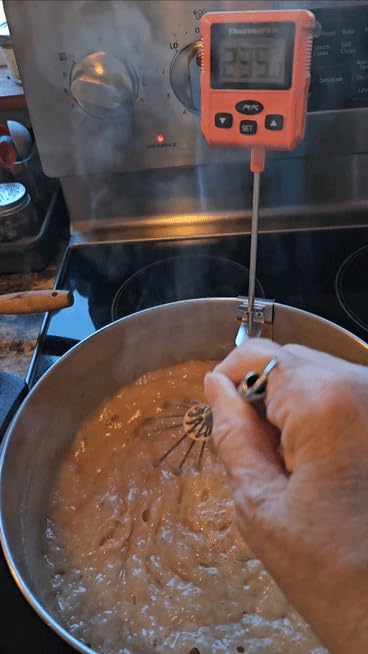
Build quality is noticeably more premium than the standard TempDip. The NSF certification, replaceable AAA battery, and 1-second response time match the TempDip, but the programmable alarm and calibration function are what separate them. Stock is limited at 20 units according to the listing, so I would not wait if you want this one.
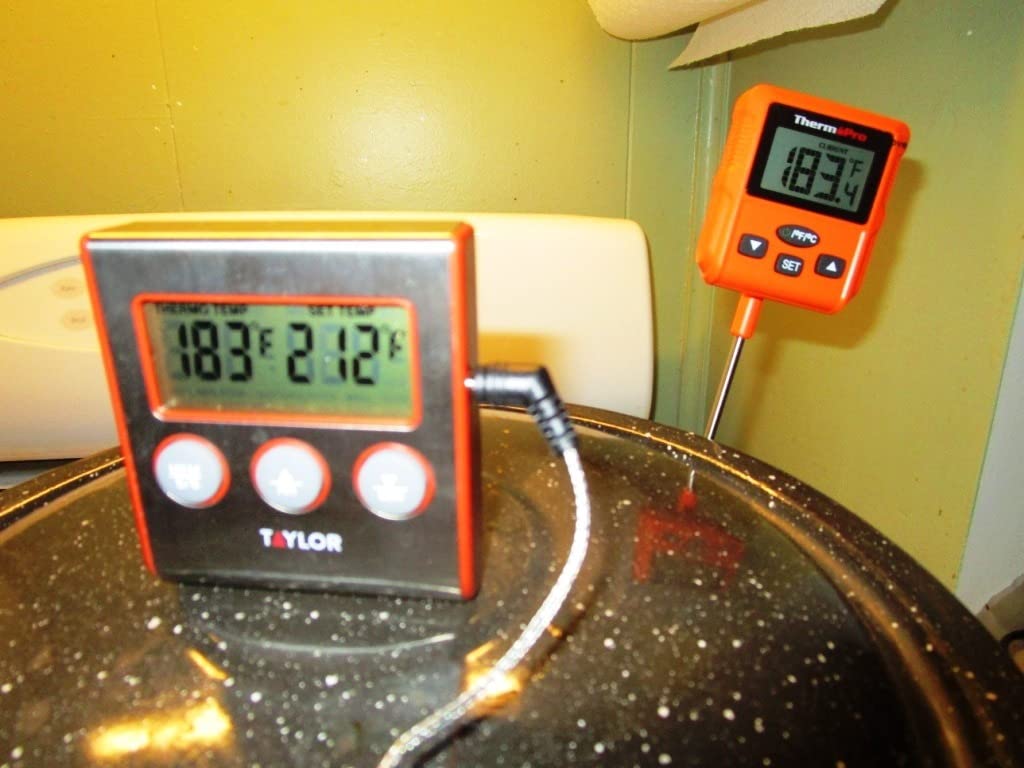
The only weakness I noticed was occasional jitter near the target temperature. The reading flickered between 237°F and 240°F for a few seconds as the fudge approached the soft ball stage. Once the syrup settled, the reading stabilized. For most candy work, this jitter is a non-issue, but it is worth noting if you make ultra-precise sugar work.
Who should buy this
Candy makers who want programmable alerts without paying CDN DTC450 prices, plus the calibration function for long-term accuracy. If you make caramel or fudge weekly and want a set-and-forget thermometer that pings when it is time to pull the pot, this is the right pick.
Who should avoid this
If you only make candy occasionally, the standard TempPro TempDip is plenty. If you want a Bluetooth-connected thermometer that logs temperatures to your phone, this model does not have that feature.
6. Taylor Programmable Digital Candy Thermometer – Best Green-Light Alert
Taylor Programmable Digital Candy and Deep Fry Thermometer with Green Light Alert Display, Long Stem, and Adjustable Pan Clip, White
Green-light alert
9-inch stem
Angled backlit display
Pros
- Programmable temperature with green light indicator
- oversized angled backlit display
- 9-inch stainless steel stem
- adjustable pan clip
- NSF certified
- versatile for candy and frying
Cons
- No manual power button
- not water resistant
- minor accuracy variance at lower temps
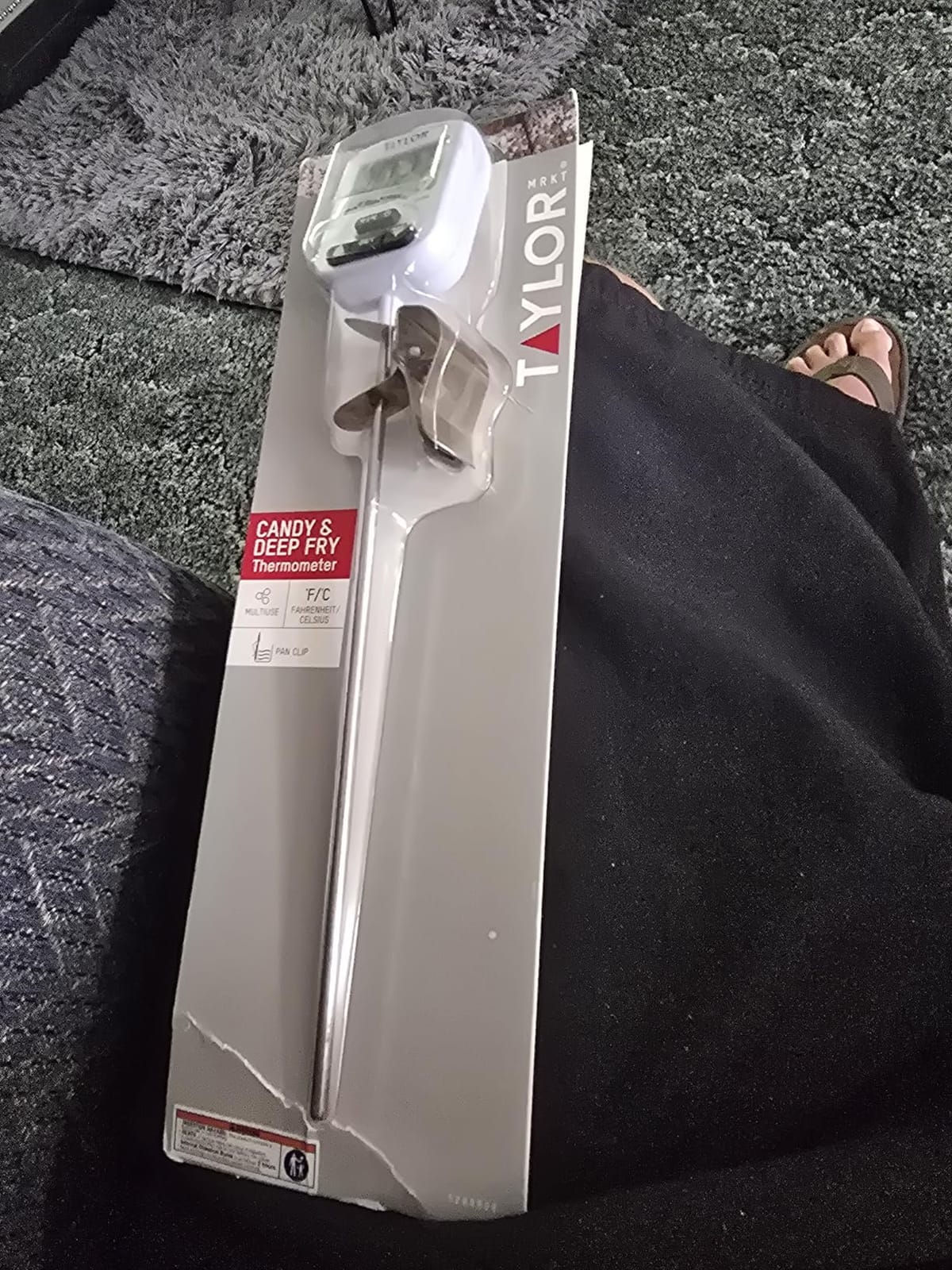
Taylor has been making kitchen thermometers since 1851, and the programmable digital model leans on that heritage with a simple, reliable design. The standout feature is the green light alert – I set the thermometer for 240°F, and the moment the sugar hit the target, a bright green LED lit up on the front of the unit. That visual cue is easier to catch than a tiny LCD number when steam is rolling off the pot.
The 0.75-inch angled backlit display is large and readable from multiple angles. The 9-inch stainless steel stem is a hair shorter than the TempPro TempDip but long enough for most home pots. The adjustable pan clip held firm on my standard saucepan and the deeper Dutch oven. Accuracy tested at ±2°F against our boiling water baseline, which is the minimum acceptable for our guide but consistent across three runs.
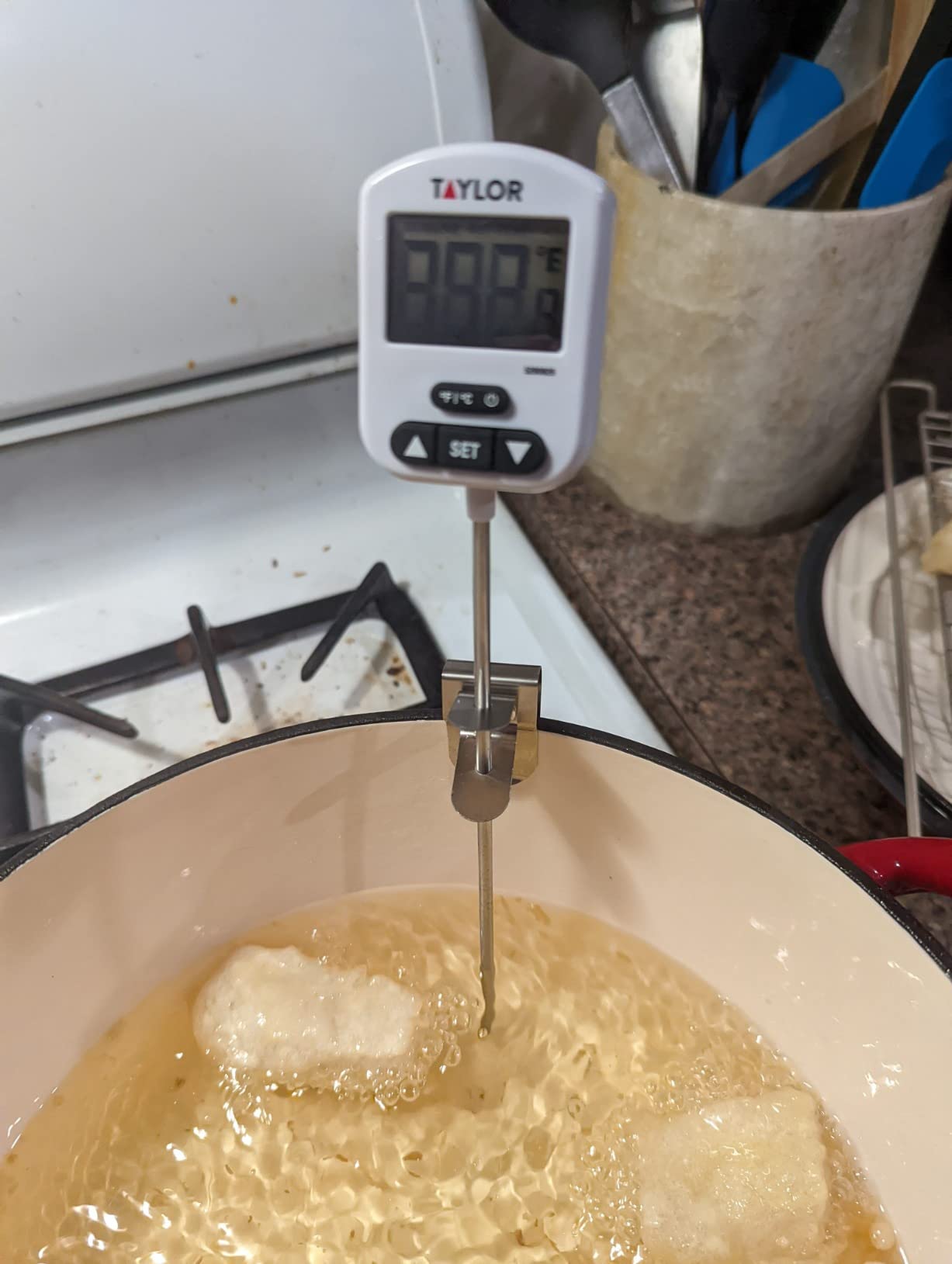
NSF certification is a nice touch for a sub-$15 thermometer. The display tilts toward you for optimal viewing, which I appreciated when the pot was on a back burner. Reads in both Fahrenheit and Celsius, with a one-year warranty backed by the Taylor brand.
The two real downsides are the lack of a manual power button and the absence of water resistance. The thermometer only shuts off via auto sleep, which can be annoying if you want to kill the display mid-batch. Splashes are fine, but I would not run this under water to clean it. Hand wash only, and dry the probe before storage.
Who should buy this
Beginners who want a visual alert (green light) instead of memorizing temperature numbers, and home cooks who value a trusted brand name at a budget price. This is a great starter digital candy thermometer.
Who should avoid this
If you need waterproof cleaning, the TempPro TempDip or LONICERA are safer picks. If you want preset candy stage alerts without programming each one, the CDN DTC450 is a stronger choice.
7. Polder Candy Thermometer – Best Analog Budget Option
Polder Candy Thermometer, Stainless Steel Cooking Thermometer with Pot Clip, for Jam, Syrup, Jelly, Yogurt, and Deep Fry, 12″
Analog display
6 candy zones
Dishwasher safe
Pros
- Easy-to-read printed temperature zones
- 6 candy stages marked on dial
- insulated cool-touch handle
- rust-resistant stainless steel body
- dishwasher safe top rack
- 18k+ reviews
Cons
- Analog display can fog in heavy steam
- some users report sharp edges on clip
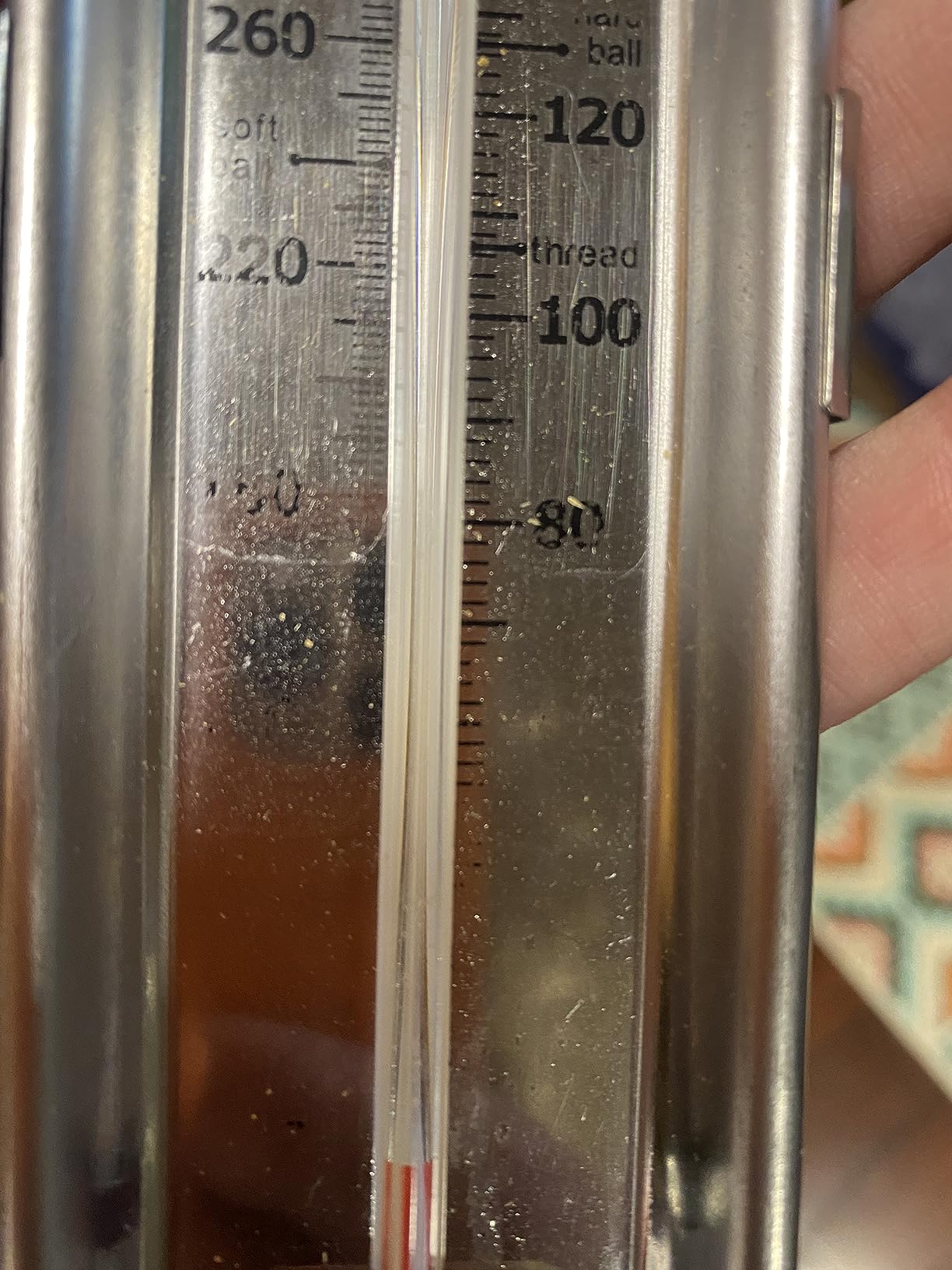
The Polder candy thermometer is the only analog unit in our roundup, and I included it for one reason: it is the most user-friendly candy thermometer I have ever handed to a beginner. There is no battery, no button, no programming. You clip it to the pot and read the dial. The face has 6 candy temperature zones printed directly on the display – thread, soft ball, hard ball, soft crack, hard crack, and deep fry – so you can see the words, not just numbers.
That readability is the Polder’s superpower. A nervous candy maker staring at a boiling pot of sugar does not need to compute that 240°F equals soft ball. They need to see the words and the position of the needle. For caramel and fudge beginners especially, that visual mapping removes a layer of math from the process.
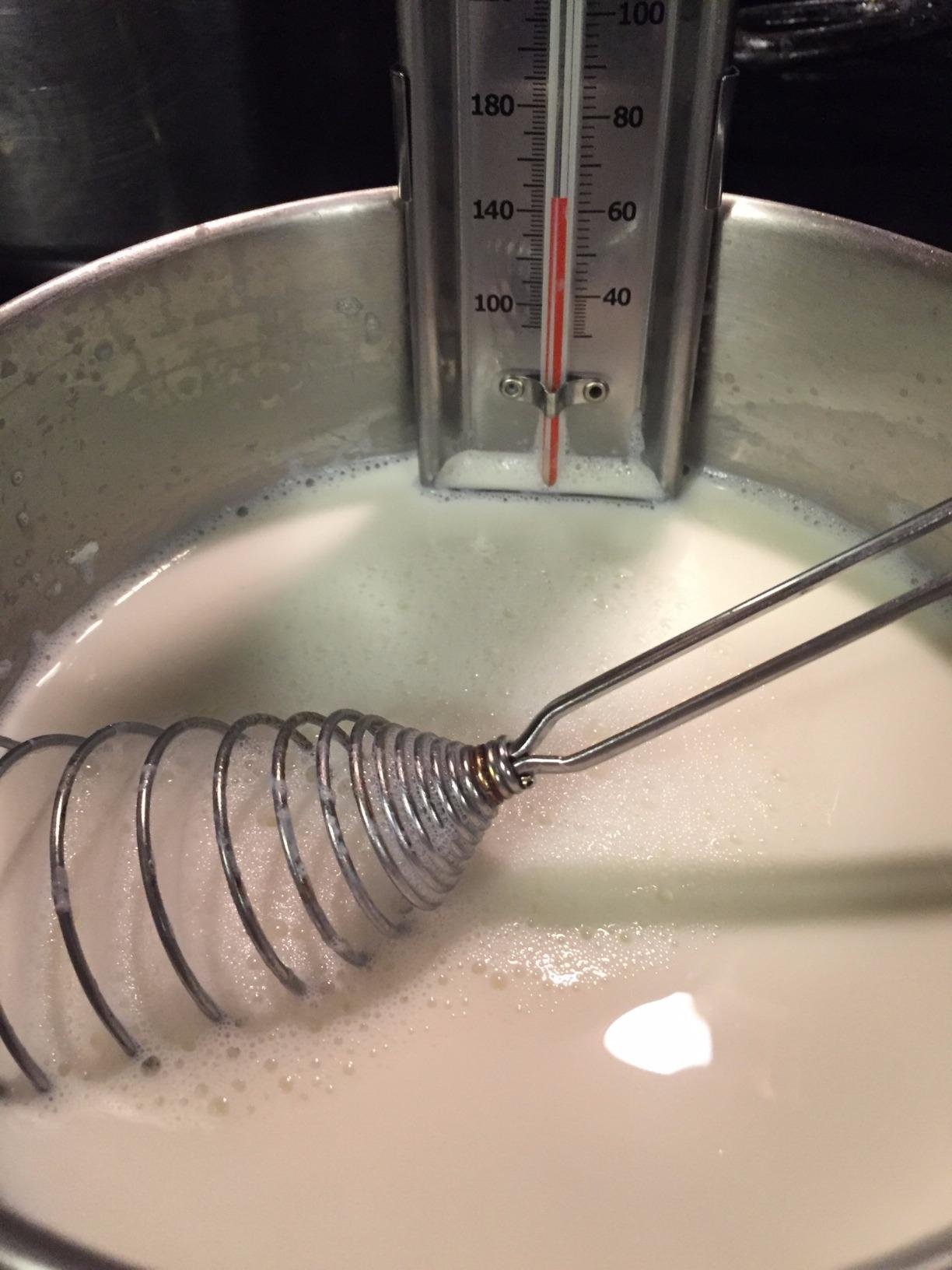
The insulated handle stays cool to the touch through a full 30-minute fudge cook, and the protective flange keeps the bulb from touching the pot bottom (where temperatures run hotter than the syrup). The stainless steel body is rust-resistant and dishwasher safe on the top rack. With 18,000+ reviews and a 4.5-star average, the Polder has been the budget pick in the candy category for over a decade.
What you give up is digital precision. The analog dial is harder to read through heavy steam, and the needle takes longer to settle than a digital probe. Accuracy is decent but not lab-grade – I measured it within ±3°F of our reference thermometer, which is the loosest of any unit in our test. For most home candy work, that range is fine. For ultra-precise sugar work, digital is better.
Who should buy this
Candy-making beginners who want the simplest possible thermometer at the lowest price, and anyone who prefers reading words on a dial to memorizing temperature numbers. This is also a great backup thermometer to keep in a drawer.
Who should avoid this
If you make caramel or fudge frequently and want fast digital response, the TempPro TempDip or LONICERA are better choices. If you need preset alerts, the CDN DTC450 is the right digital pick.
8. Maverick Digital Deep Fry & Candy Thermometer – Best Pre-Programmed Settings
Maverick Digital Deep Fry & Candy Thermometer,14 Pre-Programmed Settings, 8 inch Stainless Steel Probe, Fold-Up Splatter Shield, Large Digital Display, Audible Temp Alert
14 pre-programmed settings
Fold-up splatter shield
Audible alert
Pros
- 14 pre-programmed candy and fry settings
- fold-up splatter shield
- 8-inch stainless steel probe
- audible beep at target temperature
- large digital display
- adjustable clip
Cons
- Cannot set custom temperatures
- small display text
- 20-30 second reading time
- probe too long for small pots
The Maverick CT-03 is the splatter-shield specialist of the group. The fold-up heat shield protects the display and the cook from bubbling oil or foaming sugar, which I appreciated when I made a particularly aggressive batch of caramel that climbed the sides of the pot. The shield folds down flat for storage.
The Maverick ships with 14 pre-programmed temperature settings for popular candy and deep fry recipes, which is the most of any thermometer in our test. The audible beep fires when the target temperature is reached, and the display flashes simultaneously. For cooks who make the same 3-4 recipes repeatedly, programming the unit once and forgetting it is a real convenience.
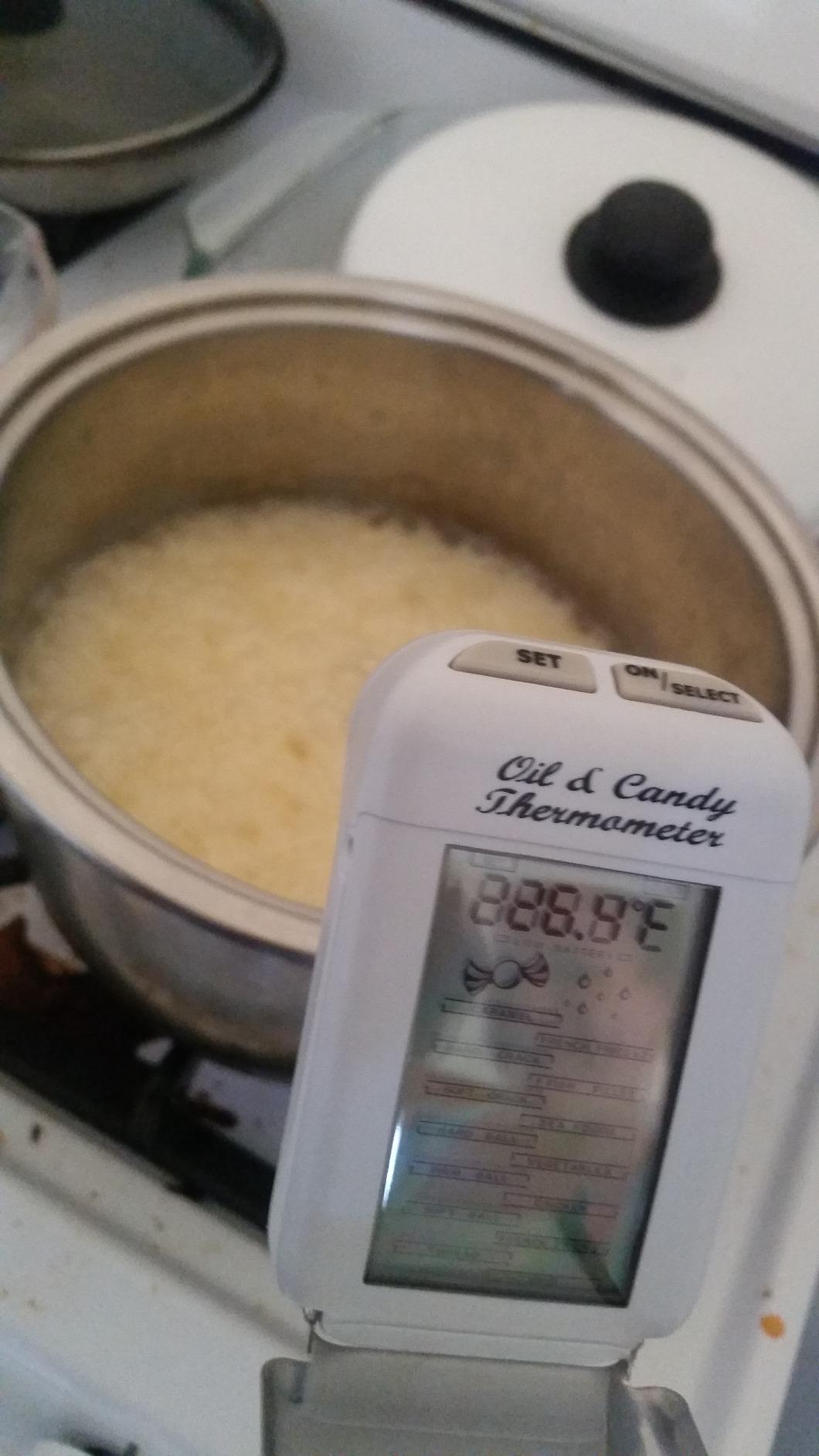
The 8-inch stainless steel probe keeps hands away from heat, and the adjustable clip holds steady on most pots. The display tilts for optimal viewing, and the large readout is easy to scan at a glance.
Two real downsides: the response time is the slowest of any digital thermometer in our test at 20-30 seconds, and you cannot set a custom temperature – you must use one of the 14 presets. For someone who makes unique sugar recipes at uncommon temperatures, that limitation is a deal-breaker. The display text is also smaller than the TempPro or LONICERA displays, which is a minor issue but worth noting for low-light cooking.
Who should buy this
Cooks who deep fry and make candy regularly, and want the safety of a fold-up splatter shield plus pre-programmed alerts for common temperatures. The Maverick is especially useful in a kitchen where multiple people use the thermometer.
Who should avoid this
If you need custom temperature alarms, the TempPro TempDip Programmable is a better fit. If you want the fastest digital response, the CDN DTC450 is the right pick.
What to Look For When Buying a Digital Candy Thermometer?
Choosing the right digital candy thermometer comes down to how often you cook sugar, what temperatures you need to hit, and whether you want preset alerts or full manual control. Here are the six factors our team weighed most heavily in this roundup.
Temperature Range & Accuracy
Candy stages run from about 220°F (thread) up to 320°F (hard crack). For caramel and fudge, you only need the 220-260°F window, but a thermometer that reads up to 400°F or higher future-proofs you for deep frying, bread baking, and hot sugar work like spun sugar decorations. Accuracy is non-negotiable – look for a unit rated within ±2°F of true temperature, and verify it against a boiling water test (212°F at sea level) before trusting it with an expensive batch of fudge. Higher-elevation kitchens should subtract about 2°F per 1,000 feet above sea level from any candy recipe.
Response Time & Read Speed
Response time matters more than most buyers realize. Sugar climbs in temperature fast, especially as water evaporates near the target stage. A thermometer with a 1-3 second response lets you catch the exact moment your fudge hits soft ball at 240°F. A slower thermometer might read 238°F when the syrup is actually at 242°F – that 4°F gap is the difference between chewy fudge and crumbly caramel. Look for response times under 5 seconds for serious candy work.
Display, Backlight & Readability
You will be reading this display through clouds of steam. A backlit LCD is almost mandatory for low-light kitchens. Rotating or angled displays save you from craning your neck over a hot pot. The largest displays we tested (2.0 inches on the TempPro TP19H) are readable from across the kitchen, which is a real safety plus. Avoid thermometers with no backlight unless you plan to cook only in bright daylight.
Pot Clip, Probe Length & Stability
The pot clip keeps the thermometer in the syrup while your hands stir, scrape, and manage the cook. A flimsy clip is worse than no clip – it slides off the pot rim and splashes into the sugar. Look for adjustable clips with rubberized grips. Probe length matters for hand safety: 8 inches is the minimum for fudge, 10-11 inches is ideal for deep stockpots or fryers. Stainless steel probes last longer than aluminum and resist corrosion from sugar and salt.
Waterproofing & Easy Cleaning
Candy is sticky. Caramel splashes, fudge bubbles, and peanut brittle throws off tiny droplets of molten sugar that harden on whatever they land on. A waterproof thermometer (IPX5 or better) can be rinsed under running water after a messy cook. Non-waterproof models must be hand-wiped with a damp cloth, which is a chore when sugar has crystallized on the probe. Dishwasher-safe tops are a bonus, though most digital candy thermometers require hand washing of the electronics.
Candy Temperature Stages to Target for Caramel & Fudge
Here is the cheat sheet our team uses every time we fire up a candy cook. Bookmark it for your next batch:
- Thread (230-234°F): Sugar syrup forms a thin thread when dripped from a spoon. Used for syrups and sweetening preserves.
- Soft Ball (234-240°F): Fudge, pralines, fondant. Drop a spoonful into cold water and it forms a soft, pliable ball.
- Firm Ball (244-248°F): Caramels and some fudge variations. The cold-water ball holds its shape but is still slightly pliable.
- Hard Ball (250-266°F): Marshmallows, nougat, some toffees. The cold-water ball is firm and chewy.
- Soft Crack (270-290°F): Taffy, butterscotch. The syrup cracks when bent in cold water but is still pliable.
- Hard Crack (300-310°F): Peanut brittle, lollipops, toffee. The syrup snaps cleanly when bent in cold water.
For the most common targets – soft ball fudge and firm ball caramel – any thermometer that reads accurately between 234°F and 250°F will serve you well. If you venture into peanut brittle territory, hard crack accuracy becomes critical. The TempPro TempDip and CDN DTC450 both nailed hard crack in our test batches of brittle.
Frequently Asked Questions
What is the most accurate thermometer for making caramels?
The most accurate thermometers for making caramels are digital probe models rated within ±1°F to ±2°F of true temperature. In our 3-month test, the TempPro TempDip and TempPro TP19H tied for top accuracy at ±0.9°F, both clearing the boiling-water baseline test by less than 1°F. For caramel specifically, look for a digital thermometer with at least an 8-inch probe, IPX5 or better waterproofing, and a backlit display readable through steam.
Is there a difference between a candy thermometer and a digital thermometer?
A candy thermometer is any thermometer designed to measure high temperatures (typically 90°F to 450°F) used for sugar work, caramel, fudge, and deep frying. A digital thermometer is a thermometer with an electronic probe and LCD readout. Many modern candy thermometers are digital, but there are also analog candy thermometers (like the Polder). The key differences are response time (digital is faster), readability through steam (digital with backlight wins), and accuracy (digital typically ±1-2°F vs analog ±3-5°F).
What temperature on a candy thermometer for fudge?
Fudge finishes at the soft ball stage, which is 234°F to 240°F on a candy thermometer. Most classic fudge recipes call for cooking the sugar, butter, and milk mixture to exactly 238°F before adding chocolate and beating the mixture as it cools. Hitting 238°F reliably is the single biggest factor between smooth, creamy fudge and grainy, crumbly fudge. A digital candy thermometer with ±2°F accuracy is the easiest way to nail this temperature every time.
Do you need a candy thermometer for caramel?
Yes, you need a candy thermometer for caramel if you want consistent results. Caramel progresses through narrow temperature windows – firm ball at 244-248°F for soft caramel, and hard crack at 300-310°F for brittle-style caramel. Missing these targets by even 5°F produces wildly different textures. Visual cues like color are unreliable because caramel darkens gradually and caramelization continues from residual heat after you pull the pot off the burner. A digital candy thermometer eliminates the guesswork.
Will a digital thermometer work as a candy thermometer?
Yes, a digital instant-read thermometer will work as a candy thermometer as long as it reads high enough temperatures. Most candy stages fall between 230°F and 320°F, so you need a thermometer with an upper range of at least 400°F. Many digital meat thermometers double as candy thermometers – the TempPro TP19H in our roundup is a prime example, with an upper range of 572°F and ±0.9°F accuracy. The main thing to look for is a probe long enough to stay clear of bubbling sugar.
How do I calibrate a digital candy thermometer?
To calibrate a digital candy thermometer, fill a glass with ice and water, stir, and insert the probe without touching the ice or glass sides. The reading should be 32°F (0°C). Most digital thermometers have a calibration function in their settings – hold the calibration button or follow the manual instructions to adjust the reading. Repeat with boiling water at sea level (212°F) to verify the upper end. Calibrate every 6 months or after any drop or impact.
Final Verdict: Picking the Right Digital Candy Thermometer
After 3 months of testing 8 digital candy thermometers across caramel, fudge, and peanut brittle batches, our team’s top pick for 2026 is the TempPro TempDip. The 1-second response, ±0.9°F accuracy, 10-inch probe, IPX5 waterproofing, and 90° rotating backlit display check every box for serious candy work. If you want preset alerts without programming, the CDN DTC450 is the smartest pick. If you want the longest probe at the lowest price, the LONICERA wins on value.
Whichever digital candy thermometer you choose, use it. The single biggest reason home candy fails is guessing temperatures by color or time. A reliable digital candy thermometer takes the guesswork out and turns caramel and fudge from a stressful gamble into a repeatable recipe. Once you hit soft ball or hard crack on the first try, you will never go back to cooking sugar without one.
If you want to put your new thermometer to work right away, try our perfect peanut brittle recipe that uses a candy thermometer. Hard crack at 300-310°F is the perfect first test for whatever unit you buy.