
Japanese siphon coffee makers turn a routine morning cup into a small piece of theater: water climbs a glass tube, coffee blooms in a bubbling upper chamber, then the finished brew drops back down like something out of a chemistry lab. The payoff is not just the show. Vacuum brewing holds grounds at a stable, near-boiling temperature and pulls the coffee through a cloth filter, which gives you the clarity of pour over with the body of full immersion.
I looked at the siphon brewers people actually buy and keep using, from entry-level starter kits to the flagship Hario showpiece, and narrowed the field to eight. Every pick below is built from heat resistant borosilicate glass, uses a genuine vacuum brewing cycle, and has enough verified owner feedback to know how it holds up after a year on the counter. There is a sensible option at every budget, whether you are testing the method for the first time or upgrading a Sunday ritual.
Table of Contents
- Key Takeaways
- Japanese Siphon Coffee Makers at a Glance
- 1. Hario “Technica” 600ml Coffee Syphon — Editor’s Choice
- 2. Yama Glass 8-Cup Stovetop Siphon — Best for Entertaining
- 3. Hario “Next” NXA-5 Coffee Syphon — Best Premium Pick
- 4. Yama Glass 5-Cup Tabletop Siphon — Best Tabletop Showpiece
- 5. Hario 3-Cup Coffee Siphon (Moca MCA-3) — Best Compact Japanese Siphon
- 6. YUCHENGTECH 3-Cup Syphon Coffee Maker — Best Budget Buy
- 7. Amarine Made TCA-5 Siphon Coffee Maker — Best Complete Starter Kit
- 8. moo-1 Japanese Style Vacuum Siphon Pot — Best for Coffee and Tea
- How Does a Japanese Siphon Coffee Maker Work?
- How to Choose a Japanese Siphon Coffee Maker?
- How to Brew Siphon Coffee Step by Step?
- Cleaning and Caring for Your Siphon Brewer
- Siphon Coffee vs Pour Over, French Press and Cold Brew
- Common Siphon Brewing Mistakes to Avoid
- Frequently Asked Questions
- Who makes the best siphon coffee maker?
- What is the best Japanese coffee maker?
- Is Japanese siphon coffee good?
- What is the Rolls Royce of coffee machines?
- Is a siphon coffee maker worth it for beginners?
- Can you use a siphon coffee maker on an induction cooktop?
- How long does siphon coffee take to brew?
- Do I need a butane burner instead of the alcohol burner?
- Final Verdict: Which Japanese Siphon Coffee Maker Should You Buy?
Key Takeaways
- Best overall: the Hario “Technica” 600ml is the reference-standard Japanese siphon coffee maker, with thick borosilicate glass, a stainless filter assembly, and a 4.7-star average from more than 1,300 owners.
- Best value: the YUCHENGTECH 3-cup and Amarine Made TCA-5 are the two most affordable picks here and brew the same way as models costing several times more.
- Skip the included alcohol burner. Owners of nearly every model in this guide recommend a butane burner or preheated kettle water to cut brew time from 15 minutes to about 5.
- “Cups” are Japanese cups. A 5-cup siphon holds roughly 20 ounces, which is two American mugs, not five.
- Expect 8 to 12 minutes from cold start to poured cup, and treat the glass gently to avoid thermal shock.
Japanese Siphon Coffee Makers at a Glance
Here is how the eight best Japanese siphon coffee makers compare on capacity, heat source, and owner ratings before we get into the individual reviews.
| Product | Specs | Action |
|---|---|---|
 Hario Technica 600ml Coffee Syphon Hario Technica 600ml Coffee Syphon |
|
Check Price |
 Yama Glass 8-Cup Stovetop Siphon Coffee Maker Yama Glass 8-Cup Stovetop Siphon Coffee Maker |
|
Check Price |
 Hario Next NXA-5 Coffee Syphon 600ml Hario Next NXA-5 Coffee Syphon 600ml |
|
Check Price |
 Yama Glass 5-Cup Tabletop Siphon Yama Glass 5-Cup Tabletop Siphon |
|
Check Price |
 Hario 3-Cup Coffee Siphon Moca MCA-3 Hario 3-Cup Coffee Siphon Moca MCA-3 |
|
Check Price |
 YUCHENGTECH Syphon Coffee Maker 3 Cups YUCHENGTECH Syphon Coffee Maker 3 Cups |
|
Check Price |
 Amarine Made Siphon Coffee Maker TCA-5 Amarine Made Siphon Coffee Maker TCA-5 |
|
Check Price |
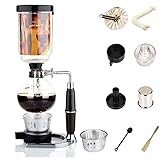 moo-1 Japanese Style Vacuum Glass Siphon Pot moo-1 Japanese Style Vacuum Glass Siphon Pot |
|
Check Price |
Hario Technica 600ml Coffee…
- Thick borosilicate glass bowls
- Stainless steel stand and filter
- Smooth low-acidity brew
- 5-cup 600ml capacity
Yama Glass 8-Cup Stovetop…
- Works on any stovetop including induction
- Reusable cloth filter
- Stable flat base
- 24 oz 8-cup capacity
Hario Next NXA-5 Coffee…
- Heaviest most solid build
- Silicone-covered stand handle
- Consistent repeatable brews
- 5-cup 600ml capacity
1. Hario “Technica” 600ml Coffee Syphon — Editor’s Choice
Hario Technica 600ml Coffee Syphon
5-cup 600ml capacity
Borosilicate glass upper and lower bowls
Stainless steel stand and filter
14 x 6.2 x 4.3 inches
1.5 lbs
Imported from Japan
Pros
- Thick borosilicate glass construction
- Smooth mellow low-acidity coffee
- Fits on the counter under cabinets
- Engaging brewing process
Cons
- Fragile glass requires careful handling
- Included alcohol burner is slow
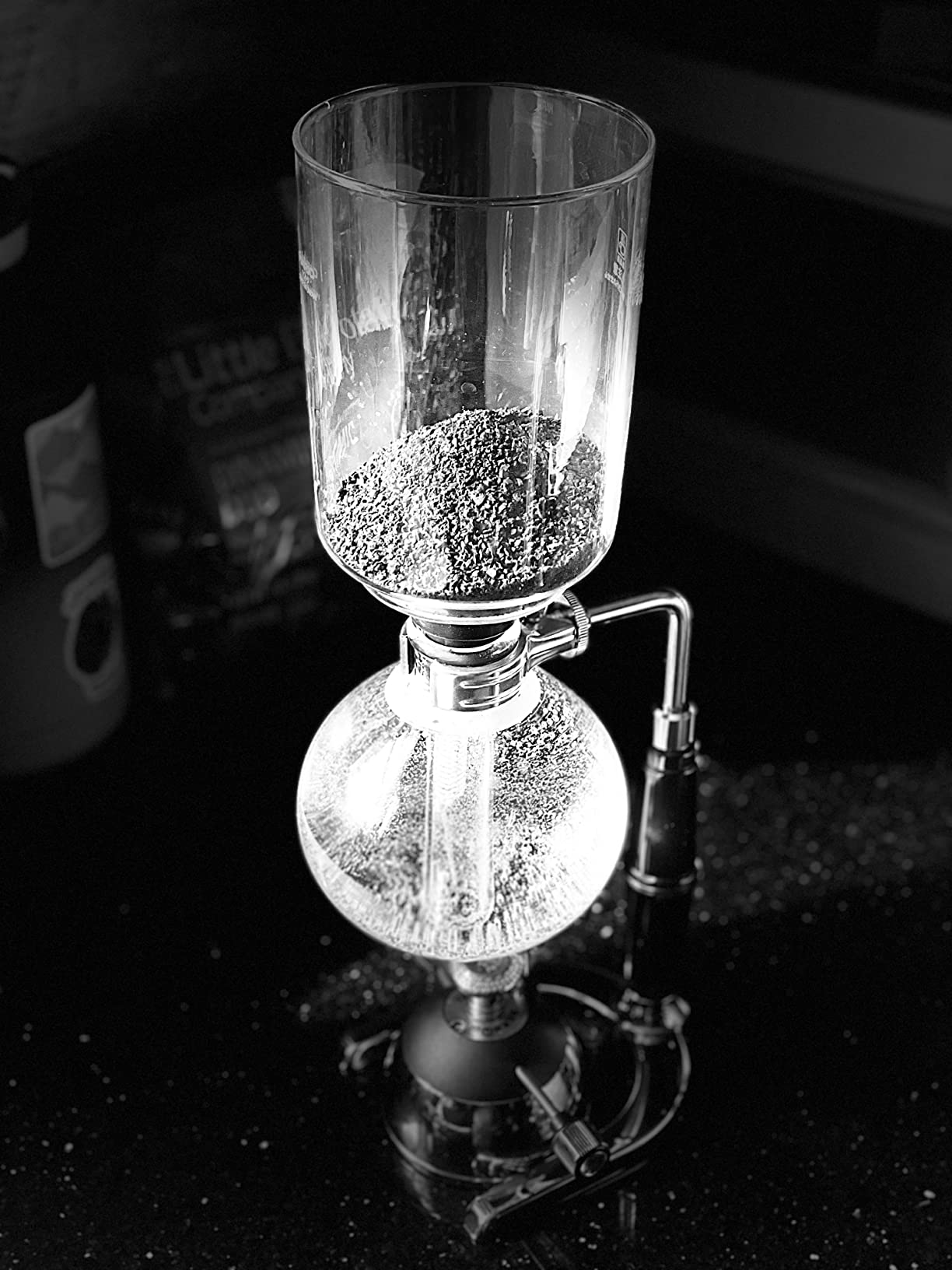
If you buy one siphon brewer and never think about it again, make it the Hario Technica. Hario has been blowing heat resistant glass in Japan since 1921, and the Technica is the model that turned vacuum brewing into a household object rather than a café curiosity. The upper bowl, lower bowl, and burner are all borosilicate glass; the stand, burner cover, and filter assembly are stainless steel; the fasteners are brass and the windbreak is aluminum. It is imported from Japan, and the fit and finish shows it.
Key specs: 5-cup (600 ml) capacity · 14″ H x 6.2″ W x 4.3″ L · 1.5 lbs · borosilicate glass and stainless steel · model TCA-5 “Technica” · manual operation
Why It Made the List
Two things separate the Technica from cheaper lookalikes. First, the glass is genuinely thick — owners who have handled both describe the difference immediately when they pick it up. Second, the stainless filter assembly seats cleanly and the spring hook holds its tension, which is where budget siphons usually fail after a few months. At 14 inches tall it still fits under standard upper cabinets, so it can live on the counter instead of in a box.
What Owners Say
Across 1,387 reviews the Technica averages 4.7 stars. The recurring praise is for the coffee itself: smooth, mellow, and noticeably low in acidity compared with drip. The recurring complaint is the included alcohol burner, which takes roughly 10 to 15 minutes to bring the lower bowl to a boil. Swap in a butane burner, or start with kettle-hot water, and first-cup time drops to about five minutes. Several owners also note the knurled knob on the filter assembly could grip better with wet fingers.
Pros
- Beautiful Victorian-era lab equipment look
- Makes excellent, smooth, mellow coffee with low acidity
- Fun and engaging brewing process
- Quality construction with thick borosilicate glass
- Compact size fits on the counter under cabinets
Cons
- Fragile glass construction requires careful handling
- Knurled knob on the filter assembly could be improved
- Yields barely two American-sized cups
- About 10-15 minutes for the first cup on the stock burner
- Included alcohol burner is slow; a butane burner is recommended
Best for: anyone who wants the definitive Japanese siphon coffee maker experience and plans to brew several times a week.
2. Yama Glass 8-Cup Stovetop Siphon — Best for Entertaining
Yama Glass 8-Cup Stovetop Siphon Coffee Maker
8-cup 24 oz capacity
Heat-resistant borosilicate glass
7 x 7 x 12 inches
2.4 lbs
Reusable cloth filter and measuring spoon
Model SY-8
Pros
- Works on any stovetop including induction
- Stable flat base
- Reusable cloth filter with no paper waste
- Largest capacity in this guide
Cons
- Seals can develop vacuum leaks over years
- Replacement seals are hard to find
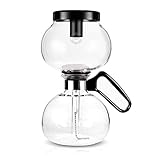
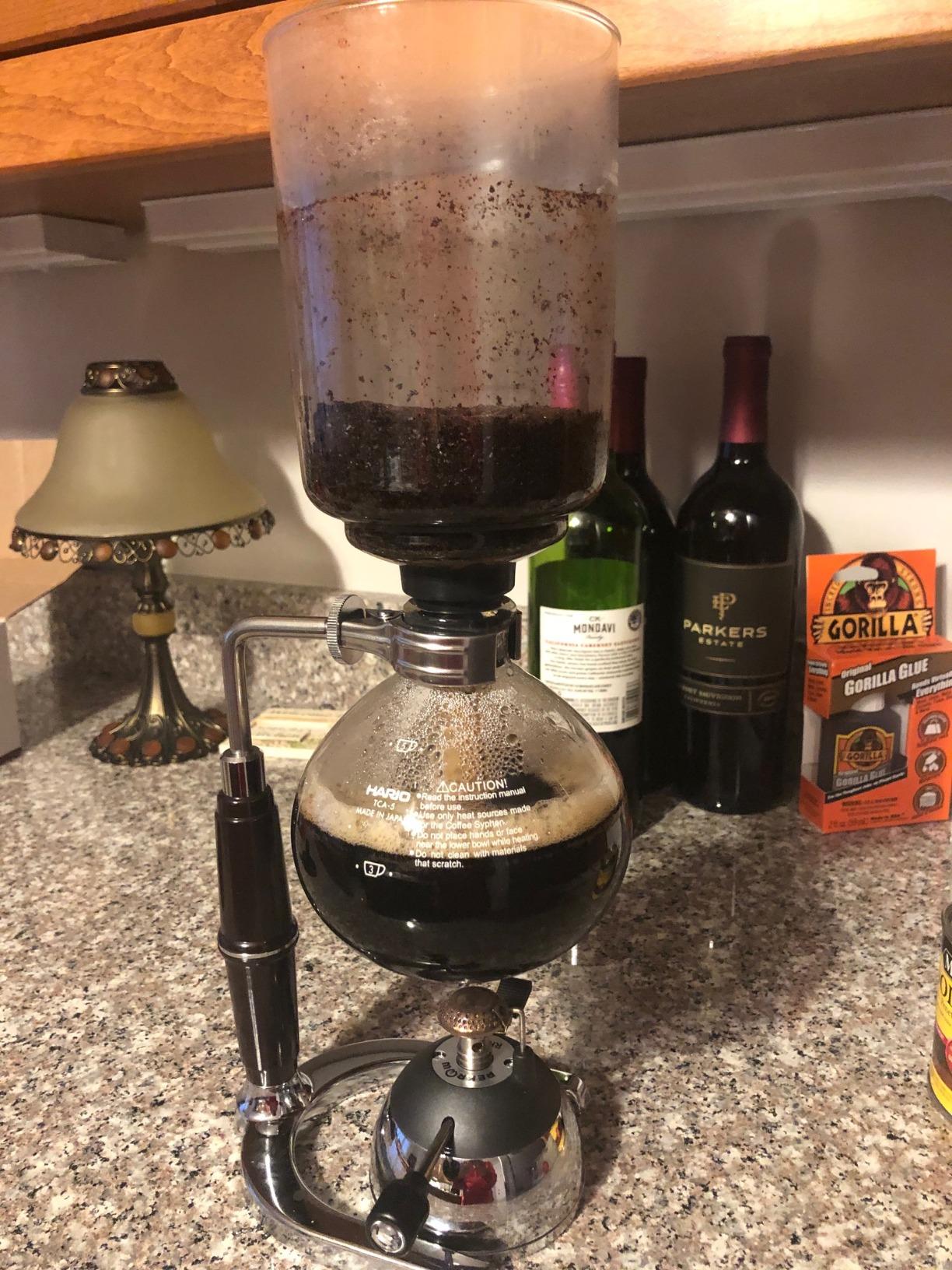
Most siphons force you to babysit a flame. The Yama Glass SY-8 removes that variable entirely: the lower chamber has a flat base designed to sit right on your cooktop, so gas, electric coil, glass-top, and induction all work. At 24 ounces it is the largest brewer here, which makes it the obvious choice when you are pouring for three or four people rather than yourself.
Key specs: 8-cup (24 oz) capacity · 7″ D x 7″ W x 12″ H · 2.4 lbs · heat resistant borosilicate glass · reusable cloth filter and measuring spoon included · model SY-8
Why It Made the List
Removing the alcohol burner from the equation solves the single biggest frustration with siphon brewing. You get precise, adjustable heat you already know how to control, and the water reaches temperature in a couple of minutes instead of ten. The included cloth filter means no paper waste and a rounder, heavier body in the cup, and the wide flat base makes the whole assembly far more stable on a counter than the tripod-stand designs.
What Owners Say
With 1,067 reviews at 4.5 stars, owners consistently rate the coffee above both drip and French press, describing it as cleaner without losing richness. The most common long-term issue is the seals: after several years of heavy use the vacuum can start to leak, and replacement gaskets are not easy to source. The upper chamber’s stem tube also needs a gentle hand during washing.
Pros
- Works on any stovetop including electric and induction
- Makes superior coffee compared with drip and French press
- Flat base is stable and easy to handle on the counter
- No paper waste thanks to the reusable cloth filter
- Brews at the ideal temperature automatically
Cons
- Seals may develop vacuum leaks after years of heavy use
- Replacement seals are hard to find
- Glass still requires careful handling
- Full brewing process takes 8-10 minutes
- Cleaning the upper chamber requires care around the stem tube
Best for: weekend brunches, brewing for a table, and anyone who would rather use a stove than manage an open flame.
3. Hario “Next” NXA-5 Coffee Syphon — Best Premium Pick
Hario Next NXA-5 Coffee Syphon 600ml
5-cup 600ml capacity
Borosilicate glass and stainless steel
Silicone-covered stand handle
15 x 7 x 4.5 inches
3.1 lbs
Imported from Japan
Pros
- Heaviest and most solid build here
- Consistently repeatable brews
- Silicone handle stays cool
- Striking display piece
Cons
- Highest price in this lineup
- Stock alcohol burner needs upgrading
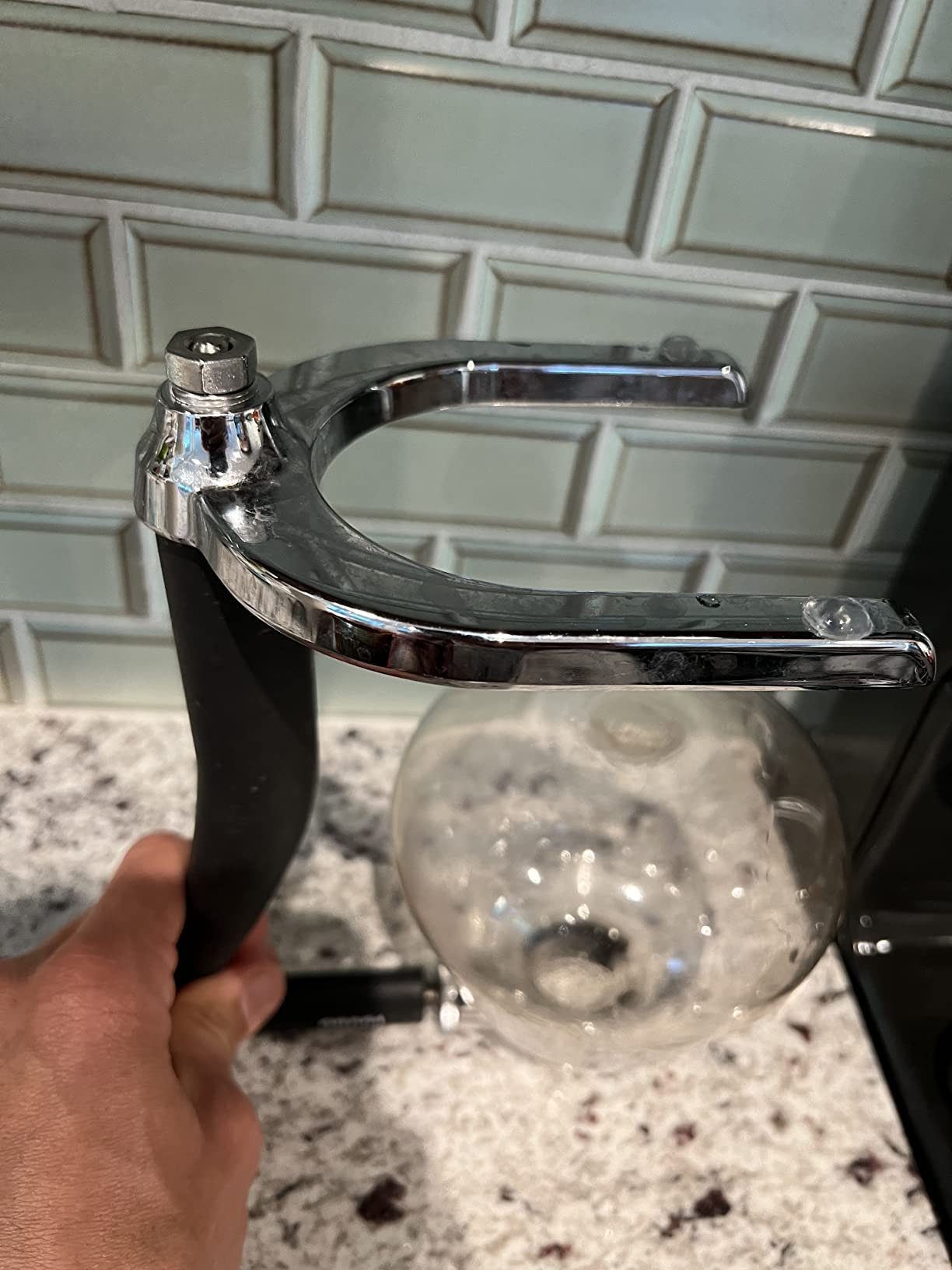
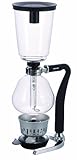
The “Next” is Hario’s design-forward siphon: same borosilicate bowls and stainless filter, but wrapped in a heavier, more sculptural stand with a silicone cover on the handle so you are not gripping hot metal. At 3.1 pounds it feels substantially more solid than the Technica, and it is the model most likely to draw a question from a guest before you have even lit the burner.
Key specs: 5-cup (600 ml) capacity · 15″ H x 7″ W x 4.5″ L · 3.1 lbs · borosilicate glass and stainless steel · silicone handle cover · brass fasteners, aluminum windbreak · model NXA-5
Why It Made the List
Owners rate it 4.7 stars across 549 reviews, matching the Technica’s score at a higher price, and the reason is consistency. The thicker glass and heavier stand make the brew cycle more repeatable — less wobble, fewer temperature swings, and a filter that stays seated. If you already know you like siphon coffee and want the version you will still be using in ten years, this is it.
What Owners Say
Reviewers describe it as an excellent way to brew great coffee consistently, praising the thick glass and the display-piece looks. The criticism is blunt and universal: the included alcohol burner is widely called worthless, and buyers recommend budgeting for a butane burner alongside it. It also costs meaningfully more than the rest of this lineup, and like every siphon it takes longer than pressing a button.
Pros
- Excellent method for brewing great coffee consistently
- Well made with thick glass and a substantial stand
- Beautiful appearance that looks great on display
- Genuinely fun to watch and use
- Great conversation starter for guests
Cons
- Included alcohol burner is widely criticized; budget for butane
- Slower than automatic brewing methods
- Glass containers require careful handling
- Cleaning takes care to avoid breakage
- Highest price point in this guide
Best for: committed enthusiasts who want the best-built Japanese siphon coffee maker and treat it as kitchen decor as much as equipment.
4. Yama Glass 5-Cup Tabletop Siphon — Best Tabletop Showpiece
Yama Glass 5-Cup Tabletop Siphon
5-cup 20 oz capacity
Hand-blown borosilicate glass
Alcohol burner included
Retro tabletop stand
0.99 kg
Model YAMTCA5D
Pros
- Elegant tableside presentation
- Hand-blown glass craftsmanship
- Smooth strong vacuum-brewed coffee
- Excellent gift for coffee lovers
Cons
- Alcohol burner may not reach a full boil
- Lower bowl can run dry if left unattended
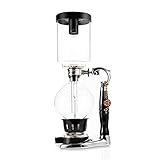
Yama’s 20-ounce tabletop siphon is the retro option — a hand-blown borosilicate brewer on a curved stand with its own alcohol burner, built to be used at the table rather than at the stove. Yama Glass has been making vacuum brewers in the USA for decades, and the craftsmanship of the glass is the first thing owners mention.
Key specs: 5-cup (20 oz) capacity · borosilicate glass · alcohol burner included · 0.99 kg · retro tabletop stand · model YAMTCA5D
Why It Made the List
Rated 4.6 stars across 345 reviews, this is the brewer to buy if the ritual matters as much as the coffee. Because it is self-contained, you can carry the whole assembly to the dining table, light it in front of people, and let the vapor pressure do the rest. It also makes an unusually good gift — it arrives looking like an heirloom rather than an appliance.
What Owners Say
Owners call it elegant, theatrical, and genuinely capable of smooth, strong coffee. The two consistent warnings: the stock alcohol burner may struggle to bring water to a full boil (Yama’s own tip is to use denatured alcohol for faster heating, and many owners eventually move to butane), and the lower vessel can run dry if you walk away mid-brew. It rewards attention.
Pros
- Makes excellent coffee with a true vacuum brewing process
- Beautiful, elegant conversation piece
- Fun to watch from start to finish
- Quality hand-blown borosilicate glass construction
- Ideal for weekend coffee rituals and gifting
Cons
- Lower vessel can run dry if left unattended
- Included alcohol burner may not reach a strong boil
- Takes patience and practice to master
- Glass construction requires careful handling
- Cleaning takes some effort
Best for: tableside brewing, dinner-party coffee service, and gift-giving. Pair it with a slice of blueberry coffee cake and you have a whole weekend morning.
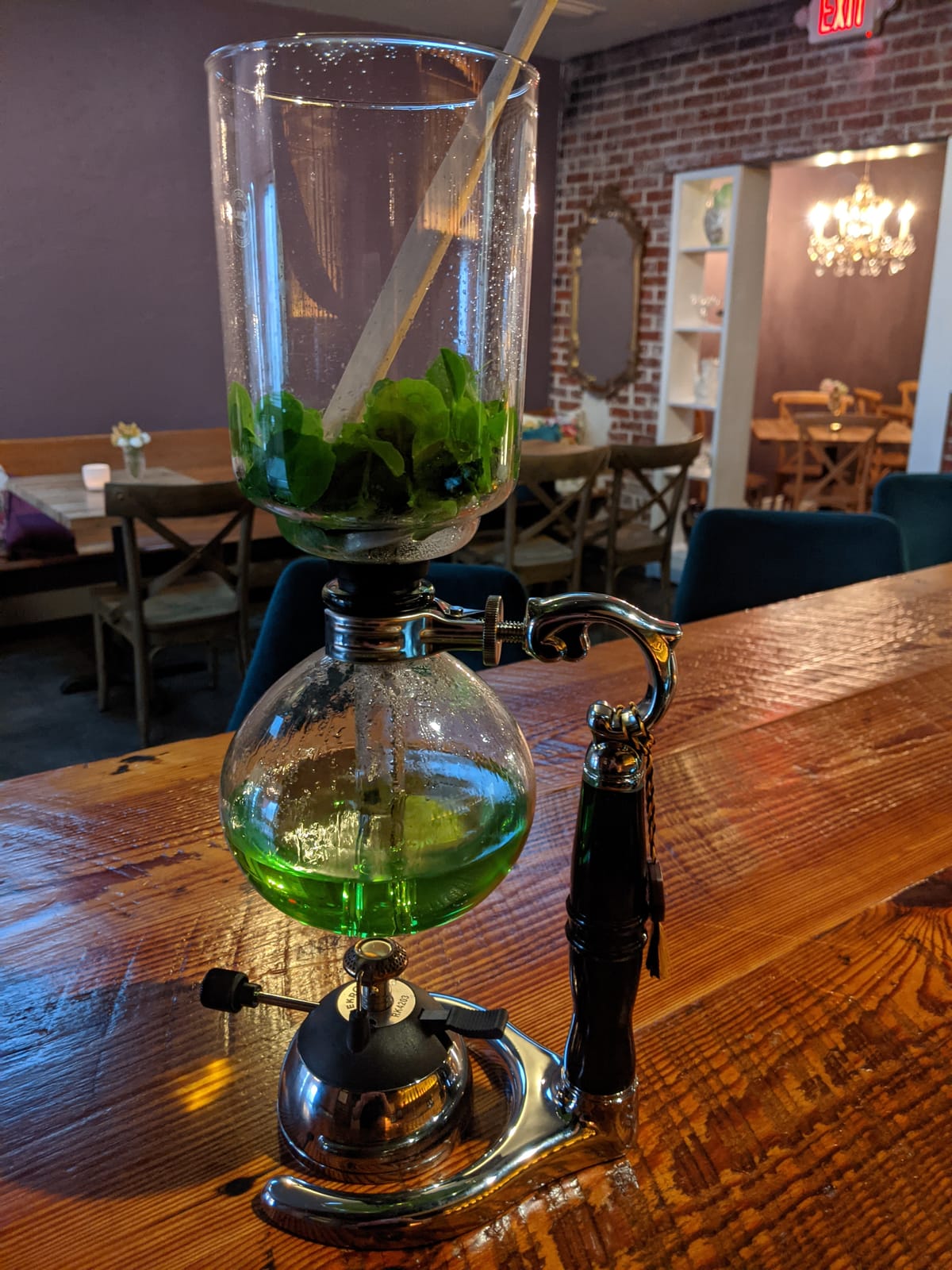
5. Hario 3-Cup Coffee Siphon (Moca MCA-3) — Best Compact Japanese Siphon
Hario 3-Cup Coffee Siphon Moca MCA-3
3-cup 360ml capacity
4.53 x 6.5 x 7.48 inches
0.66 kg
Heat resistant glass and stainless steel
Alcohol lamp spoon and 50 paper filters
Made in Japan
Pros
- Ideal size for one or two drinkers
- Clean fruity paper-filtered cup
- Genuine Japanese build quality
- Very small counter footprint
Cons
- Instructions are in Japanese only
- Rubber seal needs regular maintenance
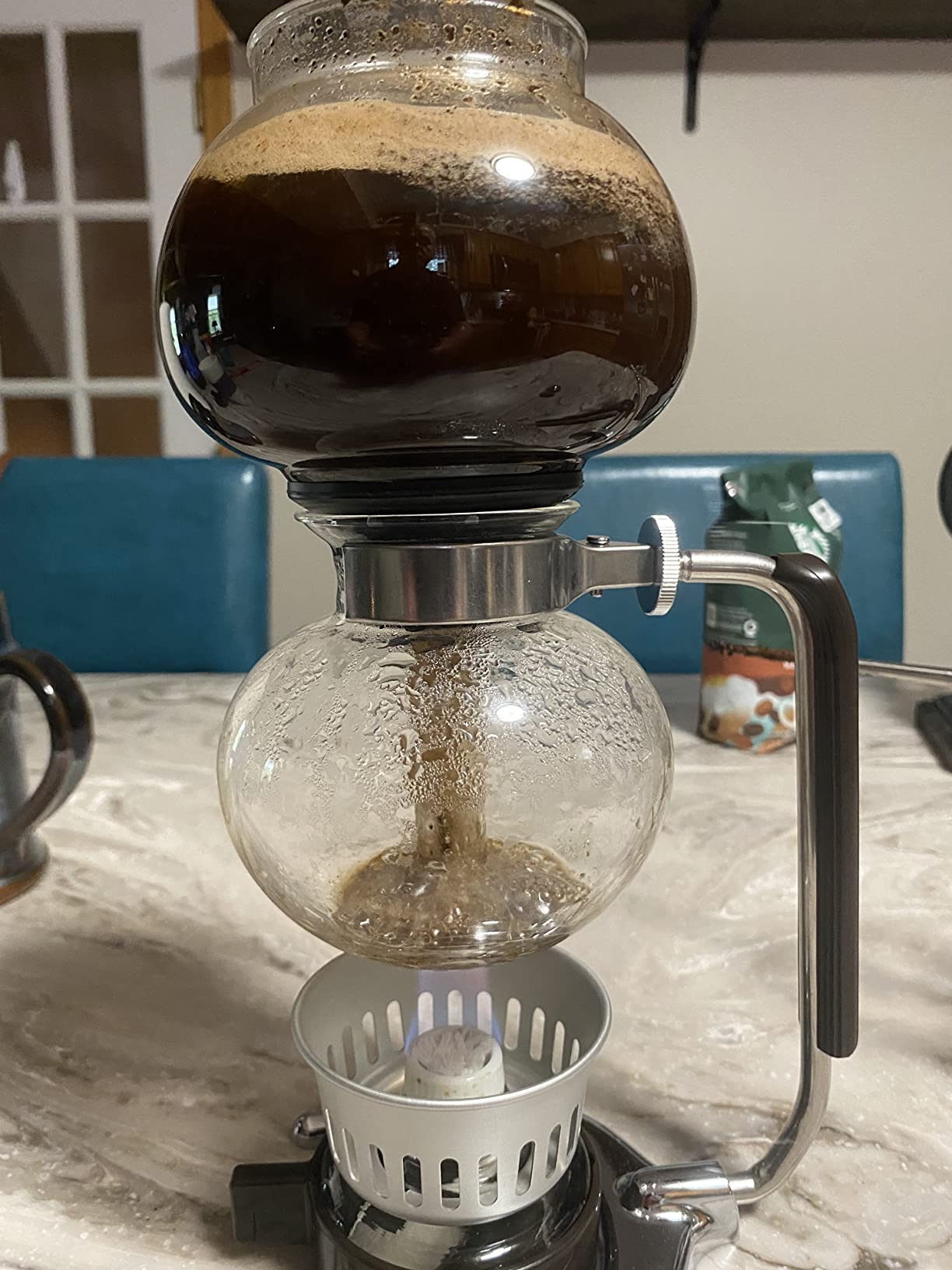
The Moca is Hario’s small-format siphon, built for one or two people rather than a crowd. It brews 12.2 fluid ounces (360 ml) — three Japanese cups, or one generous mug — and at 7.5 inches tall it takes up almost no counter space. It ships with an alcohol lamp, a measuring spoon, and 50 paper filters, which is a different flavor profile from the cloth-filter models: cleaner and more tea-like.
Key specs: 3-cup (360 ml) capacity · 4.53″ D x 6.5″ W x 7.48″ H · 0.66 kg · heat resistant glass, stainless steel, aluminum, brass · #2 filter size · made in Japan · model MCA-3
Why It Made the List
If you brew one cup at a time, a 5-cup siphon wastes coffee and time. The Moca right-sizes the whole process, and because it is made in Japan to Hario’s standards, you are not trading quality for the smaller footprint. Owners repeatedly describe the cup as fruity and clean — the paper filter strips more oils than cloth, which suits bright single-origin beans.
What Owners Say
It holds a 4.4-star average over 625 reviews. The presentation is the headline: reviewers love pulling it out when guests arrive. The friction points are documentation and maintenance. Instructions ship in Japanese only, so plan on watching a video the first time, and no cleaning sponge is included for the narrow stem tube. The rubber seal also needs periodic attention to keep the vacuum tight.
Pros
- Theatrical, impressive brewing presentation
- Clean, fruity coffee flavor from the paper filter
- Genuine Japanese-made build quality
- Perfect size for one or two drinkers
- Easy to use once you learn the process
Cons
- Instructions are in Japanese only
- Rubber seal maintenance can be fiddly
- No sponge included for cleaning the narrow tube
- Takes practice to master the technique
- Small 3-cup capacity limits serving size
Best for: solo drinkers, small kitchens, and anyone who prefers a lighter, paper-filtered cup.
6. YUCHENGTECH 3-Cup Syphon Coffee Maker — Best Budget Buy
YUCHENGTECH Syphon Coffee Maker 3 Cups
3-cup 360ml capacity
High-temperature borosilicate glass rated -30C to 180C
6.3 x 3.9 x 14.7 inches
1.2 kg
Wide-angle stainless steel base
Model FBA-030XD
Pros
- Lowest-risk way to try siphon brewing
- Stable wide stainless base
- Easy to set up and clean
- Accepts multiple heating devices
Cons
- Included alcohol burner underperforms
- Some reports of glass cracking under heat
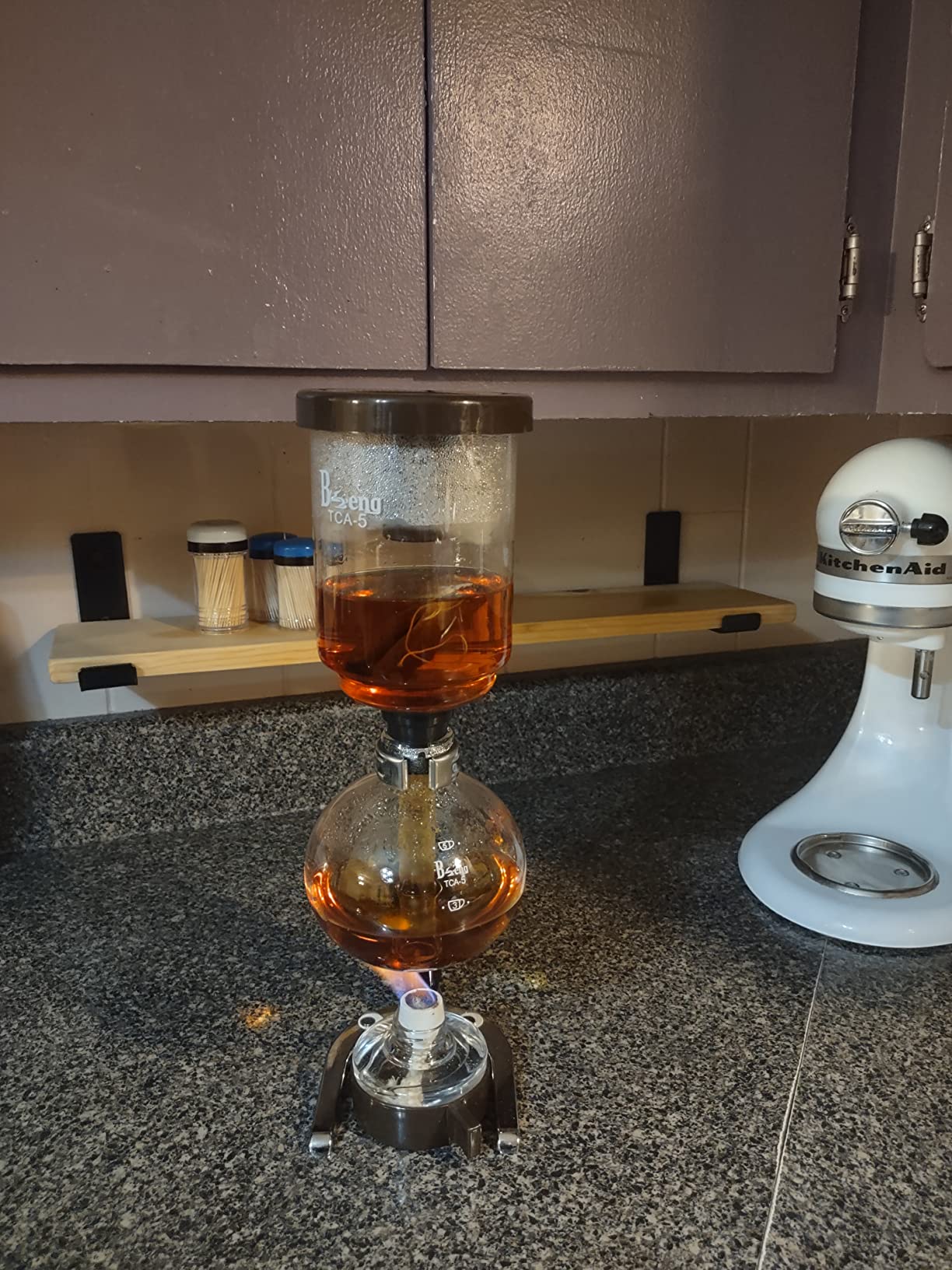
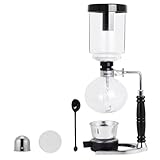
Under $40 buys a complete, functional vacuum brewer here. The YUCHENGTECH uses high-temperature borosilicate glass rated for a -30°C to 180°C swing, sits on a wide-angle stainless steel base for stability, and includes a buffer clamp that protects the lower pot and stops it slipping. Everything you need arrives in the box except burner fuel.
Key specs: 3-cup (360 ml) capacity · 6.3″ D x 3.9″ W x 14.7″ H · 1.2 kg · borosilicate glass · wide-angle stainless base · compatible with multiple heat sources · model FBA-030XD
Why It Made the List
Siphon brewing is a method some people love and some people find fussy. Spending $38.90 to answer that question is a lot more sensible than spending $150. The stainless base accepts different heating equipment, so you can start on the alcohol burner and graduate to a butane burner without buying a new brewer.
What Owners Say
380 reviewers give it 4.2 stars, and the split is predictable: people love the value, the robust flavor, and how easy it is to set up and clean, but the quality control is not Hario’s. The included alcohol burner is the most common complaint, and there are scattered reports of glass cracking under heat. Treat it as an entry point rather than a lifetime purchase and it delivers.
Pros
- Great value for the price
- Fun way to make robust, full-flavored coffee
- Durable borosilicate glass construction
- Easy to set up and clean
- Makes a great conversation piece
Cons
- Included alcohol burner does not perform well
- Some reports of glass cracking under heat
- Some buyers feel it is overpriced for the build
- Capacity is smaller than the marketing suggests
- Upper pot can be hard to remove while hot
Best for: first-time siphon buyers who want to test the method before committing real money.
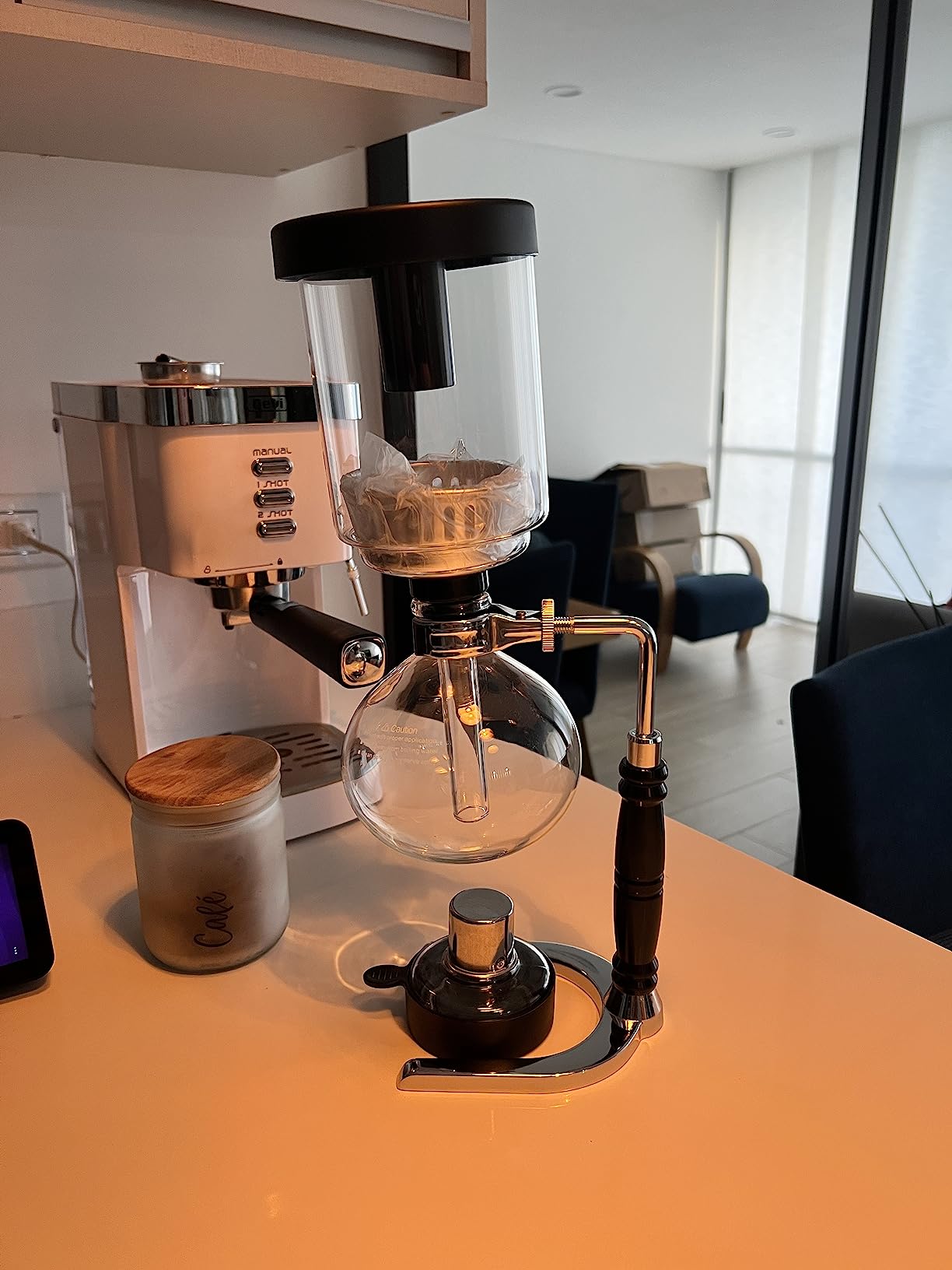
7. Amarine Made TCA-5 Siphon Coffee Maker — Best Complete Starter Kit
Amarine Made Siphon Coffee Maker TCA-5
5-cup capacity serving 3-4 people
Heat resistant glass and polypropylene
6 x 6 x 15 inches
Alcohol burner wood stirrer spoon cotton wick and cloth filters included
Model SH19
Pros
- Most complete accessory kit here
- No electricity needed to brew
- Smooth flavor without bitterness
- Steady heat through the brew cycle
Cons
- Poor and confusing instructions
- Filter chain is awkward to grip
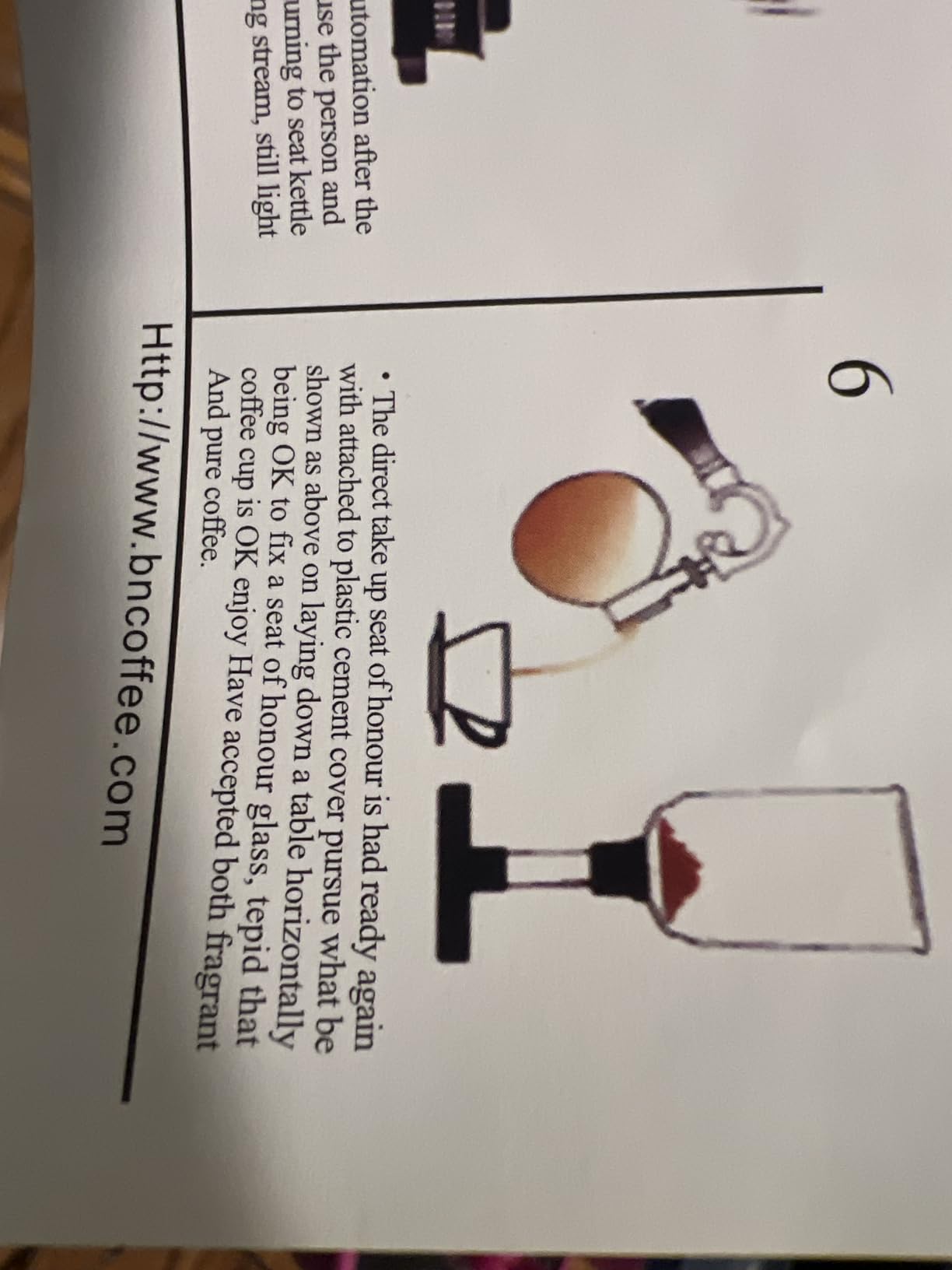
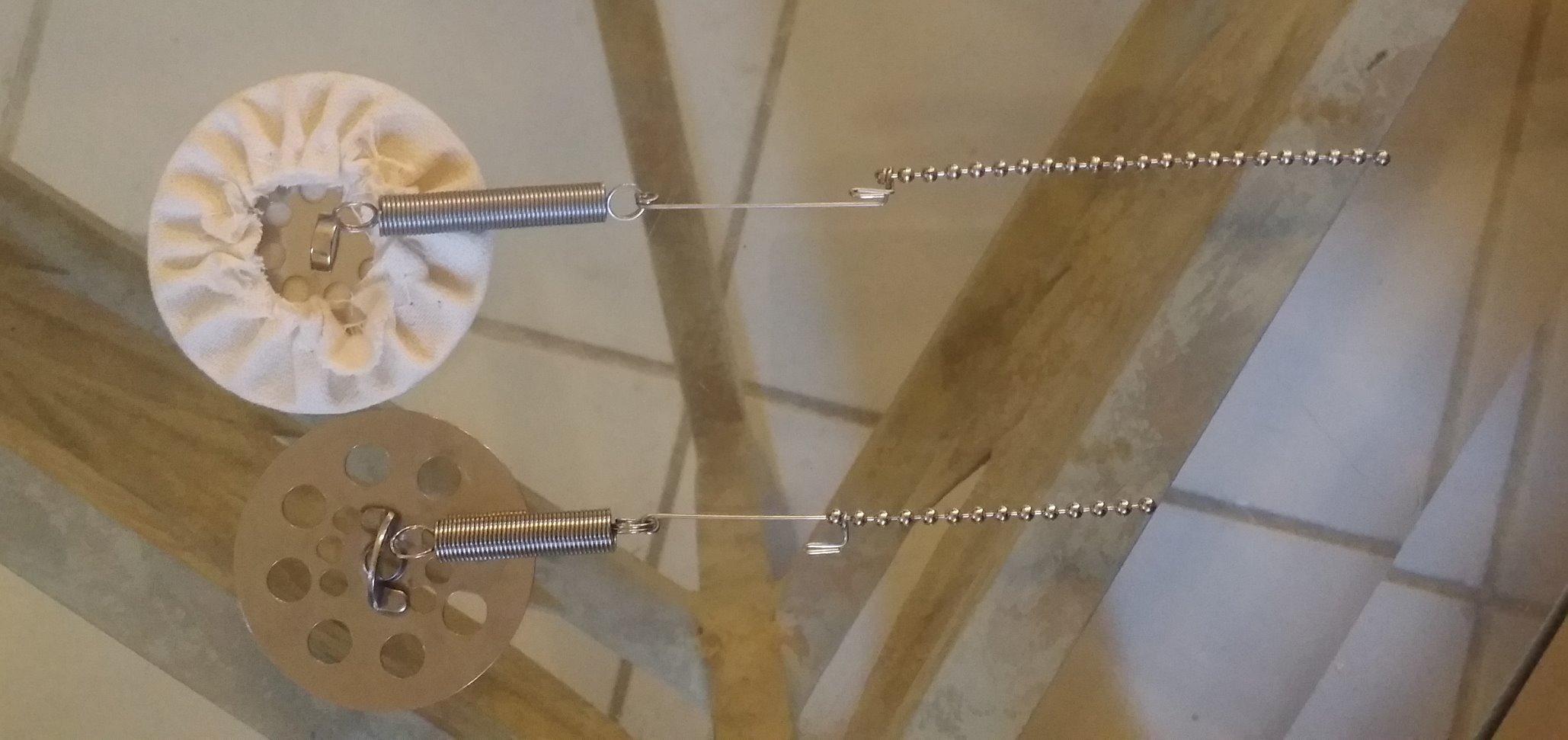
The Amarine Made TCA-5 is the most complete box in this guide for the money. Alongside the 5-cup glass brewer and alcohol burner you get a wood stirrer, a plastic measuring spoon, a cotton wick, and spare cloth filters — the exact accessories that turn a siphon from “interesting object” into something you can actually brew with on day one. It needs no electricity at all, which makes it a genuine option for camping or power outages.
Key specs: 5-cup capacity (serves 3-4 demitasse portions) · 6″ D x 6″ W x 15″ H · heat resistant glass and polypropylene · alcohol burner, wood stirrer, spoon, cotton wick, cloth filters included · model SH19 / TCA-5
Why It Made the List
At $37.99 it is the cheapest pick here, yet the 4.3-star average from 171 owners is higher than the other budget models. The alcohol burner delivers steady heat through the brew cycle, and because the design follows the classic TCA-5 pattern, replacement cloth filters from other brands generally fit.
What Owners Say
Owners describe smooth, unique, non-bitter coffee and find the process captivating to watch. The dominant complaint is the instruction sheet, which is variously described as confusing or partly in other languages — expect to learn from a video. Two practical notes from reviewers: preheat your water in a kettle to save several minutes, and the retaining chain on the filter can be awkward for anyone with limited hand sensation. As with every model in this guide, “5 cups” means demitasse cups, not mugs.
Pros
- Straightforward and easy to use
- Makes excellent coffee once your technique is dialed in
- No electricity needed to brew
- Captivating to watch during brewing
- Smooth, distinctive flavor without bitterness
Cons
- Very poor instructions
- Filter chain is hard to grasp for some users
- “5 cups” refers to demitasse cups, not American mugs
- Requires patience — 10-15 minutes per brew
- A butane burner outperforms the included alcohol burner
Best for: beginners who want every accessory in one box, and anyone who needs an off-grid brewing method.
8. moo-1 Japanese Style Vacuum Siphon Pot — Best for Coffee and Tea
moo-1 Japanese Style Vacuum Glass Siphon Pot
1-3 cup 15 oz capacity
Heat resistant borosilicate glass and stainless steel
4 x 5 x 14.3 inches
500 g
Soot-free alcohol burner included
Pros
- Brews both coffee and loose-leaf tea
- Easy to rinse out after use
- Attractive compact design
- Low cost of entry
Cons
- Top-heavy and slightly clumsy
- Poor confusing instructions
The moo-1 is a 15-ounce, 1-3 cup vacuum siphon with a decorative base and a soot-free alcohol burner. What sets it apart in this lineup is versatility: because you control the heat directly and the upper chamber is easy to access, owners use it as often for loose-leaf tea at a specific temperature as for coffee. The borosilicate glass is designed to prevent dry heating, and the whole thing is small enough to live on a desk or office credenza.
Key specs: 1-3 cup (15 oz) capacity · 4″ D x 5″ W x 14.3″ H · 500 g · borosilicate glass and stainless steel · soot-free alcohol burner included · open-flame heat source
Why It Made the List
It is the most flexible small siphon here. Coffee, tea, and herbal infusions all work, and the low price makes it easy to justify as a second brewer for the office. The stainless-and-glass build looks far more expensive than $45.99, which is why owners keep calling it a conversation starter.
What Owners Say
The 4.2-star average across 114 reviews reflects a brewer that people enjoy but do not consider flawless. Positives cluster around relaxation and ritual — it is described as a great “slow night” object — plus easy rinsing and genuine usefulness for tea. The negatives are structural: the tall, narrow profile is top-heavy, the glass is fragile enough that shipping damage happens, and the instructions are poor. If you want a workhorse, look at the Hario models; if you want an inexpensive brewer to play with, this qualifies.
Pros
- Fun to use for slow evenings and relaxed brewing
- Easy to rinse out after use
- Brews tea at any temperature you choose
- Good value for the money
- Attractive conversation starter on the counter
Cons
- Top-heavy and slightly clumsy design
- Deep cleaning is not effortless
- Vacuum filtration is not automatically better than other methods
- Fragile — can arrive damaged from shipping
- Poor, confusing instructions
Best for: tea drinkers, desk setups, and low-cost experimentation with vacuum brewing.
How Does a Japanese Siphon Coffee Maker Work?
A siphon coffee maker is a two-chamber vacuum brewer. Heat under the lower bowl creates vapor pressure that pushes water up a tube into the upper bowl, where it steeps with the grounds. Removing the heat creates a partial vacuum that pulls the finished coffee back down through a filter.
Broken into steps, the full cycle looks like this:
- Heating. Water in the sealed lower bowl is heated by an alcohol burner, butane burner, halogen lamp, or stovetop.
- Rising. Expanding vapor increases pressure above the water and forces it up the siphon tube into the upper chamber, where it settles at roughly 195-205°F.
- Immersion. Grounds steep in that stable, near-boiling water for 60-90 seconds — full immersion brewing, like a French press, but at a more consistent temperature.
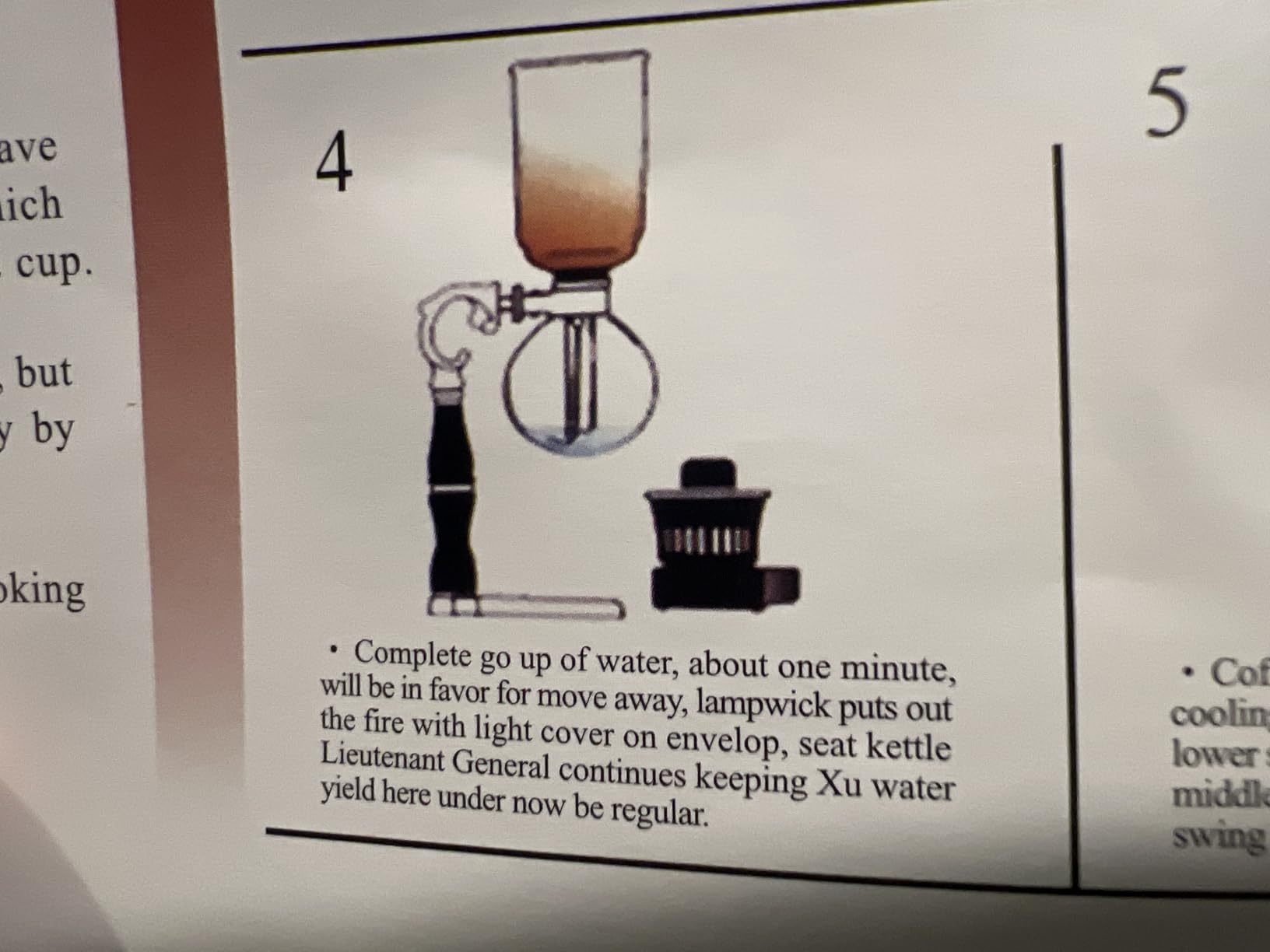
- Drawdown. You remove the heat. The trapped air in the lower bowl cools and contracts, creating a partial vacuum that pulls the brew back down through the cloth, paper, or metal filter.
- Serving. Lift off the upper bowl and pour from the lower chamber.
That combination is why siphon coffee tastes the way it does. Immersion gives you body and sweetness; the filtered vacuum drawdown gives you clarity without the sediment you get from a press pot.
How to Choose a Japanese Siphon Coffee Maker?
Capacity: Japanese Cups vs American Mugs
This is the single most common disappointment among first-time buyers. Siphon “cups” are Japanese cups of roughly 4 ounces. A 3-cup model yields about 12 ounces — one mug. A 5-cup model yields about 20 ounces, or two mugs. Only the 8-cup Yama, at 24 ounces, comfortably serves three or four people. Buy one size up from what feels intuitive.
Heat Source: Alcohol Burner, Butane, Stovetop or Halogen
Almost every siphon in this guide ships with an alcohol burner, and almost every owner review recommends replacing it. Alcohol burners take 10-15 minutes to reach a boil and are sensitive to drafts. Your options, in order of popularity: a small butane burner (fastest, most controllable, the standard enthusiast upgrade), a stovetop model like the Yama SY-8 (no extra gear needed), or a halogen beam heater (expensive but precise). At minimum, start with water already heated in a kettle — that alone cuts several minutes off every brew.
Filter Type: Cloth, Paper or Metal
Cloth filters, used by both Yama models and the Amarine, give the fullest body and the roundest mouthfeel, and produce no waste — but they must be rinsed thoroughly and stored wet in the refrigerator, or in a sealed container of water, to avoid rancid oils. Paper filters, which the Hario Moca uses, give the cleanest, brightest cup and zero maintenance. Metal filter assemblies sit in the middle and last indefinitely.
Glass Quality and Durability
Every model here uses borosilicate glass, but thickness varies enormously. The Hario bowls are noticeably heavier than the budget alternatives, which is exactly why they survive years of thermal cycling. Whatever you buy, never place a hot bowl on a cold wet surface, never heat a bowl that is not wet inside, and never run cold water into hot glass — thermal shock, not clumsiness, breaks most siphons.
Budget and Replacement Parts
Expect to spend $38-$60 for an entry-level brewer, $78-$95 for a genuine mid-range Japanese siphon coffee maker, and up to $150 for the premium Hario Next. Factor in about $20-$35 for a butane burner, and check parts availability before you buy: Hario sells replacement bowls and filter assemblies widely, while off-brand seals and gaskets can be difficult to source.
How to Brew Siphon Coffee Step by Step?
Once you have the technique down, a siphon brew is repeatable and takes about five minutes with hot starting water. Here is the sequence that works across every model in this guide.
- Prepare the filter. Soak a cloth filter in hot water for a minute, then seat it in the upper bowl and hook the chain or spring securely against the bottom of the stem tube. Rinse paper filters the same way.
- Fill the lower bowl. Add pre-heated water — around 200°F from a kettle — to the marked line. Wipe the outside completely dry before applying any heat.
- Grind your coffee. Use a medium grind, slightly coarser than drip and finer than French press. Start with a 1:15 ratio: about 25 grams of coffee for 375 ml of water.
- Apply heat. Seat the upper bowl loosely at first, then lock it in once steam begins to escape. A proper seal is what builds the pressure.
- Let the water rise. When nearly all the water has moved to the upper chamber, add the grounds and stir gently 3-4 times to break up any dry clumps.
- Steep for 60-90 seconds. Keep the heat low and steady. Longer steeps deepen body; shorter steeps stay brighter.
- Give a final stir and remove the heat. A gentle stir just before drawdown evens out extraction. The vacuum will pull the coffee down over 30-60 seconds.
- Serve immediately. Lift the upper bowl straight up with a slight twist, rest it in the stand or on a folded towel, and pour.
Aim for a total brew time of four to six minutes from the moment water reaches the upper chamber. If your coffee tastes thin and sour, grind finer or steep longer; if it tastes harsh and dry, coarsen the grind or shorten the steep.
Cleaning and Caring for Your Siphon Brewer
Siphon maintenance is simple but non-negotiable, and it is where most brewers get ruined.
- Clean while warm, not hot. Let the glass cool to warm, then rinse. Cold water on hot glass is the fastest way to crack a bowl.
- Store cloth filters wet. Rinse the filter free of grounds and oils, then keep it submerged in clean water in a sealed container in the refrigerator. A dried-out cloth filter goes rancid and will taint every brew afterward.
- Use a bottle brush on the stem tube. Most siphons do not include one. Coffee oils build up inside the narrow tube and turn bitter.
- Check the seal or gasket monthly. A hardened or shrunken rubber seal is the usual cause of a siphon that will not pull a vacuum. Wipe it clean and reseat it each time you assemble.
- Deep clean occasionally. A soak with a dedicated coffee equipment cleaner removes the oil film from the glass that ordinary washing leaves behind.
- Store it assembled but unlocked. Leaving the upper bowl clamped in permanently compresses the seal over time.
Siphon Coffee vs Pour Over, French Press and Cold Brew
Siphon brewing is not strictly better than other methods — it occupies a specific spot between them.
In practice, most siphon owners keep a second brewer for weekdays. If you want maximum body with almost no fuss, our guide to the best French press coffee makers covers the glass and stainless options worth owning. For summer, the same beans work beautifully in one of these cold brew makers for smooth coffee. And if you end up with leftover brewed coffee, it makes an excellent coffee frosting or a moist pumpkin coffee cake.
Common Siphon Brewing Mistakes to Avoid
- Starting with cold water. It doubles your brew time and scorches the grounds by the time the water finally rises. Preheat in a kettle.
- Grinding too fine. Espresso-fine grounds clog cloth filters and stall the drawdown, over-extracting the coffee in the process.
- Not seating the upper bowl properly. If the seal is loose, steam escapes, pressure never builds, and the water only partially rises.
- Walking away from the flame. Letting the lower bowl run dry cracks glass and ruins seals. Stay with the brewer.
- Over-stirring during drawdown. Aggressive agitation late in the cycle pushes fines into the filter and slows everything down.
- Skipping the filter soak. A dry cloth filter sheds a papery taste into the first cup and seats unevenly.
Frequently Asked Questions
Who makes the best siphon coffee maker?
Hario makes the best siphon coffee makers overall. The Japanese glassware company has produced borosilicate vacuum brewers since the 1940s, and its Technica and Next models earn 4.7-star averages from nearly 2,000 combined reviewers. Yama Glass is the strongest alternative, particularly its 8-cup stovetop siphon for larger batches.
What is the best Japanese coffee maker?
For siphon brewing, the Hario u0022Technicau0022 600ml is the best Japanese coffee maker for most people — it balances authentic Japanese construction, 5-cup capacity, and a reasonable $94.50 price. If you prefer smaller batches, the Japan-made Hario Moca MCA-3 brews 12.2 ounces with paper filters for a cleaner cup.
Is Japanese siphon coffee good?
Yes. Siphon brewing combines full immersion with vacuum filtration, producing coffee that owners consistently describe as smooth, mellow, and low in acidity, with more body than pour over and far less sediment than a French press. The stable 195-205°F brew temperature is a major reason the results are so consistent.
What is the Rolls Royce of coffee machines?
In the siphon category, halogen-heated and automated vacuum brewers costing $400-$700 hold that title, and among manual models the Hario u0022Nextu0022 NXA-5 at $149.99 is the premium choice. Its thicker glass, heavier stand, and silicone-covered handle justify the price for daily brewers.
Is a siphon coffee maker worth it for beginners?
It is, provided you start cheap. A $37-$40 model like the Amarine Made TCA-5 or the YUCHENGTECH 3-cup lets you learn the technique without a big investment. Expect a few mediocre brews while you dial in grind size and steep time; most people are consistent within a week.
Can you use a siphon coffee maker on an induction cooktop?
Only stovetop-specific models with flat, stable bases work directly on a cooktop, and the Yama Glass 8-Cup Stovetop Siphon is the pick here — owners confirm it works on gas, electric, glass-top, and induction surfaces. Tripod-stand siphons with rounded lower bowls need their own burner instead.
How long does siphon coffee take to brew?
Plan on 8 to 12 minutes from cold start with the included alcohol burner, or about 5 minutes if you begin with kettle-hot water or use a butane burner. The actual brew — rise, steep, and drawdown — takes only 4 to 6 minutes; the rest is heating time.
Do I need a butane burner instead of the alcohol burner?
You do not need one, but it is the upgrade owners recommend most across every brand in this guide. A butane burner reaches a boil in a fraction of the time, holds a steadier flame, and is far less affected by drafts. Budget roughly $20-$35 for one.
Final Verdict: Which Japanese Siphon Coffee Maker Should You Buy?
After weighing build quality, capacity, heat source, and thousands of owner reviews, the Hario “Technica” 600ml is the best Japanese siphon coffee maker for most people. It delivers authentic Japanese borosilicate construction, a stainless filter assembly that stays sealed, and the smooth low-acidity cup that makes vacuum brewing worth the extra minutes — all at a price that does not feel like a collector’s purchase.
If you regularly brew for a table, the Yama Glass 8-Cup Stovetop Siphon is the more practical buy: 24 ounces of capacity and no burner to manage. If you want the best-built version of this method and intend to use it daily for years, the Hario “Next” NXA-5 earns its premium. And if you are simply curious whether siphon coffee belongs in your routine, the Amarine Made TCA-5 at $37.99 includes every accessory you need to find out.
Whichever you choose, buy a butane burner alongside it, preheat your water, and treat the glass with a little care. Do that and a Japanese siphon coffee maker will reward you with one of the cleanest, most satisfying cups you can brew at home — and a five-minute ritual that is genuinely worth getting up for.