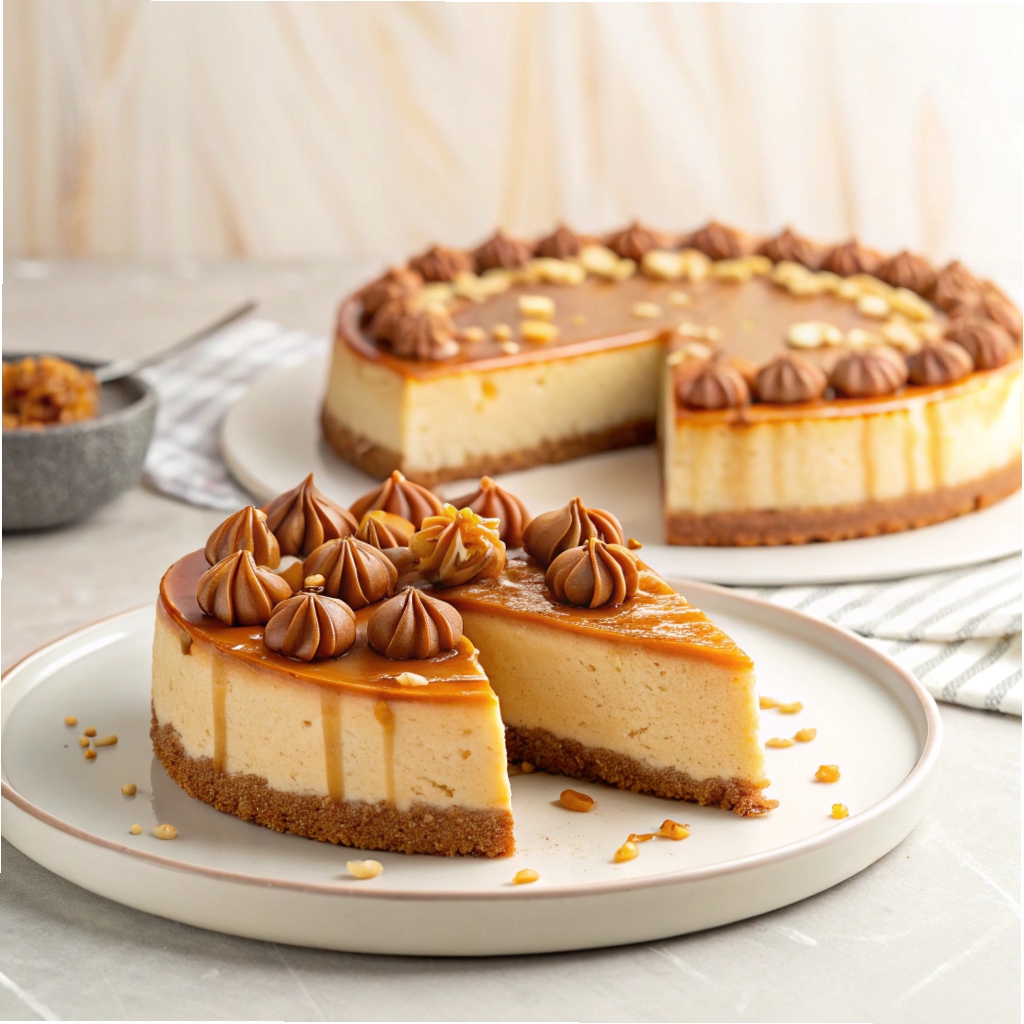
If you have been searching for a salted caramel cheesecake recipe that actually turns out creamy, crack-free, and packed with real caramel flavor in every bite, you are in the right place. This is the kind of showstopper dessert that disappears fast at holiday dinners, birthday celebrations, and weekend gatherings with friends. The combination of a buttery graham cracker crust, silky cream cheese filling with a caramel swirl, and a generous layer of salted caramel on top hits that perfect sweet and salty balance.
I have tested this recipe more times than I can count, tweaking the technique until it reliably produces a smooth, crack-free surface without needing fancy equipment. The secret comes down to room temperature ingredients, a gentle mixing method, and a slow cooling process that most home bakers skip. Whether this is your first cheesecake or your fiftieth, the steps below walk you through every detail so nothing is left to guesswork.
One of the biggest reasons cheesecakes fail at home is that bakers rush the process. Cold cream cheese creates lumps. Over-mixing whips too much air into the batter, which expands in the oven and then collapses into cracks. Skipping the chill time leaves you with a soggy, sliceless mess. This recipe is designed to prevent all of those problems, and I will explain exactly why each step matters so you understand the technique rather than just following instructions blindly.
For the caramel layer, I strongly recommend using a homemade salted caramel sauce instead of a jar from the store. The flavor difference is night and day, and it takes about ten minutes to make. If you are short on time, a good quality store-bought caramel will still produce a delicious cheesecake, so do not let that hold you back from trying this recipe.
Table of Contents
- Equipment You Will Need
- Ingredients for Salted Caramel Cheesecake
- Why These Ingredients Matter
- How to Make a Salted Caramel Cheesecake: Step-by-Step
- Troubleshooting Common Cheesecake Problems
- Homemade vs Store-Bought Caramel Sauce
- Perfect Pairings: Sauce and Topping Ideas
- Serve in Style: Presentation Tips
- Make-Ahead Guide and Freezing Instructions
- Mix It Up: Recipe Variations
- Time-Saving Hacks for Busy Bakers
- Salted Caramel Cheesecake FAQ
- How do I avoid cracks in my cheesecake?
- How should I store salted caramel cheesecake?
- Can I freeze salted caramel cheesecake?
- Why use room temperature ingredients for cheesecake?
- Can I use store-bought caramel sauce instead of homemade?
- What is the best pan for cheesecake?
- How do I know when my cheesecake is done baking?
- Final Thoughts on This Salted Caramel Cheesecake Recipe
- Salted Caramel Cheesecake
Equipment You Will Need
Before diving into ingredients, gather the right tools. Having everything ready makes the process smoother and reduces the chance of mistakes mid-bake.
- 9-inch springform pan: This is non-negotiable for cheesecake. The removable sides let you release the cake without flipping it. Every top-ranking cheesecake recipe calls for one.
- Electric hand mixer or stand mixer: A stand mixer with a paddle attachment is ideal, but a hand mixer works fine. Avoid using a whisk attachment, which incorporates too much air.
- Roasting pan or large baking dish: Needed if you are using a water bath (highly recommended for a crack-free surface).
- Heavy-duty aluminum foil: Used to wrap the springform pan if baking in a water bath, preventing any water from seeping in and causing a soggy crust.
- Offset spatula or silicone spatula: For smoothing the batter and spreading the crust evenly.
- Sharp knife: Run it under hot water and wipe dry between cuts for restaurant-quality slices.
Ingredients for Salted Caramel Cheesecake

- Crust:
- 1 ½ cups (170 g) graham cracker crumbs
- ⅓ cup (40 g) finely chopped pecans (optional, can substitute with walnuts or omit for a nut-free version)
- 2 tablespoons granulated sugar
- 1 tablespoon firmly packed light brown sugar
- 7 tablespoons melted salted butter (unsalted butter works too; just add a pinch of salt)
- Cheesecake:
- 24 oz (680 g) softened brick-style full-fat cream cheese (must be at room temperature)
- 1 cup (200 g) granulated sugar
- ½ cup (120 g) sour cream
- 1 teaspoon vanilla extract
- 3 large eggs, room temperature
- 1 cup (236 ml) thick caramel sauce, room temperature (homemade salted caramel sauce or store-bought)
- Flaky sea salt, for sprinkling (highly recommended for that signature salted caramel finish)
Why These Ingredients Matter
Understanding what each ingredient does helps you make smart substitutions and avoid common mistakes. Let us break down the key components.
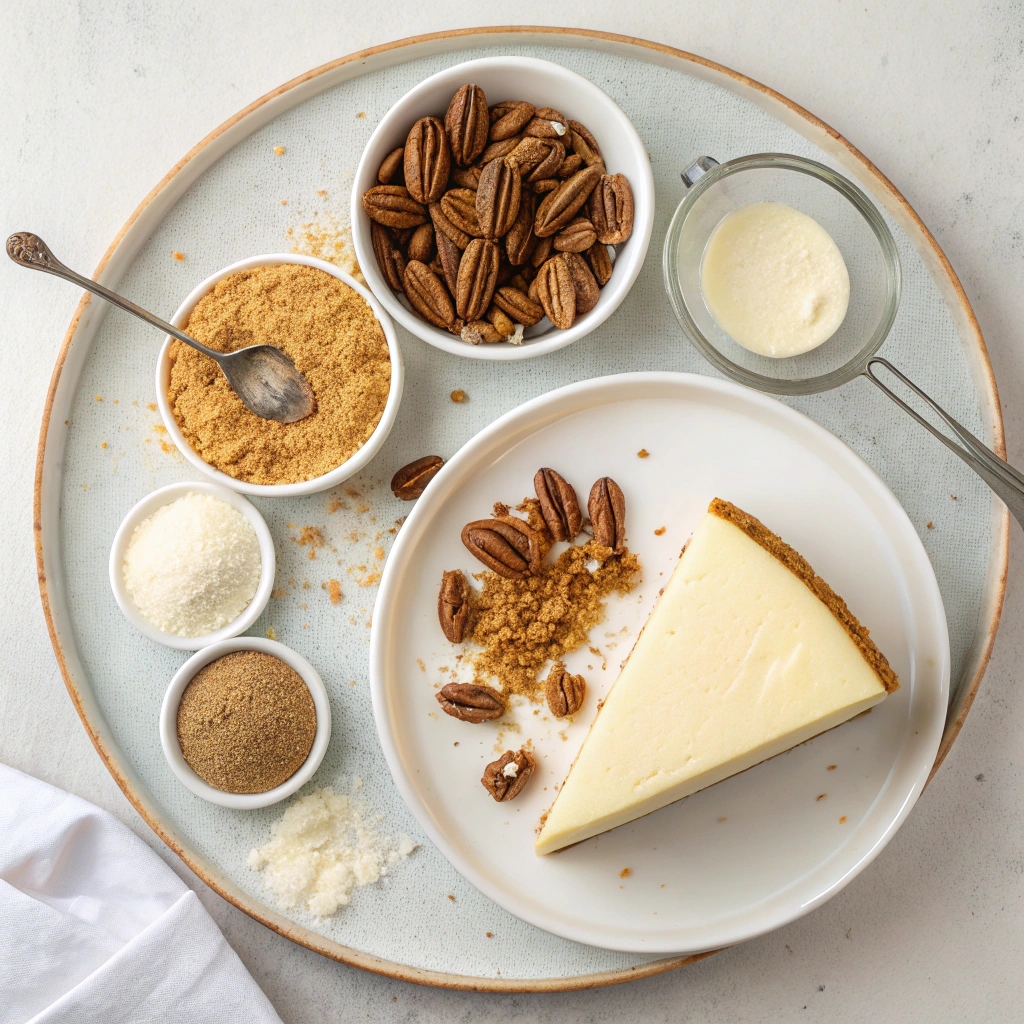
Brick-style cream cheese is essential for a creamy cheesecake texture. Philadelphia is the gold standard because it has a higher fat content and more stable structure than spreadable or whipped varieties. Spreadable cream cheese in a tub contains added air and stabilizers that can ruin the texture of a baked cheesecake. Always use full-fat brick-style cream cheese, and make sure all 24 ounces sit at room temperature for at least two hours before mixing.
Sour cream adds moisture and a slight tang that balances the sweetness of the caramel. If you do not have sour cream, plain full-fat Greek yogurt works as a one-to-one substitute. Some bakers on Reddit also report excellent results substituting mascarpone for a portion of the cream cheese, which produces an even silkier filling.
Room temperature ingredients are the single most important factor in achieving a smooth, lump-free batter. Cold eggs dropped into cream cheese will seize and create stubborn lumps that no amount of mixing can fix. If you forgot to take your eggs out early, place them in a bowl of warm water for ten minutes before using.
The caramel sauce should be thick and pourable at room temperature. If it is too thin, it will bleed into the batter instead of creating that beautiful swirl. If you are making homemade caramel sauce, let it cool completely so it reaches a spreadable consistency before layering it into the cheesecake. Multiple Reddit threads confirm that beginners struggle most with timing caramel consistency, so do not skip this step.
Graham cracker crumbs form the classic buttery base, but you are not locked into them. Crushed gingersnaps, Oreos, or Biscoff cookies all make excellent crust alternatives. Keep the same ratio of crumbs to butter regardless of which cookie you choose.
How to Make a Salted Caramel Cheesecake: Step-by-Step
This section covers the complete method from crust to chill. Read through all the steps once before starting so you know what to expect at each stage.
Step 1: Build the Graham Cracker Crust
In a medium bowl, combine the graham cracker crumbs, chopped pecans, granulated sugar, and brown sugar. Pour in the melted butter and stir until every crumb is evenly coated and the texture resembles wet sand. When you squeeze a handful, it should hold its shape without crumbling apart.
Press the mixture firmly and evenly across the bottom and about one inch up the sides of your 9-inch springform pan. Use the bottom of a measuring cup or glass to pack the crust tightly and create a flat surface. A loose crust will fall apart when you slice the cheesecake, so take your time here. Set the pan aside while you prepare the filling.
Step 2: Mix the Cream Cheese Filling
Preheat your oven to 325°F (165°C). In a large mixing bowl, beat the room temperature cream cheese and granulated sugar together on medium speed until completely smooth and free of lumps. This usually takes about two minutes. Stop the mixer once or twice to scrape down the sides and bottom of the bowl with a silicone spatula.
Add the sour cream and vanilla extract. Mix on low speed just until combined. The goal throughout this entire process is to mix gently. Over-mixing is the number one cause of cracks because it whips excess air into the batter, which expands during baking and then contracts during cooling.
Crack each egg into a small bowl separately before adding it to the batter. This lets you catch shell fragments and ensures each egg looks fresh. Add the eggs one at a time, mixing on the lowest speed until just combined before adding the next. Stop mixing the moment the yolk disappears. The batter should look silky smooth and pourable.
Step 3: Layer and Swirl the Caramel
Pour roughly half of the cheesecake batter over the prepared crust and spread it into an even layer with your spatula. Drizzle about ¼ cup of caramel sauce evenly across the surface. Use a butter knife or skewer to gently create a caramel swirl, dragging it through the batter in figure-eight motions. Do not over-swirl or the caramel will disappear entirely into the filling.
Pour the remaining batter on top and smooth the surface. Reserve the rest of the caramel sauce for the topping after the cheesecake has chilled. Some bakers on Reddit have noted that caramel sauce added before baking can sink or pool at the bottom, so keeping the swirl layer thin helps prevent this.
Step 4: Use a Water Bath for a Crack-Free Surface
A water bath is the most reliable way to achieve a crack-free cheesecake. The steam from the hot water keeps the oven environment humid, which prevents the top from drying out and splitting. It also insulates the pan so the edges do not cook faster than the center.
To set one up, wrap the outside of your springform pan tightly with two to three layers of heavy-duty aluminum foil, making sure no gaps remain where water could sneak in. Place the wrapped pan inside a larger roasting pan. Pour boiling water into the roasting pan until it reaches about halfway up the sides of the springform pan, then carefully transfer both pans to the oven.
If you do not want to deal with a water bath, you can skip it and still get a delicious cheesecake. To reduce cracking without one, place a shallow pan of hot water on the bottom rack of the oven while the cheesecake bakes on the middle rack. This creates similar humidity without the foil-wrapping step.
Step 5: Bake and Test for Doneness
Bake the cheesecake at 325°F (165°C) for 50 to 55 minutes. The edges should be set and slightly puffed, while the center still has a noticeable jiggle. To test for doneness, gently shake the pan. The center should wobble like firmly set Jell-O, not slosh like liquid. This is what bakers call the tight jiggle test, and it is the most reliable indicator that your cheesecake is perfectly baked.
Over-baking is a common mistake that results in a dry, dense texture. The cheesecake will continue to cook from residual heat as it cools, so pull it out when the center still looks underdone. If the entire surface is firm and does not jiggle at all, it has gone too far.
Step 6: Cool Slowly for Best Results
Turn off the oven and crack the door open about two to three inches. Let the cheesecake sit inside the cooling oven for one full hour. This gradual temperature change prevents thermal shock, which is another major cause of cracking. Reddit bakers consistently emphasize that this slow cooling step is what separates a good cheesecake from a great one.
After the hour, remove the cheesecake from the oven and let it finish cooling on the counter until it reaches room temperature. Once completely cool, spread the remaining caramel sauce across the top in an even layer. Transfer the cheesecake to the refrigerator and chill for at least six hours, or ideally overnight. Patience here is everything. A cheesecake that has not chilled long enough will fall apart when sliced.
Troubleshooting Common Cheesecake Problems
Even experienced bakers run into issues sometimes. Here are the most common problems and how to fix them.
Why did my cheesecake crack? Cracks happen for three main reasons: over-mixing the batter, baking at too high a temperature, or cooling too quickly. Using room temperature ingredients, a water bath, and the slow oven-cooling method eliminates nearly all cracking. If a small crack still appears, do not worry. The caramel topping will cover it completely.
Why is my batter lumpy? Lumps mean your cream cheese or eggs were too cold. Unfortunately, you cannot fix lumps once they form. Next time, let the cream cheese sit out for a full two hours and use the egg warming trick. You can also press the finished batter through a fine mesh strainer to remove stubborn lumps before baking.
Why is my crust soggy? A soggy crust usually means water seeped into the springform pan during the water bath. Double or triple-wrap the pan with heavy-duty foil next time. You can also briefly bake the crust on its own for eight to ten minutes before adding the filling, which creates a barrier against moisture.
How do I get clean slices? Dip a sharp knife in hot water, wipe it dry, then make one clean cut. Repeat before every single slice. Do not saw back and forth. Letting the cheesecake sit at room temperature for ten to fifteen minutes before slicing also softens it slightly for cleaner cuts.
Homemade vs Store-Bought Caramel Sauce
The caramel sauce is the star of this dessert, so the choice between homemade and store-bought matters more than you might think. Homemade caramel has a deeper, richer flavor because you control the level of caramelization and the amount of salt. It also avoids the artificial aftertaste that some jarred caramels carry.
Making caramel at home intimidates a lot of people, but it is genuinely simple once you know the technique. Our easy salted caramel sauce recipe takes about ten minutes and uses just four ingredients. If you are new to caramel-making, read through the instructions once before starting so you know when the sugar is ready and when to pull it off the heat.
If you go with store-bought, look for a thick, pourable caramel rather than a thin syrup. Brands labeled as caramel dipping sauce or dessert caramel tend to work best. Avoid ice cream toppings, which are too thin and will soak into the cheesecake instead of sitting on top. Dulce de leche is another popular alternative that Reddit bakers frequently use with excellent results.
Perfect Pairings: Sauce and Topping Ideas
This cheesecake is spectacular on its own, but a few extra touches can take it to another level. A drizzle of warm salted caramel sauce right before serving creates a stunning visual effect and an extra hit of flavor. A sprinkle of toasted, chopped pecans adds crunch that contrasts beautifully with the creamy filling.
For a chocolate variation, spread a thin layer of chocolate ganache between the caramel topping and the cream cheese filling. Fresh berries add a bright, acidic contrast that cuts through the richness. A dollop of lightly sweetened whipped cream on each slice never hurts, especially for holiday presentations.
Always warm the caramel sauce slightly before drizzling. Cold caramel is stiff and will clump, while gently warmed caramel flows in smooth, glossy ribbons. Ten seconds in the microwave is usually enough.
Serve in Style: Presentation Tips
Presentation matters, especially if you are serving this for a special occasion. For the cleanest slices, use the hot-knife technique described in the troubleshooting section above. Garnish each plate with a pinch of flaky sea salt and a few toasted pecan halves for a restaurant-quality look.
Let the cheesecake sit at room temperature for ten to fifteen minutes before serving. This softens the texture slightly and brings out the caramel flavor. Pair each slice with a cup of strong coffee or espresso, which balances the sweetness beautifully.
Make-Ahead Guide and Freezing Instructions
Cheesecake is one of the best make-ahead desserts you can make. In fact, it tastes better on the second day because the flavors have time to meld and the texture firms up overnight. You can bake the cheesecake up to two days before serving and store it covered in the refrigerator.
For longer storage, this is a freezer-friendly cheesecake that keeps well for up to two months. Freeze the whole cake or individual slices, depending on your needs. To freeze slices, cut the fully chilled cheesecake and place each slice on a parchment-lined tray. Freeze them uncovered for an hour until solid, then wrap each slice tightly in plastic wrap followed by aluminum foil.
Thaw frozen cheesecake overnight in the refrigerator. Never thaw it at room temperature, which can cause condensation and ruin the texture. Once thawed, the cheesecake will taste just as good as the day you baked it. Add the caramel topping and flaky salt after thawing so they stay fresh and glossy.
If you are planning for a holiday like Thanksgiving or a dinner party, here is a timeline that works well. Make and bake the cheesecake two days ahead. Add the caramel topping the morning of the event. Slice and garnish right before serving. This schedule keeps the pressure off and lets you enjoy your own party.
Mix It Up: Recipe Variations
Once you master the base recipe, there are plenty of ways to customize it. These variations have been tested by home bakers and consistently earn rave reviews.
Change the crust. Swap graham crackers for crushed gingersnaps to add a warm spice note that pairs beautifully with caramel. An Oreo cookie crust creates a richer, darker base that works especially well if you add chocolate to the filling. For a gluten-free version, use gluten-free graham crackers or a blend of almond flour and crushed pecans with the same butter ratio.
Try a no-bake version. A no-bake salted caramel cheesecake skips the oven entirely and uses whipped cream or gelatin to set the filling. The texture is lighter and airier than a baked cheesecake, which some people actually prefer for summer gatherings. Simply mix softened cream cheese with caramel sauce and whipped cream, pile it into a prepared crust, and chill for at least four hours.
Add a Biscoff base. Crushed Biscoff cookies make an incredible crust with their caramelized spice flavor. RecipeTin Eats uses this variation and it has become wildly popular. Use the same butter-to-crumb ratio as the graham cracker version.
Layer in chocolate. Spread a thin layer of chocolate ganache on top of the crust before adding the filling. The combination of chocolate, caramel, and cream cheese is decadent without being overwhelming. Dark chocolate works best so the sweetness does not get out of control.
Substitute dulce de leche. If you cannot find or make caramel sauce, dulce de leche is an excellent one-to-one substitute. It has a slightly milkier, sweeter profile but works perfectly in this recipe. Multiple Reddit bakers confirm they use it regularly with great results.
Time-Saving Hacks for Busy Bakers
If you love this dessert but are short on time, here are practical shortcuts that do not sacrifice quality. Prepare the crust and store it in the pan, covered, the night before baking. You can also mix the filling ahead and refrigerate it separately overnight, then assemble and bake the next day.
Use store-bought caramel sauce to save ten minutes, or make a double batch of homemade caramel ahead of time and freeze the extra. Pre-made graham cracker crusts are available in most grocery stores and work in a pinch, though a homemade crust always tastes better.
Skip the water bath if you are truly pressed for time. The cheesecake will still taste amazing, and you can cover any cracks with the caramel topping. The water bath produces a more refined result, but it is not a make-or-break step.
Salted Caramel Cheesecake FAQ
How do I avoid cracks in my cheesecake?
Use room temperature ingredients, mix on low speed to avoid incorporating air, bake in a water bath, and cool the cheesecake slowly in the turned-off oven with the door cracked. These four steps prevent nearly all cracking. If a small crack appears, the caramel topping will hide it completely.
How should I store salted caramel cheesecake?
Store the cheesecake in the refrigerator with the springform ring reattached and covered tightly with foil or plastic wrap. It stays fresh for up to five days. Do not leave cheesecake at room temperature for more than two hours.
Can I freeze salted caramel cheesecake?
Yes, this is a freezer-friendly cheesecake. Freeze individual slices wrapped in plastic wrap and foil for up to two months. Thaw overnight in the refrigerator, and add the caramel topping after thawing for the best texture.
Why use room temperature ingredients for cheesecake?
Room temperature cream cheese and eggs blend together smoothly without creating lumps. Cold ingredients cause the batter to seize, resulting in a grainy texture that cannot be fixed once baked. Let cream cheese sit out for two hours and warm cold eggs in a bowl of warm water for ten minutes.
Can I use store-bought caramel sauce instead of homemade?
Yes, a good quality store-bought caramel sauce works fine. Look for a thick, pourable caramel rather than a thin ice cream topping. Homemade caramel has a deeper flavor, but store-bought saves time and still produces a delicious cheesecake.
What is the best pan for cheesecake?
A 9-inch springform pan is the best choice because the removable sides let you release the cheesecake without flipping it. Always wrap the pan in heavy-duty foil if using a water bath to prevent water from seeping in and causing a soggy crust.
How do I know when my cheesecake is done baking?
Gently shake the pan. The edges should be set and the center should jiggle like firmly set Jell-O, not slosh like liquid. This tight jiggle means the cheesecake is perfectly baked. It will continue to set as it cools, so remove it from the oven while the center still looks slightly underdone.
Final Thoughts on This Salted Caramel Cheesecake Recipe
This salted caramel cheesecake recipe is built to succeed even if you have never baked a cheesecake before. The combination of a buttery graham cracker crust, silky cream cheese filling with a caramel swirl, and a generous layer of salted caramel on top creates a dessert that rivals anything from a bakery. Once you master the core techniques of room temperature ingredients, gentle mixing, a water bath, and slow cooling, you will never fear cheesecake again.
The most rewarding part is that this recipe is endlessly adaptable. Swap the crust, add chocolate, try dulce de leche, or go the no-bake route for a lighter version. Make it ahead for holidays, freeze leftovers for later, and enjoy a slice with your morning coffee. If you try this recipe, leave a comment below and let me know how it turned out. Happy baking.

Salted Caramel Cheesecake
Ingredients
Method
- For the crust
- In a medium-sized bowl, combine graham cracker crumbs, finely chopped pecans, and sugars.
- Add melted butter to the crumb mixture and mix until crumbs are moistened.
- Press the mixture evenly onto the bottom and up the sides of a 9-inch springform pan.
- For the cheesecake
- Preheat the oven to 325°F (165°C).
- In a large mixing bowl, combine cream cheese and granulated sugar. Use an electric mixer to beat on medium speed until smooth, creamy, and lump-free.
- Add sour cream and vanilla extract and mix on low speed until combined.
- In a separate bowl, lightly beat each egg with a fork, then add one at a time to the cheesecake batter, mixing on low speed until just combined. Scrape the sides and bottom of the bowl to ensure all ingredients are well incorporated.
- Pour half of the cheesecake batter into the prepared crust. Drizzle ¼ cup (59ml) of caramel sauce evenly over the batter, then top with the remaining cheesecake batter.
- Place the pan on the center rack of the preheated oven and bake for 50-55 minutes, or until the cheesecake is almost set (center will be jiggly like Jell-O, edges may puff slightly).
- Turn off the oven, crack the door several inches, and let the cheesecake cool inside for 1 hour.
- Remove from the oven to cool at room temperature until cooled completely then top the cheesecake with the remaining caramel sauce and transfer it to the refrigerator to chill completely (6 hours or overnight).
- Once the cheesecake is fully chilled, remove the springform ring, sprinkle the surface of the cheesecake with flaky sea salt if desired, then slice and serve. To store, reattach the springform ring and cover with foil.