
A snickerdoodle cake is a soft, tender layer cake inspired by classic snickerdoodle cookies, featuring a vanilla cake base swirled with cinnamon sugar and finished with a tangy brown sugar cinnamon cream cheese frosting. It captures everything people love about the cookie, including that signature cinnamon-sugar warmth and buttery softness, but transforms it into a sliceable, frosted dessert that works for birthdays, holidays, and cozy weekend baking.
This snickerdoodle cake recipe walks you through the reverse creaming method for an ultra-moist crumb, a quick cinnamon swirl layer, and a fluffy brown sugar frosting that pipes like a dream. Whether you bake it as a three-layer cake, a Bundt, a 9×13 sheet cake, or a batch of cupcakes, the flavor profile stays the same: warm, nostalgic, and impossible to resist.
Table of Contents
- Why This Snickerdoodle Cake Works
- Ingredients for Snickerdoodle Cake
- Step-by-Step Instructions
- How to Get the Semi-Naked Frosting Look
- Perfect Pairings: Serving Suggestions
- Storage and Freezing Instructions
- Recipe Variations: Pan Conversions and Easy Twists
- Equipment Essentials and Troubleshooting
- Recipe Card Nutrition Information
- Frequently Asked Questions
- What is snickerdoodle cake?
- Does snickerdoodle cake have cream of tartar?
- Can I make snickerdoodle cake without cream of tartar?
- Can I use all-purpose flour instead of cake flour?
- Can I use this recipe to make snickerdoodle cupcakes?
- Can snickerdoodle cake be frozen?
- How long does snickerdoodle cake last?
- What frosting goes with snickerdoodle cake?
- How do I make a snickerdoodle Bundt cake?
- Why is it called snickerdoodle?
- Final Thoughts
- Snickerdoodle Cake
Why This Snickerdoodle Cake Works
Great snickerdoodle cake recipes come down to a few smart choices in the mixing bowl. Here is what each ingredient brings to the party, and why this method consistently produces a tender, flavorful result.
- Reverse creaming method. Coating the flour with fat before adding liquid inhibits gluten development, which is the secret behind that fine, velvety crumb you see in bakery-style cakes.
- Cake flour. With its lower protein content (around 7-9%), cake flour produces a softer, more delicate texture than all-purpose flour. It is the single biggest reason this cake feels “melt-in-your-mouth” rather than sturdy like a pound cake.
- Buttermilk. The acidity in buttermilk tenderizes the crumb and reacts with baking powder to give the cake a gentle, even lift. It also adds a subtle tang that pairs beautifully with cinnamon.
- Butter plus neutral oil. Butter brings flavor while oil keeps the cake moist for days. Using both is a common professional trick for getting flavor and longevity in the same bite.
- Cinnamon sugar swirl. Whisking cinnamon into granulated sugar and layering it through the batter creates those gorgeous ribbons of spice you see in every slice, without sinking to the bottom.
- Brown sugar cinnamon cream cheese frosting. Brown sugar adds a caramel note that plain powdered sugar frostings cannot match. Beat it with brick-style cream cheese for a pipeable, stable finish.
- Optional cream of tartar. Traditional snickerdoodle cookies rely on cream of tartar for their signature tang and crackled top. In this cake we skip it (because the buttermilk already adds tang and lift), but you can add 1/2 teaspoon with 1/4 teaspoon baking soda for a more cookie-like flavor. Alternatively, a teaspoon of fresh lemon juice in the batter mimics the same acidic effect.
Ingredients for Snickerdoodle Cake
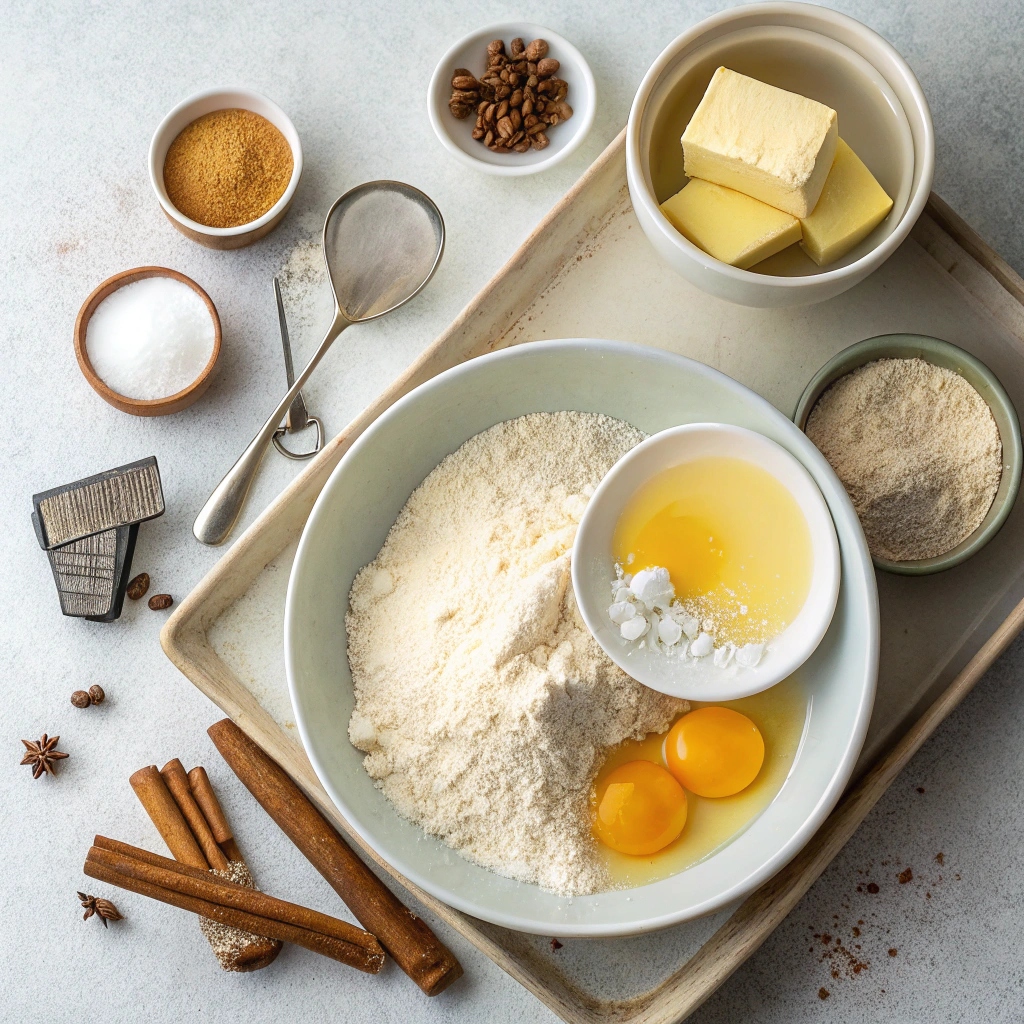
Everything you need is probably already in your pantry. Measure carefully, especially the flour (spoon and level, or weigh it), and bring your butter, eggs, and buttermilk to room temperature before you start.
- Cake:
- 3 1/3 cups (375 g) cake flour
- 2 cups (400 g) granulated sugar
- 1 Tablespoon baking powder
- 3/4 teaspoon salt
- 1/2 cup (113 g) unsalted butter, softened to room temperature, cut into Tablespoon-sized pieces
- 1/2 cup (118 ml) neutral cooking oil (avocado, vegetable, or canola oil)
- 1 1/3 cup (315 ml) buttermilk, room temperature
- 3 large eggs, room temperature
- 1 teaspoon vanilla extract
- Optional: 1/2 teaspoon cream of tartar plus 1/4 teaspoon baking soda, or 1 teaspoon fresh lemon juice, for a more traditional snickerdoodle tang
- Cinnamon Swirl:
- 3 Tablespoons granulated sugar
- 2 1/2 teaspoons ground cinnamon
- Brown Sugar Cinnamon Cream Cheese Frosting:
- 8 oz (226 g) brick-style cream cheese, softened
- 1/2 cup (113 g) unsalted butter, softened
- 1/4 cup (50 g) light brown sugar, firmly packed
- 1 teaspoon ground cinnamon
- 1/2 teaspoon vanilla extract
- 1/8 teaspoon salt
- 3 cups (375 g) powdered sugar
Step-by-Step Instructions
Read through these steps once before you begin so the timing of your mixing lines up with your oven preheating. The reverse creaming method works best when everything is at room temperature and the butter is properly softened (it should dent when you press it, but not feel greasy).
- Preheat the oven to 350°F (175°C). Lightly grease three 8-inch round cake pans, line the bottoms with parchment paper rounds, then dust with a thin layer of flour. Set aside.
- Whisk the dry ingredients. In a large bowl or the bowl of a stand mixer, whisk together the cake flour, granulated sugar, baking powder, and salt until evenly combined.
- Cut in the butter. Using the paddle attachment on low speed, add the butter one tablespoon at a time. Wait until each piece is fully incorporated before adding the next. The mixture should look like sandy, coarse crumbs after about 3 to 4 minutes.
- Add the oil. Pour in the neutral oil and mix on low just until all of the dry ingredients are moistened. You should see no loose flour at the bottom of the bowl.
- Combine the wet ingredients. In a separate bowl or large measuring cup, whisk the buttermilk, eggs, vanilla extract, and the optional cream of tartar mixture or lemon juice until smooth.
- Bring the batter together. With the mixer running on low, gradually pour the wet mixture into the dry mixture. Scrape down the sides and bottom of the bowl with a spatula, then mix on low for another 10 to 15 seconds until the batter is uniform and smooth. Do not overmix.
- Portion the batter. For even layers, weigh the batter and divide equally among the three pans (about 450 g per pan). If you do not have a kitchen scale, eyeball it as evenly as you can.
- Make the cinnamon swirl. In a small bowl, whisk together the 3 tablespoons of granulated sugar and 2 1/2 teaspoons of cinnamon until the color is uniform.
- Swirl it in. Sprinkle a heaping tablespoon of the cinnamon-sugar mixture over the top of each pan of batter. Use a butter knife to gently swirl the spice layer through the batter in wide figure-eight motions.
- Bake. Place the pans on the center rack and bake for 28 to 30 minutes, rotating halfway through, until a toothpick inserted in the center comes out clean or with a few moist crumbs.
- Cool. Let the cakes rest in their pans for 15 minutes, then invert onto a cooling rack, peel off the parchment, and let them cool completely before frosting.
- Make the frosting. In a large mixing bowl, beat the cream cheese, butter, and brown sugar on medium speed until smooth and fluffy, about 2 minutes. Add the cinnamon, vanilla, and salt and beat to combine. With the mixer on low, gradually add the powdered sugar until smooth and pipeable.
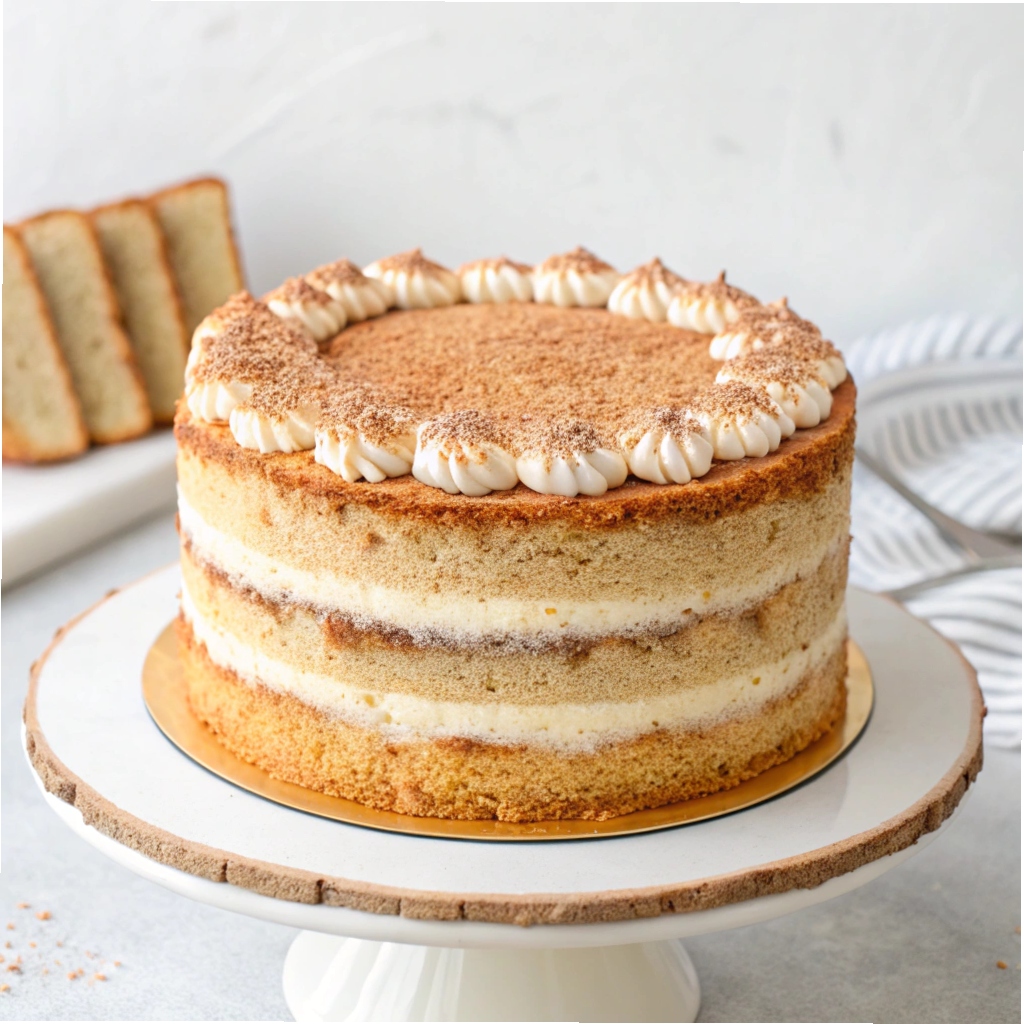
- Assemble the cake. Level the cooled layers with a serrated knife if they have domed. Place one layer on a cake stand, spread a thin, even layer of frosting on top, then repeat with the second and third layers. Apply a thin crumb coat over the entire cake, chill for 15 minutes, then add a final coat and decorate.
- Decorate. Pipe swirls on top using an Ateco 846 or 848 piping tip, dust lightly with extra cinnamon sugar, and optionally press mini snickerdoodle cookies around the top edge for a cookie-inspired finish.
How to Get the Semi-Naked Frosting Look
The semi-naked finish is what gives this cake its rustic, bakery-style charm. The trick is applying two thin coats rather than one thick one. After stacking and filling your layers, spread a whisper-thin layer of frosting over the entire cake, just enough to lock in crumbs, then refrigerate the cake for 15 to 20 minutes until that coat is firm to the touch.
Apply your final coat with a bench scraper or offset spatula held at a slight angle while you spin the turntable. Let small patches of cake peek through for that “rustic chic” look. For tall decorative swirls, fit a piping bag with an Ateco 846 or 848 tip, hold it straight up, and squeeze while pulling gently upward to create those signature soft peaks.
Perfect Pairings: Serving Suggestions
This snickerdoodle cake holds its own on the dessert table, but a few thoughtful pairings can turn it into the star of the spread. Serve slightly warm slices with a scoop of vanilla bean ice cream and a drizzle of caramel sauce for an instant a la mode moment.
For cooler-weather gatherings, pair a slice with a mug of spiced chai tea, hot cocoa, or freshly brewed coffee. The cinnamon notes in the cake echo the spices in the drink beautifully. At brunch, it sits perfectly next to a fresh fruit salad and a bowl of whipped cream with a dusting of nutmeg.
For holiday dinners, plate a thin slice alongside a scoop of cinnamon ice cream and a few fresh apple slices for a Thanksgiving or Christmas dessert that bridges the gap between pie and cake. You can also serve it the way bakers on our snickerdoodle blondies page suggest, with a small wedge of sharp cheddar on the side for a sweet-savory contrast.
Storage and Freezing Instructions
Because of the cream cheese frosting, snickerdoodle cake needs to be refrigerated if you are keeping it longer than a few hours. Store slices in an airtight container in the fridge for up to 5 days. For the best texture and flavor, take the cake out of the fridge 30 to 45 minutes before serving so the butter and cream cheese can soften back to that creamy, spreadable consistency.
If you need to keep the cake at room temperature for a party, it is safe to leave it out for up to 2 hours, provided the kitchen is not above 70°F (21°C). After that, return it to the fridge.
This snickerdoodle cake freezes beautifully, both frosted and unfrosted. Wrap individual slices (or whole layers) tightly in plastic wrap, then in a layer of aluminum foil, and freeze for up to 2 months. To thaw, move the wrapped cake to the refrigerator the night before, then bring it to room temperature 30 minutes before serving. Frosted slices can be thawed directly in the fridge overnight; the frosting will look slightly sweated when they first come out but firms up again at room temperature.
For make-ahead planning, you can bake the cake layers up to 2 days in advance, wrap them well, and store at room temperature. The frosting can also be made up to 3 days ahead and kept in the fridge; just bring it back to room temperature and give it a quick whip with the stand mixer before frosting the cake.
Recipe Variations: Pan Conversions and Easy Twists
One of the best things about this recipe is how flexible it is. Below are the most-requested pan conversions, plus a few simple twists if you want to mix things up. For a hand-held version, see our dedicated snickerdoodle cupcakes recipe.
- Bundt pan snickerdoodle cake. Pour the entire batter into a well-greased and floured 10 to 12-cup Bundt pan. Bake at 325°F (163°C) for 50 to 60 minutes, until a toothpick comes out clean. Cool in the pan for 20 minutes before inverting. Drizzle with a simple cream cheese glaze (powdered sugar, cream cheese, milk, and a pinch of cinnamon) instead of stacking layers.
- 9×13 sheet cake. Spread the batter evenly in a greased and floured 9×13 pan. Bake at 350°F (175°C) for 35 to 40 minutes. Cool completely, then swirl extra cinnamon sugar over the top before frosting right in the pan. You will only need about two-thirds of the frosting recipe for a sheet cake.
- Snickerdoodle cupcakes. Line two standard 12-cup muffin tins with paper liners and fill each about two-thirds full. Bake at 350°F (175°C) for 18 to 22 minutes. This recipe makes roughly 24 cupcakes. Ateco 844 swirls look beautiful on cupcakes, and a single mini snickerdoodle cookie on top is an easy, eye-catching finish.
- 6-inch layer cake. Divide the batter between three 6-inch pans for a taller, smaller cake (perfect for two to four servings). Increase the bake time to 32 to 36 minutes, and check with a toothpick at the 30-minute mark.
- Snickerdoodle crumbles. For an extra cookie-inspired layer, stir together 1/2 cup flour, 1/4 cup softened butter, 1/3 cup sugar, 1 teaspoon cinnamon, and a pinch of salt until clumpy. Bake at 350°F (175°C) on a parchment-lined sheet for 10 minutes, cool, and sprinkle between the cake layers and on top.
- Brown butter variation. Brown the 1/2 cup of butter in the cinnamon swirl (and a tablespoon in the frosting) until it smells nutty. Cool slightly before using. It deepens the flavor and adds a toffee note.
- Apple snickerdoodle cake. Fold 1 cup of finely diced, peeled apple tossed with 1 teaspoon of cinnamon into the batter before swirling. This makes the cake feel like a fall dessert and pairs nicely with a maple cream cheese frosting.
- Box cake mix shortcut. Use one box of white cake mix prepared according to package directions, then add 1 teaspoon of cinnamon to the batter and the cinnamon-sugar swirl on top. Frost as directed. It will not be quite as tender as from-scratch, but it is a reliable shortcut when time is tight.
Equipment Essentials and Troubleshooting
The right tools make this recipe feel effortless. Here is what you actually need, plus quick fixes for the most common snickerdoodle cake problems.
- Three 8-inch round cake pans (or 9-inch for slightly thinner layers, with a 2 to 3 minute reduction in bake time).
- Stand mixer or hand mixer with a paddle attachment for the reverse creaming step.
- Kitchen scale for accurate flour and even batter division between pans.
- Parchment paper rounds on the bottom of each pan so the layers release cleanly.
- Cooling rack that fits all three pans at once.
- Offset spatula and bench scraper for the semi-naked finish.
- Piping bag with Ateco 846 or 848 tip for decorative swirls.
- Toothpick to test for doneness without guessing.
If your cake turns out dense like a pound cake, the most likely cause is over-mixing once the wet and dry ingredients come together, or over-baking. Mix on low only until the batter is uniform, and start checking at the 28-minute mark. If the cinnamon swirl sinks to the bottom, you may have added too much swirl, or the batter may have been slightly too wet. Try swirling more gently with a knife and only halfway through the batter.
For a runny frosting, the culprit is usually spreadable cream cheese in a tub instead of the brick-style blocks. Brick cream cheese has less water and stabilizers, which is what keeps the frosting pipeable. If your frosting softens too much while you work, pop it in the fridge for 10 minutes and re-whip. For high-altitude bakers, reduce baking powder by 1/2 teaspoon and increase the oven temperature by 15°F to prevent sinking.
Recipe Card Nutrition Information
The nutrition information below is calculated for one slice assuming the recipe yields 12 slices from the three-layer cake, including frosting. Actual values will vary based on specific brands and how thickly you frost the cake.
- Calories: 585
- Total Fat: 28 g
- Saturated Fat: 13 g
- Cholesterol: 95 mg
- Sodium: 320 mg
- Total Carbohydrates: 80 g
- Dietary Fiber: 1 g
- Total Sugars: 58 g
- Protein: 6 g
Frequently Asked Questions
What is snickerdoodle cake?
Snickerdoodle cake is a soft vanilla layer cake inspired by classic snickerdoodle cookies. It has a tender cinnamon-sugar swirl running through each layer and is typically topped with a tangy brown sugar cinnamon cream cheese frosting. The flavor profile mirrors the cookie: buttery, warmly spiced, and gently tangy from buttermilk or, in cookie form, cream of tartar.
Does snickerdoodle cake have cream of tartar?
Traditional snickerdoodle cookies rely on cream of tartar for their signature tang and crackled tops. In this snickerdoodle cake recipe, buttermilk provides enough acidity to keep the crumb tender and the flavor balanced, so cream of tartar is optional. If you want a stronger cookie-like tang, add 1/2 teaspoon cream of tartar plus 1/4 teaspoon baking soda to the dry ingredients. A teaspoon of fresh lemon juice in the wet ingredients works as an easy substitute.
Can I make snickerdoodle cake without cream of tartar?
Yes. This recipe is built to work without cream of tartar. Buttermilk plus baking powder gives you a tender, well-risen crumb with plenty of tang. If you would like the flavor to lean even more cookie-like, a teaspoon of fresh lemon juice added to the wet ingredients is the simplest swap. You can also leave it out entirely and the cake will still taste like a snickerdoodle.
Can I use all-purpose flour instead of cake flour?
You can, but the crumb will be slightly more sturdy and less delicate. For every cup of cake flour, substitute 1 cup of all-purpose flour minus 2 tablespoons, then add 2 tablespoons of cornstarch and sift well. This DIY cake flour trick keeps the texture close to the original. Many readers on Reddit report success with this swap when cake flour is not available.
Can I use this recipe to make snickerdoodle cupcakes?
Yes. Scoop the batter into lined muffin tins, filling each about two-thirds full, and bake at 350°F (175°C) for 18 to 22 minutes. This recipe yields about 24 standard cupcakes. Top with the brown sugar cinnamon cream cheese frosting and a mini snickerdoodle cookie. For a dedicated cupcake version with adjusted ratios, see our snickerdoodle cupcakes recipe.
Can snickerdoodle cake be frozen?
Yes. Wrap individual slices or whole unfrosted layers tightly in plastic wrap, then in aluminum foil, and freeze for up to 2 months. Frosted slices can also be frozen; thaw them in the refrigerator overnight. Bring the cake to room temperature for about 30 minutes before serving so the frosting softens back to a creamy texture.
How long does snickerdoodle cake last?
Stored in an airtight container in the refrigerator, snickerdoodle cake stays fresh for up to 5 days because of the cream cheese frosting. At room temperature, it is safe for about 2 hours. For longer storage, freeze as described above. Always let refrigerated slices sit out for 30 to 45 minutes before serving for the best texture.
What frosting goes with snickerdoodle cake?
Brown sugar cinnamon cream cheese frosting is the most popular pairing because it echoes the cinnamon-sugar swirl in the cake and adds tangy contrast to the sweet crumb. Classic vanilla buttercream, cinnamon buttercream, or a maple cream cheese frosting all work well too. For a lighter finish, a simple glaze of powdered sugar, milk, cream cheese, and cinnamon drizzled over a Bundt version is delicious.
How do I make a snickerdoodle Bundt cake?
Pour all of the batter into a well-greased and floured 10 to 12-cup Bundt pan. Reduce the oven to 325°F (163°C) and bake for 50 to 60 minutes, until a toothpick comes out clean. Cool in the pan for 20 minutes before inverting onto a rack. Skip the layer frosting and finish with a simple cinnamon cream cheese glaze instead.
Why is it called snickerdoodle?
The name snickerdoodle is thought to come from the German word Schneckennudel, a type of cinnamon-sugar pastry, or from a New England tradition of giving whimsical, made-up names to comfort food. Whatever the exact origin, snickerdoodle has come to mean a soft, buttery cookie or cake coated in cinnamon sugar, and the name is now synonymous with cozy, nostalgic baking.
Final Thoughts
This snickerdoodle cake recipe brings together everything people love about the cookie in a sliceable, frosted form that works for birthdays, Thanksgiving, Christmas, and every cozy weekend in between. The reverse creaming method guarantees a tender crumb, the cinnamon swirl delivers that signature warmth in every bite, and the brown sugar cream cheese frosting ties it all together with a tangy, caramel-kissed finish.
If you love this snickerdoodle cake, you will probably love our snickerdoodle blondies for a chewy bar-style take on the same cinnamon-sugar flavor. Save the recipe, share it with a fellow cinnamon lover, and tag us when you bake it. There is nothing quite like the smell of cinnamon and brown sugar drifting through the kitchen.
Snickerdoodle Cake
Ingredients
Method
- Preheat oven to 350F (175C). Lightly grease and flour the sides and bottoms of three 8” round baking pans. Set aside.
- In a large bowl (or the bowl of a stand mixer) whisk together flour, sugar, baking powder, and salt until well-combined.
- Using an electric mixer on low speed, add butter one tablespoon at a time. Do not add the next tablespoon until the first has been fully incorporated. Mixture should resemble sandy, coarse crumbs.
- Add the oil and stir on low-speed until all of the dry ingredients have been moistened.
- In a separate bowl (I use a large measuring cup) whisk together buttermilk, eggs, and vanilla extract until well combined.
- With mixer on low-speed, gradually pour milk mixture into flour mixture. Once combined, scrape down the sides and bottom of the bowl using a spatula. Stir once more until batter is uniform and smooth.
- Evenly divide cake batter into prepared pans and prepare cinnamon swirl.
- In a small bowl, whisk together sugar and cinnamon for cake swirl.
- Sprinkle a heaping Tablespoon of cinnamon/sugar over each cake layer. Use a butter knife to swirl the mixture into the cake batter.
- Transfer cakes to center rack of 350F (175C) oven and bake for 28-30 minutes or until a toothpick inserted in the center comes out clean or with a few moist crumbs.
- Allow cakes to cool for 15 minutes and then invert onto a cooling rack to cool completely before frosting.
- In a large mixing bowl, combine cream cheese, butter, and brown sugar and use an electric mixer to beat until smooth and creamy.
- Add ground cinnamon, vanilla extract and salt, stir until combined.
- With mixer on low speed, gradually add powdered sugar until frosting is smooth and creamy.
- If cakes are domed or unlevel, level cakes before assembly. I do thin layers of frosting between cake layers, a semi-naked frosting around the cake, and then decorative swirls on top using an Ateco 846 or 848 tip.